Walking Tour of the Queyras - GR58 and GR541 in the French Alps

Cover of Tour of the Queyras
Availability
Published
Cover
Paperback - Laminated
Published
18 Feb 2009
Edition
Second
ISBN
9781852845100
Expand
ISBN (10)
1852845104
Size
17.2 x 11.6 x 1.5cm
Weight
270g
Pages
192
No. Maps
14
Originally Published
18 Feb 2009

Tour of the Queyras

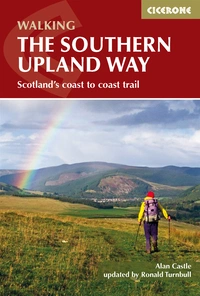
The GR58 and GR541 in the French Alps by Alan Castle

A guide to a backpacking tour of the Queyras region of the Haute Alps on the border between Italy and France, following the GR58 and GR541 trails. The route includes the highest point reached on any grand randonée with 24 cols above 2000m and options to climb up to 17, five above 3000m. More...

Buy from Cicerone

Printed Book
Adobe Digital eBook  (more)
Printed Book + eBook  SAVE £7.00
 

Activities

Walking, trekking, backpacking

Seasons

Mid-June to mid-October without specialist winter walking equipment; refuges particularly busy Read More... between 14 July and 15 August; warm, settled weather all summer

Centres

Nice, Guillestre, Montdauphin, Turin, Abriès, Saint-Véran, Ceillac, Briançon

Difficulty

Several summits can be reached by the ordinary walker, without specialist equipment or skills; Read More... other (optional) ascents need more experience; basic route suitable for any fit hillwalker

Must See

Monte Viso, Pic de Rochebrune, Grand Glaiza, Le
Pain de Sucre, Tête des Toillies, Le Grand Read More... Queyras, Bric Bouchet, Tête du Pelvas, the Guil valley


The French Alps

The French Alps stretch for some 403km (250 miles), from Lake Geneva (Lac Léman) in the north to the Mediterranean coast in the south, in the vicinity of Nice and Menton. They form a natural frontier with Italy to the east and Switzerland to the north. The weather tends to be warmer and more stable than in the Swiss and Austrian Alps.

Within France the Alps can be divided into three main regions – the Savoie (Savoy), Dauphine and Provençal Alps. The mountains are to be found within seven départements, namely Haute-Savoie, Savoie, Isère, Drôme, Hautes-Alpes, Alpes-de-Haute-Provence and Alpes-Maritimes (see map, page 8). Of these the Isère and the Drôme contain mainly the lower massifs, or Pre-Alpes.

Possibly the most impressive region of the Pre-Alpes is the Vercours, west of Grenoble, now a regional park. The Chablais Alps south of Geneva, bordering onto Switzerland, are rich in lush, green, Alpine pasture. This area leads to the major summits of the northern French Alps, culminating in Mont Blanc, at 4807m (15,759ft) the highest peak in Western Europe. Here also are the other great mountains of the French Alps: Grandes Jorasses (4208m/ 13,795ft) Aiguille du Midi (3842m/ 12,595ft) and Aiguille Verte (4122m/ 13,513ft).

South of Chamonix and the Mont Blanc region is the Vanoise, a national park. Here there are many glaciers and high peaks, including the well-known La Grande Casse (3855m/ 12,638ft). Southwest of the Vanoise is another national park, the Écrins (Parc National des Écrins). The major summits of the Écrins, La Meije (3982m/ 13,054ft), Mont Pelvoux (3946m/ 12,936ft) and the Barre des Écrins (4102m/13,447ft), are all seen to advantage on the Tour of the Queyras.

The Queyras region itself lies to the southeast of the Écrins, in what is generally considered to be the northernmost part of the southern French Alps. Further south lies the newest of the French national parks, the Mercantour. Summers here tend to be hot and the mountains rather arid, as the Alps finally run out at the Côte d’Azur.

Today the major industry in the French Alps is tourism, and during the winter months skiing is an important source of income. There is still plenty of non-intensive farming, and forestry is also very much in evidence. Employment is also available in the hydroelectric industry and in the management of the national and regional parks.

The Queyras

The Queyras is a rather isolated region of the French Alps, situated in the eastern half of the département of the Hautes-Alpes, bordering Italy on three sides. Turin lies to the east in a wide valley at the foot of the Piedmont Alps. The Queyras lies within the old province of Dauphiné, having been part of France since 1349. (The correct pronunciation of Queyras is a little unclear. Remember that in French ‘qu’ is pronounced rather like a ‘k’. Locals often do not pronounce the ‘s’, whereas most French people who live outside the region pronounce the word with the final consonant.)

The major peaks of the Queyras (Pic de Rochebrune 3320m/10,884ft, Grand Glaiza 3293m/10,795ft, Le Pain de Sucre 3208m/10,517ft, Tête des Toillies 3175m/10,409ft, Le Grand Queyras 3114m/10,209ft, Bric Bouchet 2997m/9825ft, Tête du Pelvas 2929m/9602ft) are lower than those in the Vanoise to the north and the Écrins to the northwest, and there are no glaciers in the Queyras. It is ideal hill-walking country, where several of the mountain summits can be reached by the ordinary walker, without the use of specialist equipment or skills.

The region is scenically of the highest order, and because of its location there are first-rate views of the neighbouring summits of the Écrins and the Piedmont Alps in Italy. The highest, most imposing and well-known mountain in the whole area is Monte Viso (3841m/12,592ft). Its summit lies just over the border in Italy, but its mighty and graceful lines are on view for much of the Tour of the Queyras.

The main geographical feature of the Queyras is the Guil valley. The River Guil rises high up in the mountains on the border with Italy in the Monte Viso region. It flows first to the northwest, passing La Monta and Abriès before turning to the southwest, passing Aiguilles to reach Château-Queyras. From here the river continues below the hamlet of Bramousse to enter the deep Combe du Queyras, before flowing into the River Durance near the fortified town of Montdauphin. The River Guil is met on several occasions during the Tour of the Queyras.

The major town of the Queyras is Guillestre, on the southwestern outskirts of the district. Several large villages or small towns in the region – such as Abriès, Saint-Véran and Ceillac –  have expanded over the last few decades to accommodate the growing skiing and tourist industry. The nearest large town to the Queyras is Briançon, 34km (21 miles) north of Guillestre on the N94 along the Durance valley.

The classic road approach to the Queyras is via the famous Col d’lzoard (2361m/7740ft) on the D902 from Briançon and Cervières. This is one of the most impressive road passes in the Alps, providing spectacular views, but usually made impassable by snow from October to May. The other approach is from Gap and Embrun to the southwest, then through the Combe du Queyras on the D902 to Château-Queyras, and on up the Guil valley to Abriès.

The mountains effectively prevent a southern approach to the region, and the peaks and high cols forming the Franco–Italian border isolate the district from Italy. There is one route through the heart of the Queyras and over into Italy. It runs from Château-Queyras to Ville-Vieille and on past the Demoiselle Coiffée (a natural feature that consists of a high earth pillar surmounted by a large boulder), continuing to La Rua, Molines-en-Queyras, Pierre Grosse and Fontgillarde, and up to Col Agnel on the border with Italy. On the author’s previous visits in the 1980s, the latter stages of this ascent were on an unsurfaced track, requiring the use of a four-wheel-drive vehicle. Now this track is fully metalled, and links with the road descending from Col Agnel to Chianale in Italy and so on to Turin. The route is an ancient one, and many believe it to be the line taken by Hannibal and his elephants in the legendary crossing of the Alps.

There are several cul-de-sac roads in the Queyras that allow visitors to admire the scenery. The road up the Cervières valley to Les Fonts is one example. Others include the road to the Belvédère du Viso in the Upper Guil valley and the road along the Mélezet valley from Ceillac to La Riaille.

The Queyras, like most other regions of the Alps, has experienced depopulation over the last 150 years, caused by the hardships of rural mountain life, lack of local employment and the effects of two world wars. Being so close to Italy, the Queyras suffered considerably in the last war, and was the scene of much mountain warfare (witness the destruction of La Monta and Ristolas in the upper Guil valley). The population of the Queyras stood at around 8000 in the mid-19th century, but today the resident population is much lower than this. For example, Molines-en-Queyras had over 1000 inhabitants in 1838, but this had declined to 290 by the mid-1970s. However, skiing and tourism have now helped to stabilise the situation.

In the Queyras the typical architecture is houses built of half stone and half wood, with high haylofts (or greniers). Many of these were built in the 17th and 18th centuries. There are good examples to be seen in La Rua near Molines-en-Queyras and in Saint-Véran and Aiguilles.

The Catholic religion has always been strong in the Queyras, and there is ample evidence of this to be seen on the walk, in the form of numerous shrines, chapels, ornate churches and ‘carpenter’s crosses’. There was considerable religious intolerance here in earlier centuries, leading to the emigration of many Protestants to the more tolerant German states in the north.

The Queyras is famous for its honey (miel) – it is now a minor tourist industry – and numerous beehives will be seen on the walk. Woodcarving is another speciality of the region. There are plenty of examples of local handicrafts in the shops in the villages and hamlets along the Tour.

Further information on places to visit in the Queyras, and events and activities in the region, are available at local tourist offices (syndicats d’initiative, maison du tourisme or office de tourisme). There are tourist offices in Guillestre, Ceillac, Saint-Véran, Molines-en-Queyras, Abriès, Aiguilles, Château-Queyras and Arvieux.


Site by OUTSRC