

 New
New
Walking in the Peak District - White Peak East
42 walks in Derbyshire including Bakewell, Matlock and Stoney Middleton


Walking in the Peak District - White Peak East
42 walks in Derbyshire including Bakewell, Matlock and Stoney Middleton
This guidebook to walking in the Peak District details 35 day walks and 7 longer trails in the eastern part of the White Peak, part of the Peak District National Park, Derbyshire. The book includes walks near Bakewell, Matlock and Eyam, as well as the Monsal Trail, Tissington Trail and White Peak Circular. GPX files available to aid navigation.Explore the rolling limestone landscapes, deep green dales and historic villages of the White Peak, the southern heart of the Peak District National Park. This beautiful area of Derbyshire is known for its dramatic limestone valleys, charming market towns and iconic walking routes linking places such as Bakewell, Matlock and Eyam.
This expert guidebook to walking in the eastern White Peak features 42 routes, including 35 circular day walks and 7 longer trails exploring the area’s valleys, plateaus and historic landscapes.
The day walks range from around 7 to 19km and can be completed in 2–6 hours, while longer trails such as the Monsal Trail, Tissington Trail and White Peak Circular allow walkers to explore the region in greater depth.
- 42 varied routes across the eastern White Peak, including 35 circular day walks and 7 longer trails connecting classic Peak District landscapes and picturesque villages, including Tissington, Youlgreave, Stoney Middleton and Wirksworth
- Walks ranging from 7–19km (4–12 miles) for day routes, with longer trails covering 15–70km for extended adventures, all of which are easily accessible from Bakewell, Buxton and Sheffield
- Clear 1:50,000 Ordnance Survey mapping and GPX files for each walk, helping you navigate the limestone dales and upland plateaus characteristic of the White Peak landscape of Derbyshire with confidence
- Highlights along the way include historic landmarks such as Chatsworth House, Haddon Hall, the UNESCO-listed Cromford Mill, and prehistoric sites like Arbor Low
- Practical details on transport, refreshments and facilities to help plan enjoyable walking days across the Peak District
From peaceful riverside paths and flower-filled limestone dales to historic estates and sweeping countryside views, the eastern White Peak offers some of the most rewarding walking routes in the Peak District. Whether you’re exploring quiet valleys, visiting historic villages or following classic trails through the heart of Derbyshire, Walking in the Peak District – White Peak East provides everything you need to discover this beautiful landscape on foot.
Discover the full White Peak region of the Peak District with Cicerone’s 2-part series. Walking in the Peak District – White Peak West is available to purchase separately, offering more routes and day walks across the western dales and limestone plateaus.
Walking in the Peak District – White Peak East – Quick Facts
Guidebook name: Walking in the Peak District – White Peak East
Location: White Peak, Peak District National Park, Derbyshire, England
Number of walks: 42 routes – 35 circular day walks and 7 longer trails
Distance: Day walks 7–19 km (4–12 miles); longer trails 15–70 km (9–43 miles)
Typical duration: 2–6 hours for day walks; longer trails can take multiple days
Terrain: Limestone dales, riverside paths, upland plateaus, historic villages, trails along disused railway lines
Difficulty: Easy to moderate, suitable for beginners, families and experienced walkers
Highlights: Monsal Trail, Tissington Trail, White Peak Circular, Chatsworth House, Haddon Hall, Cromford Mill, Arbor Low
Navigation: 1:50,000 Ordnance Survey maps and downloadable GPX files
Facilities: Practical information on public transport, refreshments, parking and local amenities for all routes
Best season: Year-round walking, though limestone landscapes can be especially slippery when wet
Author Highlight
“Walking in the White Peak landscape is a restorative experience. The gentle rolling hills, the long sinewy dales, the green grass and white limestone flecked with the vivid, eye-catching primary colours of wildflowers – all fill the mind and body with a sense of wellbeing.”
- Paul Besley, author of Walking in the Peak District - White Peak East
Printed book
A guidebook with detailed route descriptions, stage breakdowns, accommodation listings, profiles and maps - everything you need on the trail.
ISBN
9781852849764
Availability
Published
Reprinted
15 Oct 2022
Published
16 May 2020
Edition
Third
Pages
232
Size
17.20 x 11.60 x 1.60cm
Weight
260g
eBook
The complete digital edition of the guidebook, with full route descriptions, accommodation listings, profiles and maps, ready to use on any device. To access your eBook, you will need an eReader app. For more details, visit the eBook FAQs.
Map key
Overview map
Introduction
Geology
Plants and wildlife
History
Local communities
Customs
Peak District National Park
Local services and transport
The walks
Responsible walking
Maps and navigation
Using this guide
Northern section
Walk 1 Bradwell to Offerton
Walk 2 Hope to Shatton
Walk 3 Longshaw to Curbar Gap
Walk 4 Grindleford to White Edge
Walk 5 Foolow to Wardlow
Walk 6 Eyam to Abney
Walk 7 Eyam to Grindleford
Walk 8 Eyam Village
Walk 9 Tideswell to Cressbrook
Walk 10 Curbar to Gardom’s Edge
Walk 11 Calver to Hassop
Walk 12 Calver to Great Longstone
Walk 13 Taddington to Monsal Dale
Walk 14 Chatsworth to Beeley
Walk 15 Ashford in the Water to Monsal Head
Walk 16 Bakewell to Chatsworth
Walk 17 Bakewell to Monsal Head
Walk 18 Bakewell to Over Haddon
Walk 19 Monyash to Sheldon
Walk 20 Rowsley to Birchover
Southern section
Walk 21 Youlgreave to Elton
Walk 22 Middleton to Elton
Walk 23 Middleton to Kenslow Knoll
Walk 24 Winster to Bonsall
Walk 25 Matlock to Dethick
Walk 26 Biggin to Minninglow
Walk 27 Cromford to Black Rock
Walk 28 Cromford to Crich
Walk 29 Middleton to Harboro Rocks
Walk 30 Brassington to Kniveton
Walk 31 Parwich to Alsop en le Dale
Walk 32 Parwich to Tissington
Walk 33 Wirksworth to Alport Height
Walk 34 Tissington to Thorpe Cloud
Walk 35 Ashbourne to Thorpe
Long Walks and Trails
Walk 36 Derwent Valley Heritage Way
Walk 37 Eastern Gritstone Trail
Walk 38 Limestone Way
Walk 39 White Peak Circular
White Peak Trails
Walk 40 High Peak Trail
Walk 41 Tissington Trail
Walk 42 Monsal Trail
Appendix A Route summary table
Appendix B Useful websites
Appendix C Bibliography and further reading
Seasons
Walking in the Peak District is enjoyable all year round although the famous limestone landscapes can be slippery in or after wet weather. A snowy winter walk in the White Peak can be an enchanting experience.
Centres
Ashbourne, Bakewell, Calver, Chatsworth, Cromford, Eyam, Hope, Matlock, Middleton, Monyash, Parwich, Stoney Middleton, Tissington, Tideswell, Youlgrave, Wirksworth, Winster
Difficulty
Ranging between 4 and 12 miles in length and largely following well-marked paths over gentle landscapes, these walks are suitable for walkers of all abilities. Free GPX files available to aid navigation.
Must See
Market town of Bakewell; medieval village of Tissington; plague village of Eyam; Thorpe's Norman church; Chatsworth House; Haddon Hall; Cromford World Heritage Site; Stanton Moor stone circle; the Dales of Lathkill and Cressbrook; Thorpe Cloud; the Monsal Trail; the Companion Stones on White Edge; limestone plateaus; Neolithic burial site of Arbor Low; the Headstone Viaduct
October 2023
Updates
White Peak Walks East Third Edition (Reprinted 2022)
Walk 2 Hope to Shatton (Page 37)
The text should read:
Where the road forks, bear right down Bowden Lane, cross the bridge over the River Noe, then turn immediately right on to a stone track leading to a fenced lane.
Walk 6 Eyam to Abney (Page 58)
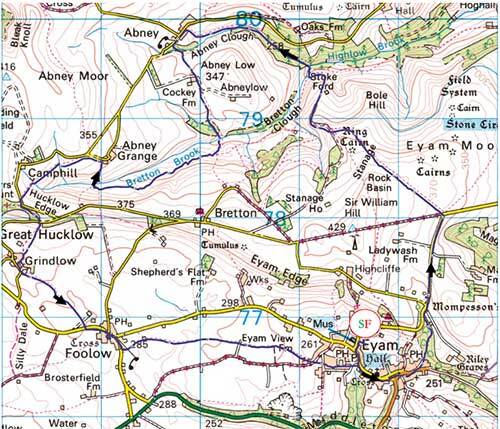
Derbyshire County Council closed this path in May 2022 until at least April 2025. Motor vehicles are no longer allowed on that section of road. In view of the length of time and the precarious situation I have completely revised that section of the walk.
The text should read:
Due to a landlsip in the area the following section of the walk has been rerouted.
Go through two gates along the path and, at the stone wall running N-S, pass through the gate and head NW downhill to cross a footbridge over Bretton Brook. Follow the signposts NNE uphill to a stone wall. Go through the gate and follow the wall on your right round the field passing the farm at Abney Grange and exiting on to a minor road via a stone stile. Turn left up the road until you come to a fingerpost on the left just before the road junction. Follow its direction heading SW to the field corner. Go through the next gate, following the fence downhill, cross a small brook then continue uphill along the fenceline. Pass through a small gate and cross the large field SW keeping the woodland ahead, to your left. Descend to a small building, cross the stream and ascend the opposite bank. At the top of the field exit via the gate then walk to the fingerpost ahead, leading on to a minor road. Go left down the road until you come to stone steps on the right. Descend the steps to take the footpath immdeiately left down through the brush exiting via a gate on to the road. Walk diagonally left across the road to take the footpath to Grindlow.
New GPX has been provided. The map is shown.
Walk 8 Eyam Village (Page 64)
The text should read:
I recommend continuing into the village to visit Eyam Hall, and the village craft and information centre, opposite. Then, walk N, back along Church Street taking the next left down New Close, then left into Dunlow Lane.
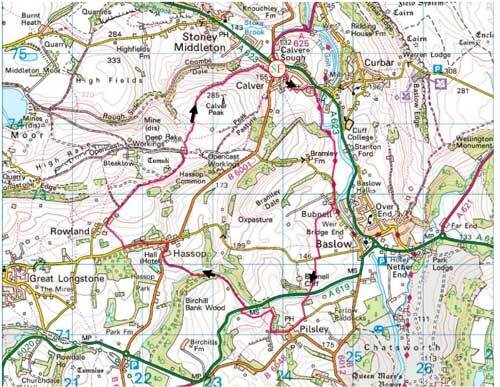
Walk 11 Calver to Hassop (Page 77)
Actual distance is 12.65km (7.86 miles). New GPX has been provided. The map is below.
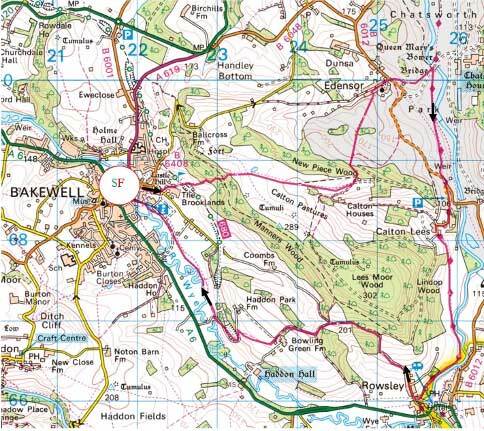
Walk 16 Bakewell to Chatsworth
I have made a small change to the map for clarity. New GPX has been provided. The map is below.
Walk 17 Bakewell to Monsal Head
The book description is correct. However, the map is incorrect. New GPX has been provided. The map is below.
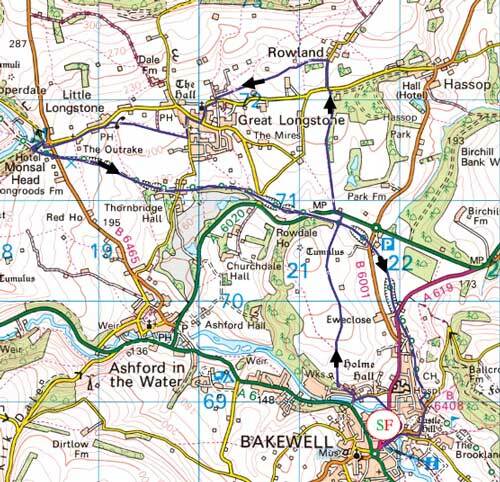
Walk 22 Middleton to Elton
The book description is correct. However, the map is incorrect. New GPX has been provided. The map is below.
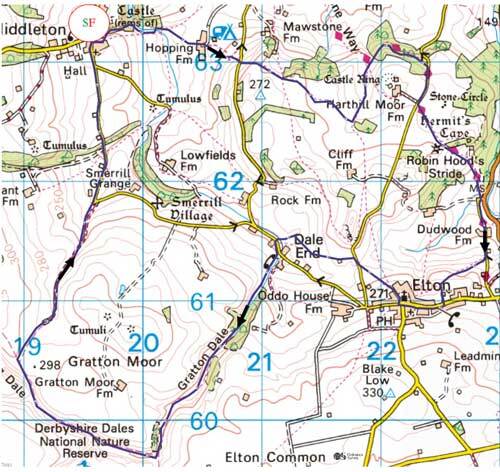
August 2023
Walk 11 Calver to Hassop
Third Edition (Reprinted 2022)
Page 77, paragraph 1
It should read:
'Where the lane meets a minor road, bear diagonally left and walk along Mill Farm Close. At the end, enter a passage between two fences.'
Free Royal Mail 48 postage on UK orders. European postage is £3.50 per item. Worldwide postage is £5.50 per item. If you're not happy with your purchase for any reason, we'll give you a full refund.
Learn moreDiscover the Cicerone App
The Cicerone App brings decades of expertise straight to your phone, making it easier than ever to plan and enjoy your adventures wherever you are. For use with In-App guides — not compatible with eBooks.


Popular related guides


