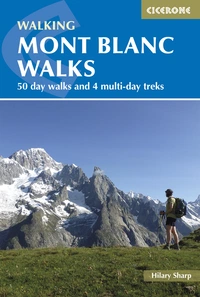
Italy's Sibillini National Park - walking and trekking guide
Italy's Sibillini National Park
Walking and Trekking Guide by Gillian Price
An inspirational guidebook to walking and trekking in Italy's Sibillini National Park includes the GAS, Grande Anello dei Sibillini, 8-day trek. Easily reached from airports on the Adriatic coast and from Rome, the Monti Sibillini belong to the Appenine chain that straddles the Marche and Umbria, and will become a popular walking destination. More...
Buy from Cicerone
Activities
Walking, trekkingSeasons
Refuges open from mid-April to mid-October; August and midsummer weekends very busy; higher ridges Read More... may have snow until June; excellent winter walking with snowshoes or touring skis, best with a local guideCentres
Amandola, Balzo, Castelluccio, Norcia, Nursia, Preci, Castelsantangelo, Visso, Ancona, Pescara, Read More... PerugiaDifficulty
Something for all abilities, low-level strolls, ridges and walkers' peaks; the GAS requires no Read More... mountaineering expertiseMust See
The Grande Anello dei Sibillini 8-day trek, Sibillini National Park, Monte Vettore, Monte Sibilla, Read More... Piano Grande, Monte BoveMONTI SIBILLINI
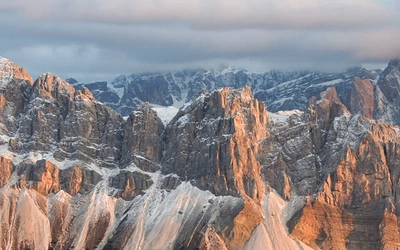
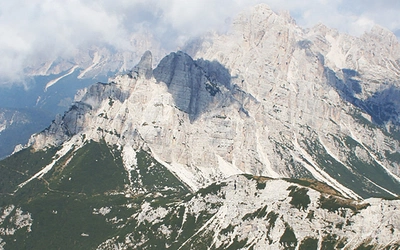
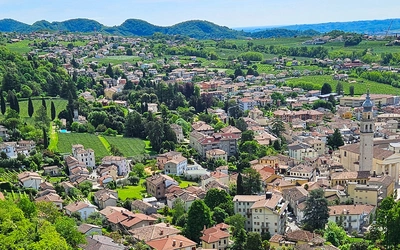
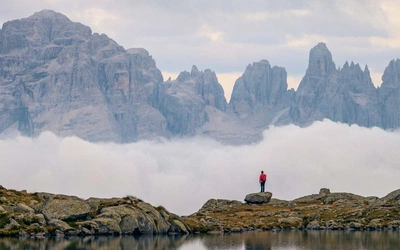
Little known to foreign visitors, the Sibillini, in Italy’s central Apennine chain, comprise soaring limestone mountains and awe-inspiring natural landscapes inhabited by wonderful wildlife. Rugged lofty ridges link dizzy peaks above vast bare flanks swept by howling winds. Vast grassy uplands are smothered with vivid wildflowers. In dramatic contrast, worlds below, plunging gorges are run through with deliciously cold streams. The thickly wooded valleys are dotted with utterly charming historic villages, home to herders and woodcutters, hard-working reticent folk with a great sense of hospitality. With a good 50 peaks, many over 2000m, there is plenty of exploratory walking to be done in the Sibillini on the intricate web of pathways and old cart tracks. Thanks to dedicated nature lovers and environmental activists, in 1993 this wonderland finally became the Parco Nazionale dei Monti Sibillini, encompassing 700km2.
Part of Italy’s backbone, the Monti Sibillini are a narrow line of ridges that act as the watershed between the Adriatic and the Tyrrhenian seas. Straddling the regions of Umbria to the west and Marche to the east they run north–south for almost 40km. Limestone is the main constituent, formed 200 million years ago in a shallow sea and forced skywards. Glaciers later left recognisable traces such as cirques and U-shaped troughs. The stark bareness of these mountains is striking, as few trees exceed the 1500m level.
However, much of this bareness is caused by man as dense forests of beech once cloaked the uplands. These were dramatically cut back over time to create pasture for the armies of sheep – once totalling 400,000 – key to the region’s economy.
A number of important rivers run through the range: the Nera has its source in the heart of the Sibillini and flows out through Umbria, whereas the eastern flanks give rise to the Aso, Tenna, Ambro and Fiastrone which head down to the Adriatic coast.
And the name? Sibillini glides over the tongue. In antiquity Sibyls were well known across the Mediterranean as oracles. And one such magnificent prophetess dwelt in a cavern on what is now known as Monte Sibilla, attended by bevies of gorgeous fairy handmaidens. The stuff of fairy tales. Ephemeral beings are hard to avoid in these mountains, as reflected in the place names, an entertaining mix of sacred and profane: Redeemer Peak (Cima del Redentore) and Holy Valley (Valle Santa) vs Devil’s Point (Pizzo del Diavolo) and Hell Gorge (Gole dell’Infernaccio)!
WALKING
The wondrously varied landscapes of the Sibillini make for memorable outdoor holidays at any time of year, and holidaymakers of all grades of walking expertise will find something to get their boots into. There are leisurely strolls across flowered meadows and paths down eerie canyons, dizzy high ridge itineraries and a host of walkers’ peaks. This guide provides a selection of 21 day walks ranging from 1hr 30mins to 6hrs in duration, and covering the unmissable features of this region. In addition, a magnificent 8-day trek circling the Sibillini is given in detail: the GAS – Grande Anello dei Sibillini – is highly recommended and accessible to everyone, as nothing of a mountaineering nature is required. Created by enthusiasts from the Italian Alpine Club in the 1980s, it dips in and out of peaceful out-of-the-way hamlets. The objective was to offer an overall vision of the Sibillini and involve outermost villages, a superb idea. Moreover, it encourages visitors to discover that there is more to the Sibilllini than the hot spots such as Castelluccio and Gole dell’Infern-accio, where visitor numbers are huge at peak times. The GAS lends itself to numerous variations as well as detours to link up with the shorter day walks.
For Italian readers the landmark work is Monti Sibillini. Parco Nazionale. Le più belle escursioni. (SER/CAI 2004), by pioneers Alberico Alesi and Maurizio Calibani. This is a comprehensive guide to the park’s pathways and environmental concerns, with copious background titbits.