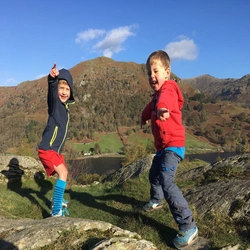
Five of the best short walks in Coniston and Langdale: fells, tarns and quarrying heritage
Coniston and Great Langdale sit at the heart of the Lake District National Park, in a landscape shaped by ancient industry, vast sheets of water and the distinctive stepped skyline of the Langdale Pikes. Paddy Dillon's 15 Short Walks Lake District: Coniston and Langdale covers 15 routes across the area, all designed to be completed in under three hours, with one longer challenge walk included. The five walks below range from a village-to-village linear route to a full fell ascent, taking in Tarn Hows, the Old Man of Coniston, Tilberthwaite and Blea Tarn. All five walks suit walkers of a range of abilities, from easy valley and woodland routes to the steeper ascent of the Old Man of Coniston. Several start from villages with good bus connections. (Date updated: June 2026. Guidebook updated: January 2024.)
How to get to Coniston and Langdale?
Coniston is served by daily buses from Ambleside, with weekday services also running from Ulverston. The Old Dungeon Ghyll Hotel in Great Langdale is served by daily buses from Ambleside. Hawkshead is linked to both Ambleside and Coniston by daily bus services. Windermere railway station is the nearest rail hub, with onward bus connections to the area. Drivers will find pay and display car parks in Coniston village and at the Old Dungeon Ghyll Hotel in Great Langdale.
If you are planning a fuller walking holiday in the area, 15 Short Walks Windermere, Ambleside and Grasmere and 15 Short Walks Keswick, Borrowdale and Buttermere are also available from Cicerone.

15 Short Walks Lake District - Coniston and Langdale
£9.95
This guide contains 15 easy-to-follow walks for all abilities in Coniston and Langdale (Lake District). All the walks are under 3 hours and are clearly described alongside OS mapping and information on facilities, parking and highlights. They are set in stunning scenery and can be completed year-round.
More information"Walking in the Lake District is rewarding all year round as the colours of the landscape change dramatically, from Spring when the first flowers emerge, and black Herdwick lambs are born, to Autumn when the woodlands and bracken turn russet and gold. Winter, too, brings breathtaking beauty, but care is needed on icy ground. If it rains heavily, find a walk that includes waterfalls!"
— Paddy Dillon
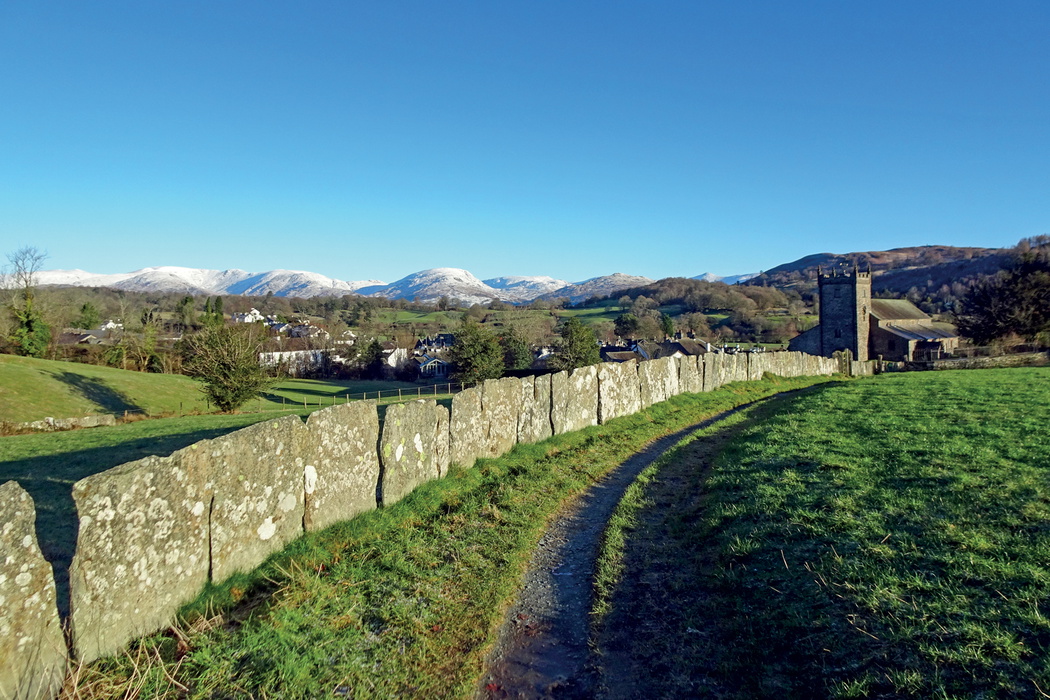
Hawkshead to Coniston
Summary: A linear walk through fields and forest, linking ancient Hawkshead with Coniston.
Start: Opposite Hawkshead Grammar School
Finish: Coniston tourist information centre (LA22 0NT)
Time: 3hr
Distance: 7km (4.5 miles)
Climb: 200m
Hawkshead is a pretty village with old buildings and poky alleyways to explore, and plenty of options for food and drink. The walk starts opposite Hawkshead Grammar School, where the 18th-century poet William Wordsworth was educated. The school now serves as a museum illustrating school life from 1585 to 1909. The route heads through fields and forest to Coniston and passes four intermediate bus stops, so you can cut the walk short at any point if needed.
Coniston also repays careful exploration on arrival. The Ruskin Museum houses the restored Bluebird K7, the craft in which Donald Campbell used in his attempt to break his own world water speed record and was sadly killed on Coniston Water on 4 January 1967.
This is a one-way walk. Daily buses link Coniston and Hawkshead, so the return is straightforward.
Best time to visit: The walk is achievable year-round on well-marked paths. Spring and summer give dry paths underfoot and good woodland cover.
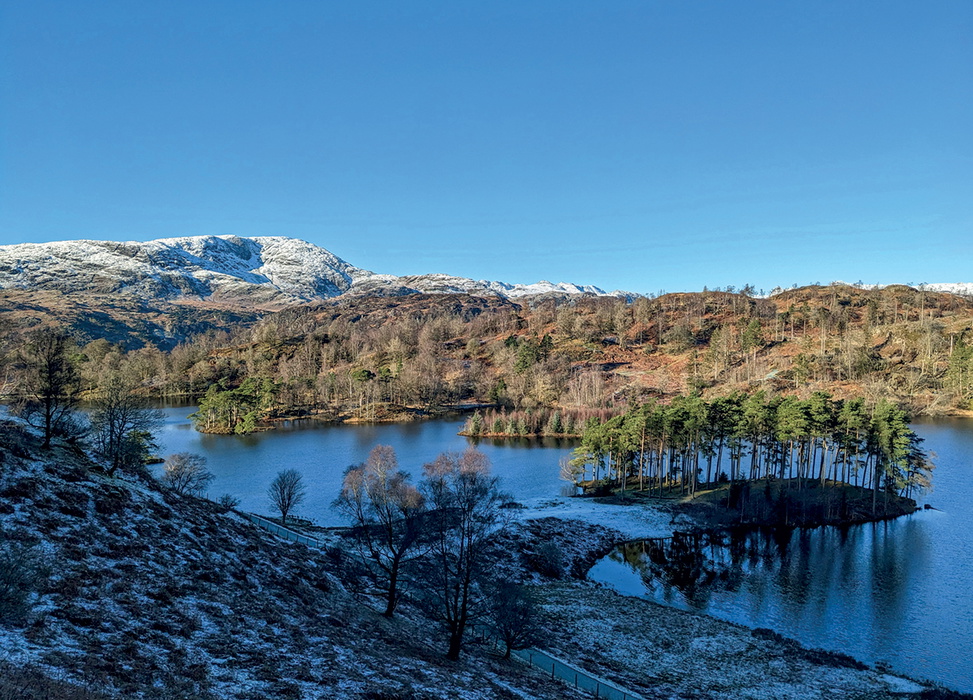
Coniston and Tarn Hows
Summary: A walk along the Cumbria Way to popular Tarn Hows and back through the Monk Coniston estate, with an arboretum and walled garden on the return.
Start/finish: Coniston tourist information centre (LA21 8EH)
Time: 4hr
Distance: 10.5km (6.5 miles)
Climb: 330m
The Cumbria Way long-distance footpath runs from Coniston to Tarn Hows, passing Tarn Hows Cottage. The cottage once belonged to Beatrix Potter, who purchased the Monk Coniston estate in 1930 and later bequeathed it to the National Trust on her death in 1943. Tarn Hows itself is National Trust land and freely accessible on foot year-round.
A circuit of Tarn Hows is included in the route, but can be omitted for a shorter walk. For a quiet visit, come in winter, when the tarn sees far fewer visitors. The tarn sits at around 200m above sea level and the surrounding fells are visible on clear days. The return to Coniston passes through forest and takes in the arboretum and walled garden at Monk Coniston.
Best time to visit: Winter for a quiet visit. Spring and summer when the woodland is in full leaf. Autumn colour can be good, though the tarn path is busier during school holidays.
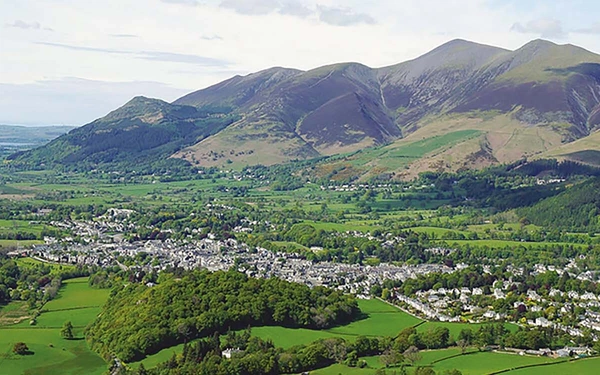
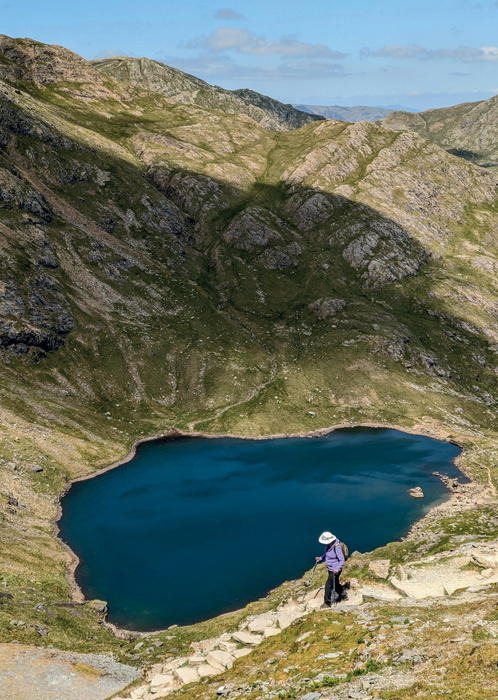
Old Man of Coniston
Summary: A steep but obvious ascent to the highest summit in the Coniston Fells, with evidence of the area's quarrying heritage throughout.
Start/finish: Coniston tourist information centre (LA21 8EH)
Time: 4.5hr
Distance: 8.5km (5.25 miles)
Climb: 750m
The Old Man of Coniston, also known as Coniston Old Man, features a steep but obvious path from Coniston. The surrounding fellsides were mined for copper and quarried for slate for centuries, and spoil heaps, levels and ruined buildings are visible throughout the ascent. The copper mines were worked most intensively in the 19th century followed by a swift decline and the end of the industry in the early 20th century. The summit stands at 803m and on a clear day the views extend across Coniston Water to Morecambe Bay, the rest of the Lake District and possibly even North Wales, the Isle of Man and Southern Scotland.
The ascent is steep, stony and prolonged and should only be attempted in good weather. If the climb is not going well at any point, simply turn around and walk back down. An alternative start from the Walna Scar Road car park shortens the walk.
Best time to visit: Late spring to early autumn in settled weather. Avoid the Old Man in winter, when the steep stony path can be icy and the short days leave little margin for error.
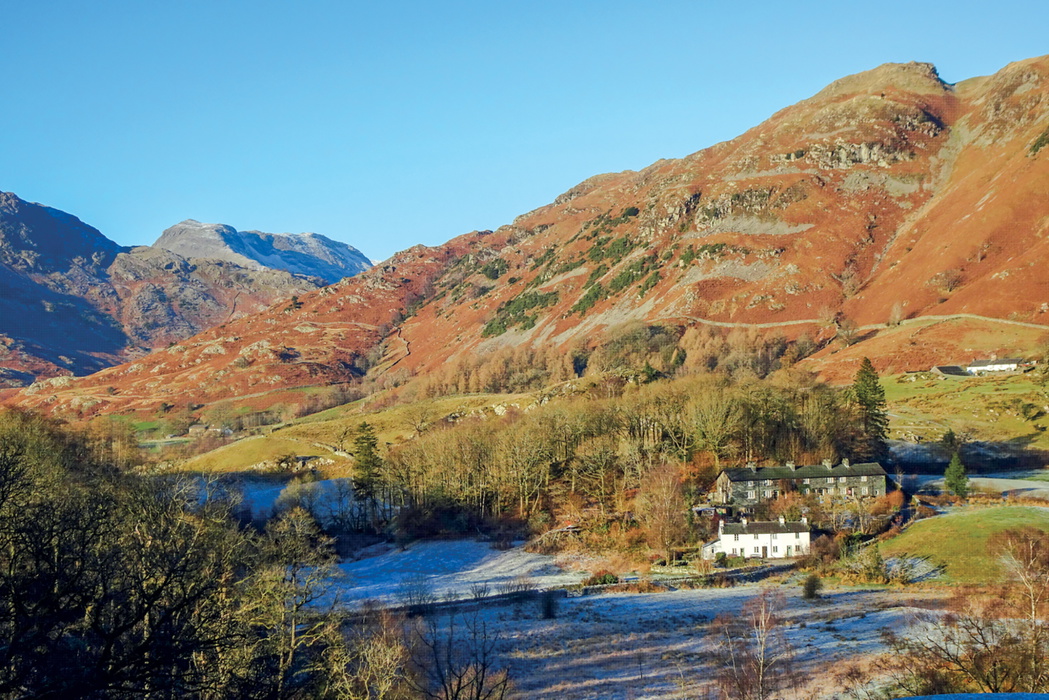
Tilberthwaite
Summary: A valley walk around the farms, woodland and slate quarries of Tilberthwaite, with an optional detour into the cavern at Hodge Close Quarry.
Start/finish: Tilberthwaite car park (LA21 8DG)
Time: 3hr
Distance: 7km (4.5 miles)
Climb: 220m
A car is required to reach Tilberthwaite, as there is no public transport to the valley. The walk starts from the honesty car park and passes through a landscape of small farms and broadleaved woodland. The valley was heavily quarried for slate in the 19th and early 20th centuries, and woodland now screens the quarries and spoil heaps from view for much of the route. High Tilberthwaite farm, passed on the route, specialises in Herdwick sheep, the breed native to the Lake District fells.
A short detour allows you to enter Hodge Close Quarry, which features a spacious cavern and a deep pool of water popular with divers. Take care near the quarry edge and on the steep, rocky path down into the quarry. The Three Shires Inn at Little Langdale is 700 metres off-route and the High Park tea garden is 500 metres off-route if you need refreshment.
Best time to visit: Spring and summer, when the woodland is in leaf. The route is walkable year-round, but take extra care at the quarry detour in wet conditions.
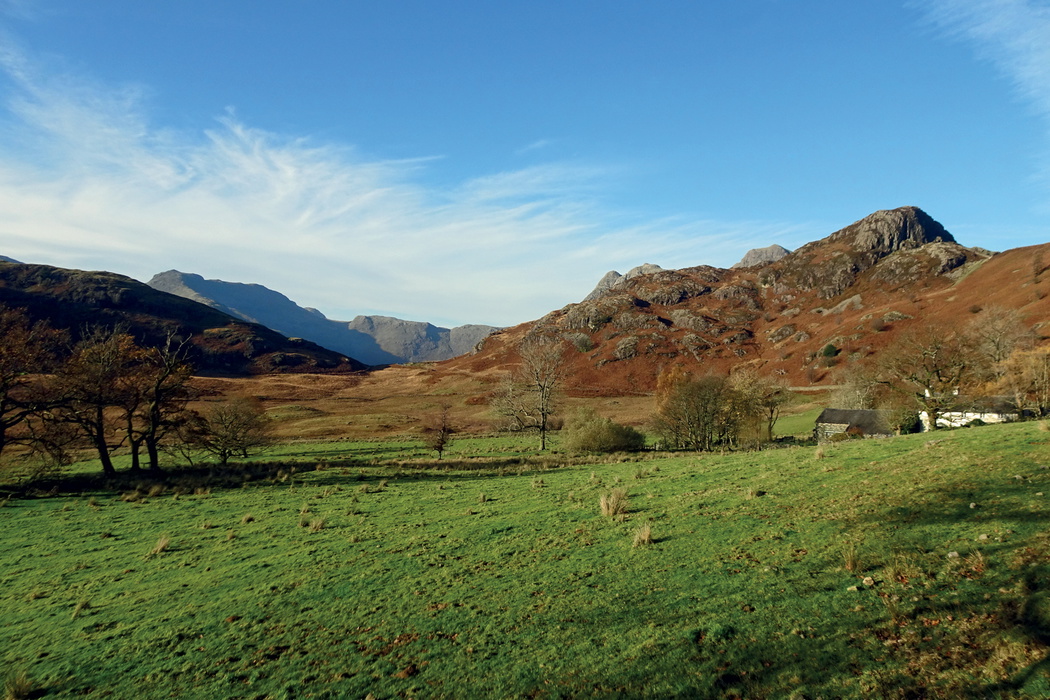
Blea Tarn
Summary: A circular walk from the Old Dungeon Ghyll Hotel in Great Langdale, with views of the Langdale Pikes on the climb and a circuit of Blea Tarn.
Start/finish: Bus shelter near Old Dungeon Ghyll Hotel, Great Langdale (LA22 9JY)
Time: 2hr
Distance: 5km (3 miles)
Climb: 175m
The Old Dungeon Ghyll Hotel has served fellwalkers and rock climbers since the 19th century. Daily buses from Ambleside stop nearby, making this one of the few walks in the collection fully accessible without a car. The climb from the hotel gives splendid views of the Langdale Pikes, whose summits include Harrison Stickle and Pavey Ark. The route then reaches Blea Tarn, which sits in a col between Great Langdale and Little Langdale at around 190m.
A circuit of the tarn gives views of the water and the surrounding fells. The tarn and its surroundings are National Trust land. If you are starting from the Blea Tarn car park, a much shorter walk around the tarn alone is possible. The full route from the Old Dungeon Ghyll gives Langdale Pikes views on both the ascent and the final descent.
Best time to visit: Spring and summer for clear views of the Pikes. The route is short enough to work as a late afternoon walk in the longer summer days.
15 Short Walks Lake District - Coniston and Langdale
£9.95
This guide contains 15 easy-to-follow walks for all abilities in Coniston and Langdale (Lake District). All the walks are under 3 hours and are clearly described alongside OS mapping and information on facilities, parking and highlights. They are set in stunning scenery and can be completed year-round.
More informationYou'll find all five of these routes, along with ten more, in Paddy Dillon's 15 Short Walks Lake District: Coniston and Langdale. Every walk comes with clear Ordnance Survey mapping, step-by-step route descriptions, and practical information on parking, transport and local facilities. The guide has also been optimised for the app.
About Paddy Dillon, author of 15 Short Walks Lake District: Coniston and Langdale
Paddy Dillon is a prolific walker and guidebook writer with over 100 guidebooks to his name and contributions to 40 other titles. He has written for several outdoor magazines and has appeared on radio and television. Paddy uses a tablet computer to write as he walks, meaning his descriptions are written at the very point at which the reader uses them. He has walked all of Britain's National Trails and several European trails, and has also walked in Nepal, China, Korea and the Rocky Mountains of Canada and the US.