In conversation with Brian Furze: trekking in the Indian Himalayas
From sacred pilgrimage routes to remote glacier valleys, trekking in Uttarakhand offers far more than dramatic mountain scenery. In this conversation, Brian Furze reflects on decades of walking in the Indian Himalayas and explains why these mountains have kept drawing him back. He talks about the spiritual and cultural depth of the region, the role of local communities in shaping each journey, and the changes now being felt across one of the world’s most remarkable trekking landscapes.
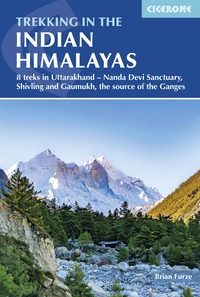
Trekking in the Indian Himalayas
8 treks in Uttarakhand - Nanda Devi Sanctuary, Shivling and Gaumukh, the source of the Ganges
£24.95
Guidebook to 8 treks in the Uttarakhand Himalaya, including the Nanda Devi Sanctuary, Shivling and the source of the Ganges. Ranging from 3 to 8 days, these guided trekking routes take in verdant valleys, alpine meadows, peaks, glaciers, holy sites and national parks, with the chance to see protected species such as snow leopard and musk deer.
More informationHi Brian! You've been working in and writing about the Indian Himalayas for many years. What first made Uttarakhand somewhere you had to keep coming back to?
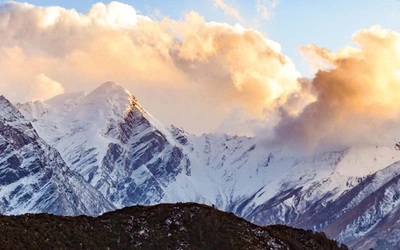
It was my first time in Uttarakhand’s mountains, coming round a corner in a car. I’d been leaning forward in the back seat for four hours, with no room to sit back because it was overfull with passengers. It was sunrise, we had left the valleys and climbed high, and there they were: mountains lit by first light. I’d been to the foothills many times, but that first sight of the mountains on the way to Nanda Devi really hit me. Before that trip, I’d spent hours poring over maps of the area at a research centre in Delhi where I was based, maps I still have and brought out again while shaping the guide.
That view was the first layer of my experience of Uttarakhand’s mountains. They seemed to be a geographic anchor to the landscape. But during that first trip, I also spent time with villagers and heard about their dreams, aspirations, concerns and challenges. I began to see the mountains as a physical, economic and cultural anchor for the region, and to understand the complex relationships local people have with them. I also saw how conservation can protect these landscapes while sometimes affecting the communities that live there, alongside the sheer beauty of the place.
If there was one takeaway, it was that people in the mountains have multiple connections to their landscapes, and supporting those connections is something we can all do through our visits. That support does not have to be huge, just a better understanding of what we do, where we do it and how we do it. Uttarakhand’s mountains made me exhale and recognise that I was travelling through lived-in places, where each visit revealed more. Not just in the mountains themselves, but in how people, histories and landscapes are woven together.
For many Cicerone readers, big mountain trekking might mean the TMB or the West Highland Way. What makes trekking in Uttarakhand a fundamentally different experience?
Many Cicerone readers have mountain walks much closer to home than the Indian Himalayas, but the Himalayas offer something fundamentally different. You are not just seeing impressive landscapes, you are moving through vast environments where distance, time and effort feel different. The walking is more sustained, the scale is bigger, and people’s lives are closely tied to the land. You get a stronger sense of how landscapes and communities work together, and how your own pace fits into that.
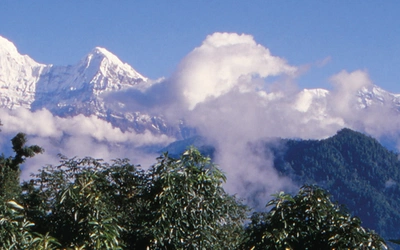
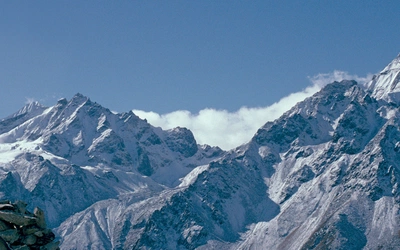
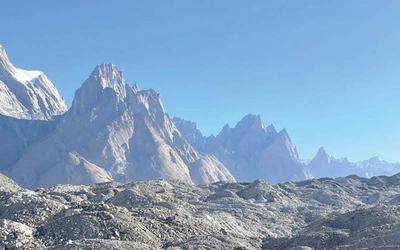
The most obvious difference is the sheer verticality of the terrain. In Uttarakhand, you can walk near Himalayan giants such as Nanda Devi (7816m), camp beside Shivling (6543m), or watch the light shift across peaks like Bethartoli and Dunagiri from the trail. These mountains are steeped in both mountaineering and local history, yet they are remarkably accessible in the sense that you can pause and really absorb their scale. That comes with responsibilities. You are trekking at a higher altitude, with all that means for health, equipment and the need for guides. But the routes in the guide were chosen to give people that experience without requiring very difficult or technical trekking.
How did you choose the eight treks in the guide, and are there any that stand out?
I wanted a range of treks that could do justice to Uttarakhand’s social, cultural and ecological diversity. I also wanted routes of different lengths, so someone could try a short three-day trek and then decide to do a longer one nearby. It was important to include iconic places such as Shivling, Gaumukh, and Nanda Devi, while also showcasing the more remote landscapes of Kumaon and giving people the chance to reach the glaciers.
Two routes stand out for me. Kedarkantha in winter is memorable because it combines winter trekking with a genuine high-mountain feel. The route from Sankri passes through forest and clearings before opening onto snow-covered slopes, with wide views across the Garhwal range. It can be cold and snowy, but the terrain usually remains manageable, making it a good introduction to winter trekking in a Himalayan setting.
The route to Milam Glacier in Kumaon is memorable for different reasons. You follow the old Indo-Tibetan trading route through the Johar Valley and still see traces of what was once a busy trade corridor. So you experience both the history of the route and the beauty of a remote valley, ending at the snout of the glacier. Your guides and porters are often from the area and may share their own stories of trade and migration.
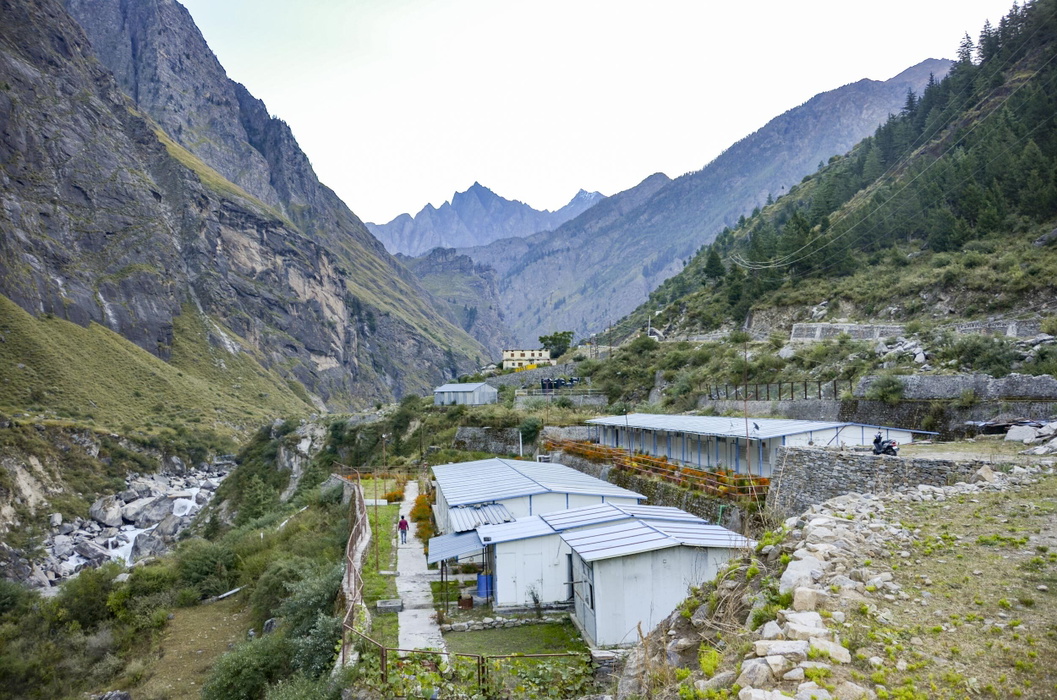
Uttarakhand is often called the ‘Abode of the Gods’. How much does that spiritual and cultural dimension shape the experience of trekking there?
That’s a good question. I don’t come from a religious tradition at all, but over the years I’ve come to appreciate the complexity of these spiritual connections because they help explain the many layers of connection people have with landscapes, mountains and species. In Uttarakhand, those dimensions are never far away. These are landscapes shaped over time by stories and beliefs, and you see that in temples along the trail, in offerings left in particular places, and in festivals that mark the mountain calendar. It is especially visible on the Char Dham Yatra, which links four high-altitude Hindu temples in Garhwal and remains a deeply spiritual journey for many people.
At the same time, much of this is embedded in everyday life and can easily be missed by visitors. There are the more formal pilgrimages, such as the Char Dham routes or the walk to Gaumukh and Tapovan beneath Shivling, but there are also quieter spiritual connections woven into the way people talk about seasons, forests, wildlife, and the mountains themselves. Even if you do not share that belief system, spending time in these places can deepen your understanding of how people relate to the landscapes they live in. As a practical aside, if you want relative solitude, it is worth checking the dates of major Hindu and Sikh festivals, because they can bring large numbers of pilgrims into certain parts of Uttarakhand.
The book includes routes to Gaumukh, the source of the Ganges, and into the Nanda Devi Sanctuary, both highly significant places. What is it like to walk in landscapes like these?
I first saw the spiritual significance of Gaumukh in a television documentary long before my first visit to India, in the late 1980s. Sadhus were bathing in the freezing water at the snout of the Gangotri Glacier, where the Ganges begins. To walk there yourself, that significance is everywhere. You see it in the temples, the offerings, the pilgrims and the conversations along the trail. Because it is an out-and-back route, people returning constantly pass those still heading up, sharing what they have seen and what the place means to them, which adds another layer to the experience.
Nanda Devi carries a different but equally powerful presence. The mountain is sacred, but the sanctuary is also a World Heritage landscape recognised for its biodiversity and conservation importance. The people from the surrounding villages, who are often your guides, have deep connections to these mountains and have played an active role in protecting them. Walking there with local guides means you are not just entering a dramatic landscape, you are hearing the histories of the place and the people who continue to care for it. That can make the experience feel far richer than simply reaching a viewpoint.
You write about trekking as a form of mutual exchange, where local guides, porters and villagers are central. In practice, what does that look like on the trail, and how can trekkers make sure they are contributing rather than simply taking?
I have always felt that an important part of a trek is not simply getting from A to B. It is learning how to move in a landscape rather than just through it, by paying attention, being patient and staying open to its different layers. Before even reaching the trail, that can mean reading a little about the area and understanding something of how local people see the mountains around them. It is very easy to see the peaks as the whole story, when in reality they are often the anchor for geological, ecological, cultural and political histories that are just as important.
On the trail, that openness often shows itself in small moments. It might be stopping for chai, sitting quietly for a while, or talking with your guide or porter about the places you are walking through. Some of the most valuable things I have learned have come from those conversations, or from simple exchanges with shopkeepers and villagers along the way. For me, chai and even a packet of Maggi noodles often become part of that alchemy, because they create space for warmth, conversation and understanding in a way that feels natural rather than staged.
I try to use local guides and porters whenever possible, because the economic benefit stays within the community, not only with the guide but with local farmers, shopkeepers and muleteers as well. Increasingly, some guides are developing specialist knowledge of birds, plants or local history, which can make the experience richer for both the visitor and the guide. If I use a trekking company, I always look at whether they employ locally, pay fairly and keep group sizes reasonable, because large groups can put real pressure on trails and campsites. Ideally, I want to come away feeling that I have learned something, contributed something and gained a better understanding that I can carry home with me.
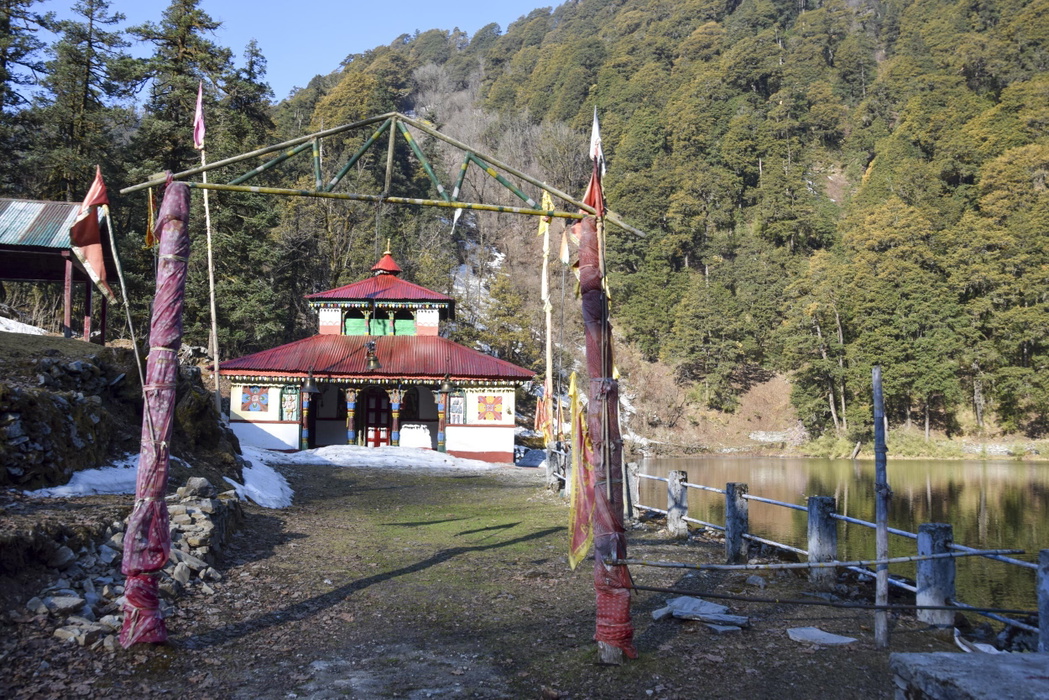
Uttarakhand is a high-mountain region undergoing environmental, cultural and economic change. What are you seeing on the ground, and how has that influenced how you write the guidebook?
Uttarakhand is changing, and those changes are visible on the ground in roads, routes, villages and the landscapes themselves. The most immediate change on a trek is infrastructure. Roads now reach further into valleys, shifting trailheads higher and compressing what used to be a gradual transition from road to village to forest to mountains. You see widened tracks, construction and sometimes unstable slopes where road cutting has altered the terrain. That changes the rhythm of a journey, how you reach a trek, how long you spend on it and how it unfolds. Even though the road now reaches higher, I often start where the old roadhead used to be. It adds time, but it also lets me experience those changes more directly.
We are also seeing increased visitor numbers in some areas, though not everywhere. Some routes feel busier, camps more concentrated and interactions more transactional than they once were, while other valleys remain remarkably quiet. Alongside that, environmental change sits in the background. Glaciers have receded, weather patterns can be less predictable and landslides can be more frequent in some places. Villages are changing too. The landscape is still very much lived in, but the balance between local life and visitor presence is shifting, which is not always negative, just different.
All of that shaped how I approached the guidebook. It became less about presenting the Himalayas as static or untouched and more about acknowledging that these are places of movement and change. Description on its own no longer felt enough because context matters. I also became more aware that a guidebook can influence where people go and how they experience a place, so I wanted the book to encourage people to notice not just the mountains, but the social and cultural layers that give these landscapes their meaning.
Altitude is one of the things that makes Himalayan trekking genuinely different from European mountain walking. What kind of preparation should walkers consider before heading to the Indian Himalayas?
Altitude can be a challenge. Fitness matters, but acclimatisation often matters more. Going slowly, staying well hydrated and listening to your body are essential. Some trekking operators check your oxygen levels and other signs at the end of each day, and more than once, I have been told to drink more because what felt like enough clearly was not. The mountains can be unforgiving if you ignore small warning signs.
Trekking in Uttarakhand can suit anyone with solid walking experience, as long as they choose a route that matches their ability and make sure they have the right support. For experienced UK hillwalkers, the skills are transferable, but the combination of altitude, remoteness and more changeable mountain weather means the experience can feel very different. Good equipment matters, but so does having a qualified local guide who can recognise when something is not right, and who feels comfortable enough to change plans if needed.
That is often what makes the biggest difference. A good guide is not just there to lead the way, but to watch how you are coping and make decisions that keep the trek safe. In the Indian Himalayas, preparation is not just physical. It is also about patience, flexibility and accepting that the mountain may decide the pace of the journey rather than you.
The best trekking seasons are spring and autumn. For someone planning their first trip, is there a time of year you would particularly recommend, and why?
The short answer is that it depends on the kind of experience you want. The main trekking seasons in Uttarakhand are late spring and autumn, when conditions are usually most stable. In spring, from March through to early June, snow has usually receded from many mid and high-altitude routes, trails are open and temperatures are manageable. It is a good time for classic valley and pass treks, with longer daylight hours and generally clear mornings. The downside is that it can also be one of the busier periods on the better-known routes, and by late June the monsoon starts to become a concern.
Autumn, from mid-September to early November, is often the best overall season for a first visit. The air is clearer after the monsoon, mountain views can be exceptional and conditions are usually dry and stable. Temperatures begin to drop at higher altitudes, but the trails are often quieter than in spring. It offers a very good balance between accessibility and a strong sense of being in the mountains. Winter can also be beautiful, especially on routes such as Kedarkantha, but it requires more careful planning, proper equipment and an understanding that many routes are closed for very good reasons.
Whatever the season, the most important thing is to match the timing to the kind of experience you want. Build in flexibility, allow time for acclimatisation and avoid planning every day too rigidly. The people who tend to enjoy Uttarakhand most are often the ones who leave a little room for the mountains to set the terms.
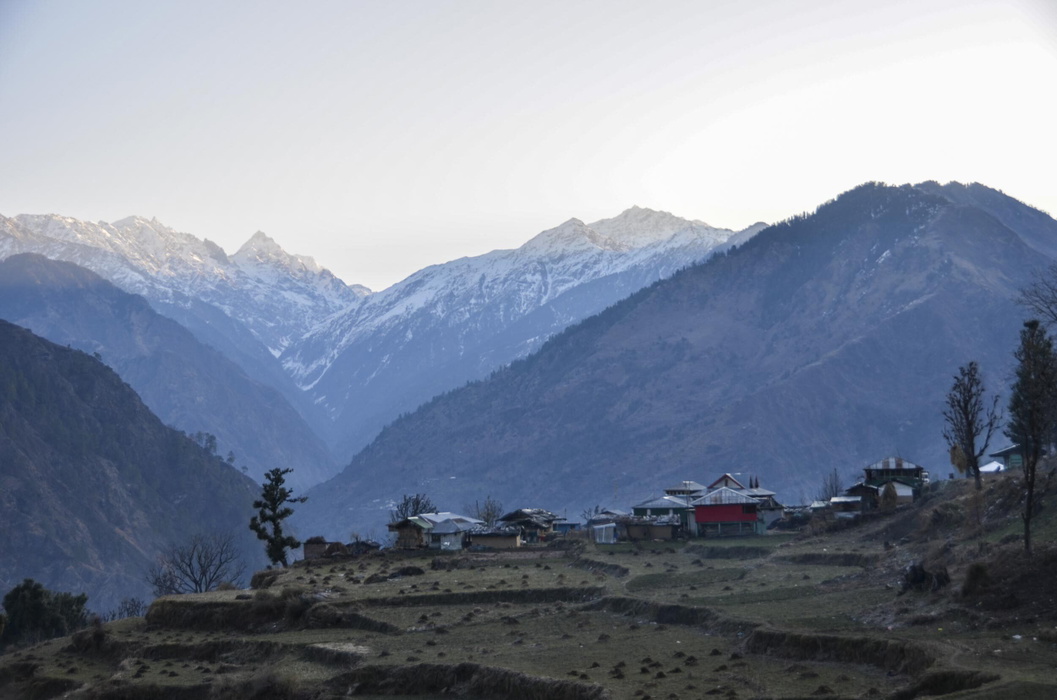
What do you wish you had known before your first serious Himalayan trek that you know now?
There are four things that stand out, though there is also plenty you simply absorb through the pores of your skin as you walk. First, the high mountains change your sense of scale. Distance, time and effort do not always behave as you expect. What looks close can still take hours to reach, and what feels like the final climb often is not. Patience becomes as important as pace. Second, weather and conditions can shift quickly. Plans are always provisional, and flexibility is not a disruption to the trek, it is part of the trek.
The third lesson was about gear. In the early days I carried far too much, but of course you do not want to be caught without enough. Finding that balance depends on the route, the season, the support you have and your own comfort level. Even now, I often take my own sleeping bag and mat even when they are provided, simply because that familiarity adds comfort and warmth. Lastly, I wish I had understood sooner that you are not walking through wilderness in the way many people imagine. You are trekking through villages, grazing routes and cultural spaces. Awareness and respect shape the experience, not only for the people who live there but for you as well, and that adds immeasurably to what the mountains can teach you.
If you could send a Cicerone reader who has done a few Alpine routes to just one of the eight treks in the book as their introduction to Uttarakhand, which would it be and why?
I am probably a little biased, but I would say Nanda Devi because it was the setting of my first visit to the Uttarakhand Himalayas. The trek has so much of what makes the region special. Nanda Devi itself becomes a constant presence as you follow the ridges, and there are moments when the surrounding mountains feel close enough to touch. From places like Lata Kharak you can stand and look towards Dunagiri and begin to understand the scale of the landscape in a very immediate way.
It also has the Rishi Ganga gorge, where you can look into that immense cut in the mountains and wonder how early explorers such as Shipton and Tilman ever found their way through towards the sanctuary beyond. For someone coming from the Alps, it offers not only spectacular mountain scenery but also a sense of history, culture and depth that makes it feel distinctly Himalayan from the very beginning.
Finally, how would you sum up the experience of trekking in the Indian Himalayas in just a few words?
I just need one: extraordinary.
Trekking in the Indian Himalayas
8 treks in Uttarakhand - Nanda Devi Sanctuary, Shivling and Gaumukh, the source of the Ganges
£24.95
Guidebook to 8 treks in the Uttarakhand Himalaya, including the Nanda Devi Sanctuary, Shivling and the source of the Ganges. Ranging from 3 to 8 days, these guided trekking routes take in verdant valleys, alpine meadows, peaks, glaciers, holy sites and national parks, with the chance to see protected species such as snow leopard and musk deer.
More informationAbout the author
Brian Furze (www.brianfurze.com) is an educator and advocate for community-based trekking whose work has included the Indian Himalaya, particularly Uttarakhand, for many years. Through this, Brian promotes trekking that strengthens community resilience and fosters meaningful connections between visitors, local communities and place. For him, trekking is a form of mutual exchange, where local guides, porters, villagers and their landscapes are central to the experience of trekkers, not just peripheral or background. He continues to contribute to conversations about characteristics of ethical travel in high mountain regions that are facing significant change.
Brian lives in southeast Australia on the Murray River, within an hour of the Australian Alps. He discovered trekking more than 30 years ago - long enough ago to remember the sometimes painful experience of external frame backpacks - and has trekked in various locations, but continues to be particularly drawn to the Himalaya and the mountains and national parks of Australia.