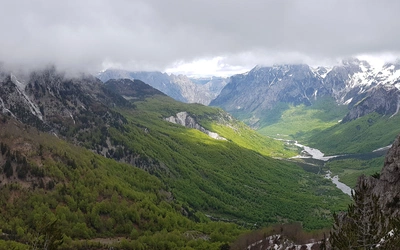
In conversation with Rudolf Abraham: Hiking the High Scardus Trail
Rudolf Abraham has been walking the mountains of the Balkans for more than two decades, and his guidebook, Hiking the High Scardus Trail, is the first to cover this remote 314km route through North Macedonia, Kosovo and Albania. The trail crosses the vast pastures of the Shar Mountains, climbs Mount Korab, the highest peak in both Albania and North Macedonia, and finishes at the UNESCO-listed Monastery of Saint Naum on the shores of Lake Ohrid. Here, we talk to Rudolf about how the trail came about, what sets it apart from the neighbouring Peaks of the Balkans, and the wildflowers, wildlife and hospitality that make it one of the last places in Europe where you can genuinely feel off the map.
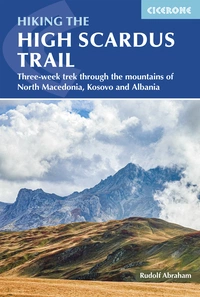
Hiking the High Scardus Trail
Three-week trek through the mountains of North Macedonia, Kosovo and Albania
£18.95
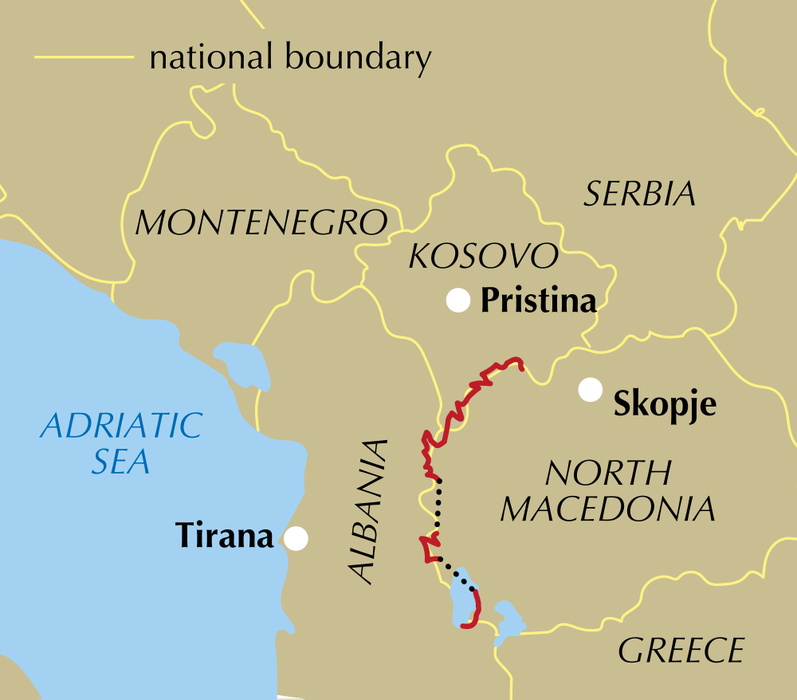
Guidebook to the High Scardus Trail, a long-distance hiking trail through the mountains of the Western Balkans, through the mountainous borderlands of North Macedonia, Kosovo and Albania. The trek covers 314km in 22 daily stages from the village of Staro Selo on the edge of the Sharr Planina national park to the monastery of Saint Naum on the shore of Lake Ohrid. Includes advice on transfers,...
More informationHiking the High Scardus Trail, quick facts:
Trail name: High Scardus Trail
Location: North Macedonia, Kosovo and Albania (Western Balkans)
Designation: Cross-border long-distance mountain trail
Distance: ~314 km / ~195 miles
Typical duration: ~3 weeks (22 stages)
Start: Staro Selo, North Macedonia (edge of the Shar Mountains)
End: Saint Naum Monastery, on Lake Ohrid
Route format: Linear long-distance mountain trek (with two transfer links between sections)
Stages: 22 stages, divided into 3 sections
Navigation: Remote mountain paths and border ridges; guidebook mapping and GPX recommended
Terrain: High mountain ridges, alpine pastures, cirques, valleys, gorges and border crest trails
Difficulty: Challenging – suited to experienced mountain trekkers comfortable in remote terrain
Best season: Late June to September (depending on snow conditions at altitude)
Accommodation: Village guesthouses, small mountain settlements and wild camping options
Hi Rudolf! The High Scardus Trail is still relatively new in its current form. What first interested you in the route, and how did it evolve into a long-distance trail?
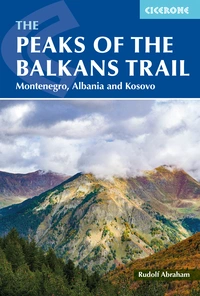
My love affair with that vaguely defined area we call the Balkans – including its sublimely beautiful, and still astonishingly unspoilt mountain regions, along with its spectacularly rich history and wonderful cuisine – goes back several decades. I first hiked some of the paths which would later become the Peaks of the Balkans more than 20 years ago, and writing a guidebook to that trail back in 2015 put me in touch with the people behind setting it up. It was many of those same people, among them local tour operators in the region, who established the High Scardus Trail, so it was inevitable that I heard about the new trail fairly early on, and perhaps equally inevitable that I would be completely captivated by it.
The motivation behind the two trails was similar: to establish a cross-border trail in a little-known yet fantastically beautiful part of the Balkans, which would not only make the area accessible to hikers, but would also establish a sustainable income for local guesthouses along the trail. With the rapidly increasing popularity of the Peaks of the Balkans, and the fact that a trail like this can ultimately only support so many hikers, it was hoped that the High Scardus Trail would offer another, comparable route in the region.
It's often compared with the Peaks of the Balkans Trail. How would you describe the High Scardus Trail in its own right, and what makes it different?
In one sense the comparison is reasonable, given that both trails were established by some of the same people, and also in the sense that, for many visitors at least, both trails lie in what must feel like a supremely unfamiliar corner of the Balkans, although they're still separated by some 100km or more. But the High Scardus Trail is longer, more remote, runs point-to-point, and is overall slightly more challenging than the Peaks of the Balkans, not to mention the obvious thing: that it includes a completely different country, North Macedonia.
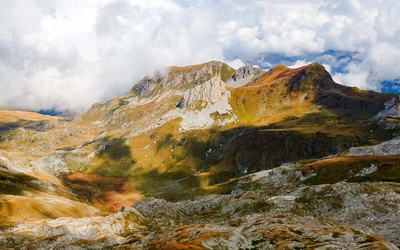
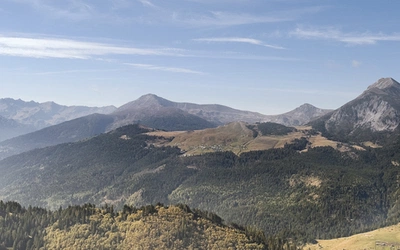
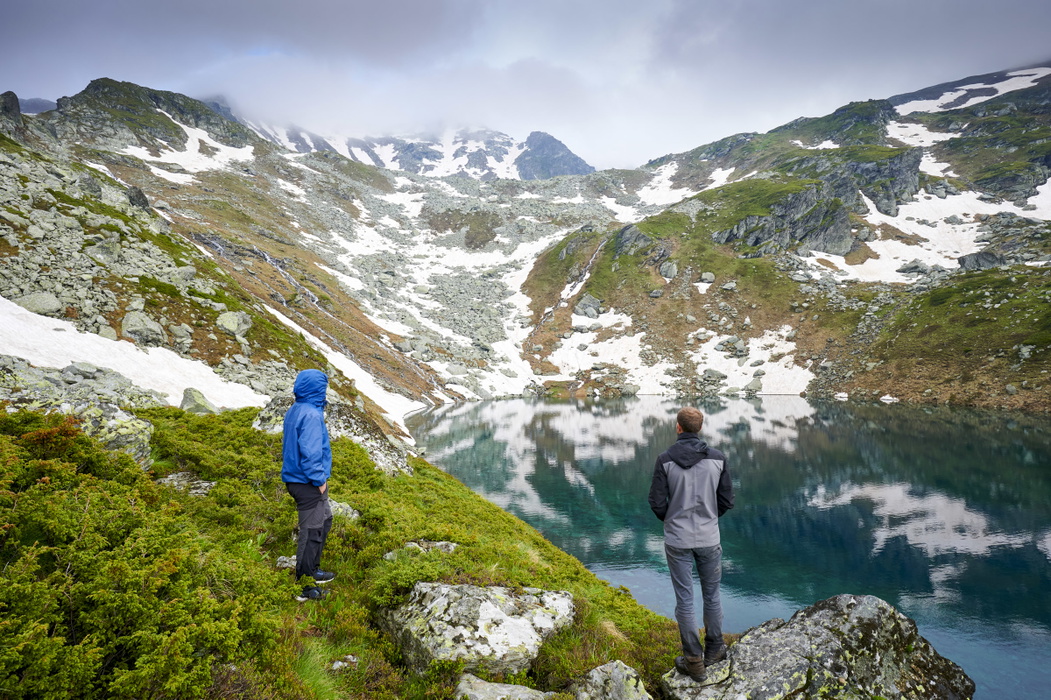
The landscapes along the HST are also quite distinct, and more varied. The vast swathes of mountain pasture which characterise the Shar Mountains, probably the largest intact area of high mountain pasture in Europe, are juxtaposed with jagged ridges, huge cirques, rushing streams, and several extremely photogenic lakes. Mt Korab, as the highest peak in Albania and North Macedonia, has an enormous presence about it. The ridge making up the border between Albania and North Macedonia across the Jablanica Mountains has a different feel again, while the final stages of the trail switch to limestone mountains between Lake Prespa and Lake Ohrid.
You've said the logistics can be more challenging than the Peaks of the Balkans. What are the main practical differences walkers need to be prepared for?
Peaks of the Balkans is already well established, and very popular, so you'll find plenty of other walkers on the trail, though still not in the numbers you'd expect on a popular trail in the Alps. On the other hand, the High Scardus Trail still has very few hikers. Trails are less clear in places along the High Scardus, largely because fewer people are walking them, but that is likely to change over time. Accommodation is also more limited in places, but more guesthouses will open as the trail becomes more established.
The trail passes through North Macedonia, Kosovo and Albania, with multiple border crossings requiring permits. How does that international dimension shape the experience of walking the route?
In many ways, despite all the border permits required, the High Scardus Trail blurs the line between international borders and different countries. When you're staying in an ethnic Albanian village on the North Macedonian side of the border, or a Bosnian-speaking village on the Kosovo side of the border, it doesn't necessarily feel as though you've crossed some invisible line or political boundary. There's a great deal of shared history across these mountainous borderlands.
How accessible is the High Scardus Trail for independent walkers, and at what point would you recommend using a local operator to help with planning and logistics?
Despite being very remote, the High Scardus Trail is still accessible for independent hikers, though a good guidebook is obviously recommended. I'd advise getting one of the recommended local tour operators to sort out the border permits; it's simply not worth the time and hassle trying to do it yourself. A self-guided trip with a local tour operator (the three I recommend are Shar Outdoors, SuperXplorers and Zbulo) will include airport pickup and transfers, plus overnight stays and meals, and baggage transfers.
The landscape is described as very different from the Alps, with far less infrastructure but a huge sense of openness. How would you characterise the terrain and walking environment?
There's certainly much, much less in the way of infrastructure than walkers may be used to when hiking a trail in the Alps. But the essentials are there: simple but welcoming accommodation, and good food, all of which is very reasonably priced. Plus there are knowledgeable local tour operators, should you prefer not to go it alone. As for the walking environment, yes, there's a real sense of open space here, and the scenery is absolutely breathtaking.
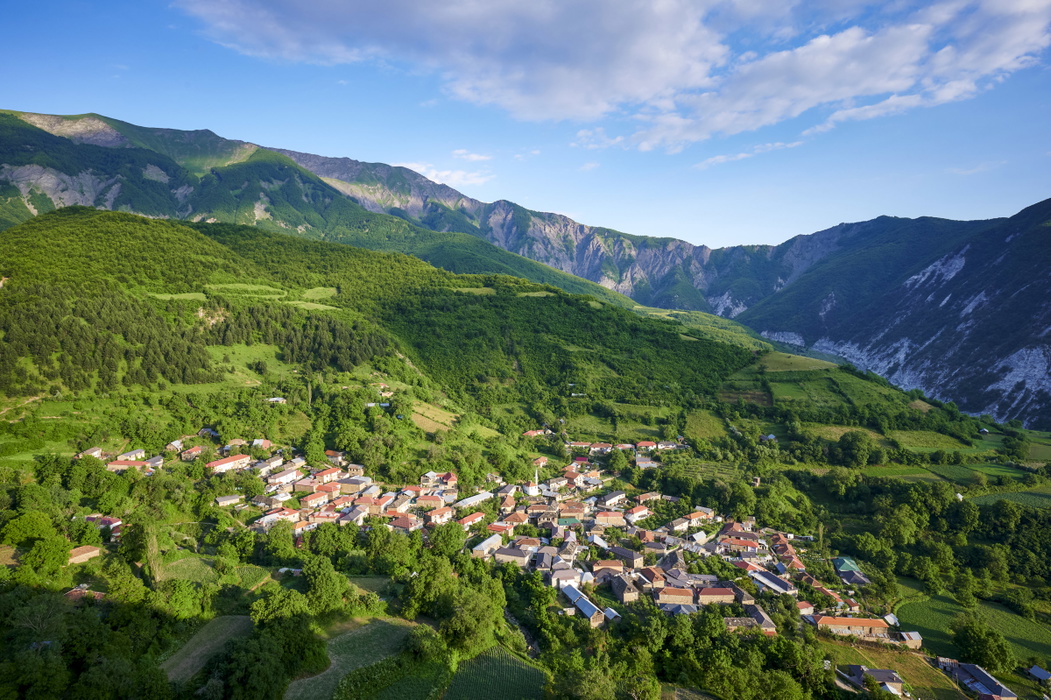
You mention that hospitality is one of the defining features of the trail. What stands out to you most about staying in guesthouses and meeting people along the way?
Staying in small local guesthouses, with delicious home-cooked food and a genuine feeling of hospitality, is definitely one of the highlights of hiking the High Scardus Trail. Staying and eating at local guesthouses feeds directly into the local economy, in a region which is economically very deprived. As an anecdote, re-walking some stages of the Peaks of the Balkans, I was told quite frankly by the owners of a small guesthouse on that trail, which I had recommended and now had a steady stream of guests, that I had quite literally changed their lives. I can't really imagine doing a route like this and not interacting in some way with the people who call this home.
Wildlife and wildflowers are a major highlight, particularly in early summer. What did you encounter on the trail that surprised you most in terms of nature?
I've simply never seen as many wildflowers as along the High Scardus Trail in early summer. I have a particularly vivid memory of meandering across vast open slopes on the way up to a high pass, with wildflowers in all directions, including a mind-boggling number of orchids, and on another day, passing the bright yellow flowers of Crocus scardicus popping up above the grass beside patches of melting snow. Another memorable moment was walking along the border ridge between North Macedonia and Albania, in the Jablanica Mountains, and being stopped in my tracks by the sight of a golden eagle gliding across my path, just a few metres in front of me.
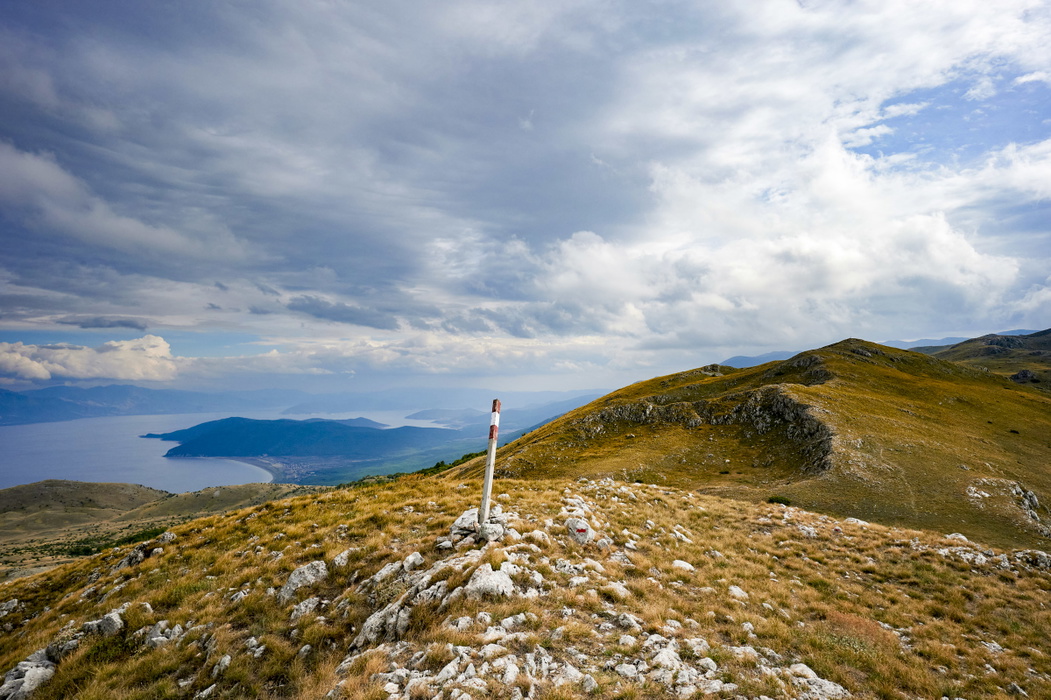
The route finishes near a UNESCO World Heritage Site, and has strong historical and cultural layers throughout. How important is that sense of heritage to the overall journey?
For most of its length, the High Scardus Trail is quite far removed from any even moderately sized towns, so until the very end of the trail, there are few prominent heritage sites along the route. But the sense of history and heritage is still there, whether it's a cluster of traditional stone houses, a small church or mosque, or the concrete bunkers of the Hoxha era, dotted across remote stretches of mountain scenery. Along with the UNESCO-listed Monastery of St Naum at the end of the trail, there's the St Jovan Bigorski Monastery at the end of Stage 14, and culture-rich Prizren makes a very worthwhile detour and overnight stay, from the end of Stage 3 or Stage 4.
Is there a particular stage or section that best captures the spirit of the High Scardus Trail?
It's hard to pick just one stage, since the character of the landscape changes significantly along the route. Only the feeling of remoteness is constant across the three main areas explored by the trail. As a section, it's the first two weeks, traversing the Shar Mountains, which best capture the spirit of the High Scardus Trail, and are the most memorable. For me, it's one of the few places in Europe where I've genuinely felt like I somehow stepped off the map.
Thank you, Rudolf.
Hiking the High Scardus Trail
Three-week trek through the mountains of North Macedonia, Kosovo and Albania
£18.95
Guidebook to the High Scardus Trail, a long-distance hiking trail through the mountains of the Western Balkans, through the mountainous borderlands of North Macedonia, Kosovo and Albania. The trek covers 314km in 22 daily stages from the village of Staro Selo on the edge of the Sharr Planina national park to the monastery of Saint Naum on the shore of Lake Ohrid. Includes advice on transfers,...
More informationAbout Rudolf Abraham, guidebook author:
Rudolf Abraham is an award-winning travel writer, photographer and guidebook author specialising in central and southeast Europe. He is the author of over 15 books, including the first English-language hiking guidebooks to the Peaks of the Balkans Trail in Montenegro, Albania and Kosovo, the Juliana Trail in Slovenia and the Alpe Adria Trail in Austria, Slovenia and Italy, and has contributed to many more. His work is published widely in magazines. He first visited the mountainous borderlands of Albania in 2006, having already explored the mountains of Montenegro while living and working in nearby Croatia in the late 1990s, and has been a frequent visitor to this endlessly beautiful and little-known corner of Europe ever since.