Five of the best short walks in Northumberland
Whether you're based in Wooler for a Cheviot Hills escape, exploring the coast near Alnwick, or heading out from Rothbury into the Simonside Hills, Northumberland rewards walkers with some of the most varied and uncrowded scenery in England. These five short walks, each under three hours, with no difficult terrain or complicated navigation, are taken from the Cicerone guidebook 15 Short Walks in Northumberland: Wooler, Rothbury, Alnwick and the Coast by award-winning outdoor writer Vivienne Crow. Date updated: March 2026. Guidebook updated: July 2024.

15 Short Walks in Northumberland: Wooler, Rothbury, Alnwick and the coast
£9.95
Discover 15 of the best short walks around Wooler, Rothbury, Alnwick and the Northumberland coast. Each comes with easy-to-read Ordnance Survey maps, route description and lots of images, plus information on beauty spots and refreshment stops. No challenging terrain or complicated navigation means walks can be enjoyed by everyone.
More informationFrom an Iron Age hillfort with sweeping views across the Cheviots to a coastal path past Dunstanburgh Castle, each route showcases a different side of this vast and sparsely populated county. All are suitable for families, beginners, most accessible by public transport, and each comes with practical information on parking, refreshment stops, and what to expect underfoot.
Whether you're visiting in spring for the upland waders, summer for the long coastal evenings, or autumn for the moorland colours, Northumberland's walking season stretches year-round, and these five routes are the ideal place to start.
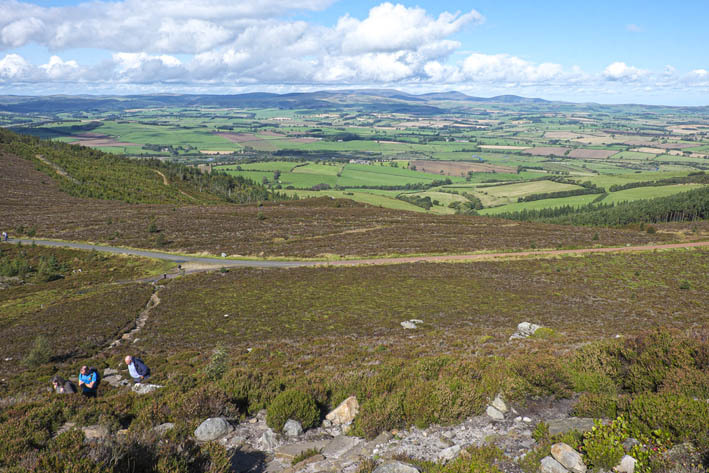
Simonside Hills
Summary: A long route including forest, prehistoric features and an amazing ridge walk
Start/finish: Market Cross, Rothbury
Time: 4hr 15min
Distance: 13.5 km (8½ miles)
Climb: 470m
After a steady climb from Rothbury, first alongside the River Coquet, then through conifer forest, the route reaches the base of the Simonside ridge, one of the most dramatic viewpoints in the Northumberland National Park. A short but steep pull onto the ridge reveals a line of sculpted sandstone crags shaped over millennia by wind and weather, with far-reaching views south across the Coquet Valley and north towards the Cheviot Hills.
The constructed ridge path makes for easy, exhilarating walking along this exposed line of high ground. On the descent back to Rothbury, the route passes close to an Iron Age hill fort and examples of prehistoric cup-and-ring 'rock art', some of the finest Neolithic carvings in northern England, dating back over 4,000 years.
Best time to visit: Spring and summer for clear ridge views; the forest is atmospheric in all seasons. Avoid the ridge in poor visibility without navigation experience.
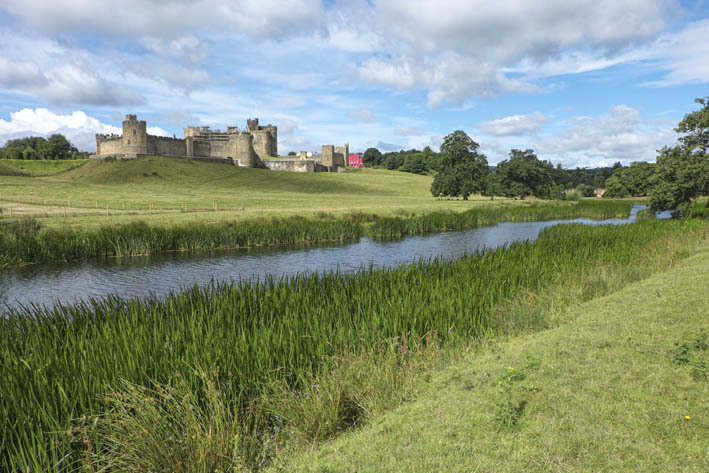
Alnwick Castle and riverside
Summary: Stroll through an historic town and riverside meadows with castle views
Start/finish: Bondgate Tower, Alnwick
Time: 1hr 15min
Distance: 4km (2½ miles)
Climb: 50m
Starting at the Bondgate Tower, one of the last surviving sections of the 15th-century town walls, the route threads through cobbled alleyways before dropping down to the riverside meadows known as the Pastures, landscaped in the 18th century by Capability Brown.
This gentle, flat riverside section is one of the finest short walks in Alnwick, with Alnwick Castle (the 11th-century seat of the Duke and Duchess of Northumberland, and one of the largest inhabited castles in England) reflected in the River Aln ahead of you. Watch out for otters, herons and the occasional sea trout along this stretch of river.
The route returns through the town, passing the entrance to the Alnwick Garden. Built on the site of the original 1750 garden by the current Duchess of Northumberland, it's well worth extending your day to visit, as is the castle itself, which is open to the public from spring through autumn.
Best time to visit: Year-round; the riverside meadows are especially beautiful in spring. The castle and Alnwick Garden are open April to October — check opening times before your visit.
"For anyone who loves the countryside, Northumberland has lots to offer, from seemingly endless beaches to rolling hills and sprawling forests. For those who want to see wildlife, there’s everything here from seals to the waders who return to the uplands every spring. If it’s history you’re after, the artefacts scattered throughout the county cover a massive time span – from prehistoric ‘rock art’ and medieval castles to the coastal defences built in World War 2."
— - Vivienne Crow, 15 Short Walks in Northumberland
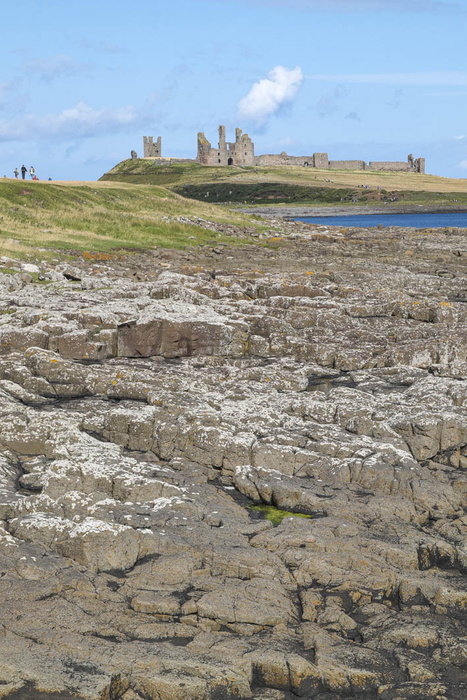
Craster and Dunstanburgh Castle
Summary: Amble around a gorgeous fishing village before walking to clifftop castle ruins
Start/finish: Craster
Time: 1hr 45min
Distance: 5.5km (3½ miles)
Climb: 50m
Few walks on the Northumberland coast match the drama of the approach to Dunstanburgh Castle. This easy there-and-back route begins with a short exploration of Craster — a traditional Northumberland fishing village still famous for its oak-smoked kippers — before joining the coastal path north towards one of the most strikingly located castle ruins in England.
Dunstanburgh Castle was built in 1313 by the Earl of Lancaster and stands on a basalt promontory above the North Sea, its gatehouse towers visible for miles along the coast. Almost constantly battered by waves on three sides, the 14th-century ruins are managed by English Heritage and are open to visitors throughout the year. In a county full of impressive castles, at Alnwick, Bamburgh and Warkworth, Dunstanburgh is arguably the most elemental in terms of setting, rising sheer from the rocky shoreline with no road access whatsoever.
The coastal path itself passes through the Dunstanburgh Castle Golf Course and alongside a stretch of coastline rich in seabirds, including fulmars, kittiwakes and eider ducks. Grey seals are regularly spotted offshore.
Best time to visit: Year-round, though the castle is especially atmospheric in winter when the coastline is at its wildest. Summer brings the best seabird activity. Check English Heritage opening times before visiting.
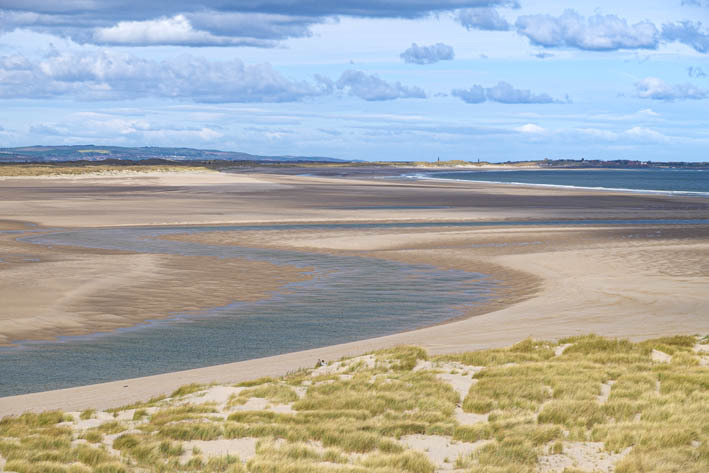
Bamburgh
Summary: Gentle coastal walking with far-reaching views and lots of historical interest
Start/finish: Bowling Green, Bamburgh
Time: 2hr
Distance: 7km (4¼ miles)
Climb: 90m
Starting in the historic village of Bamburgh, this walk passes beneath the towering walls of Bamburgh Castle — a royal fortress with origins in the 6th century, rebuilt by the Normans and restored to its current dramatic form in the 19th century — before joining the England Coast Path north along the shoreline.
As the route rounds Budle Point, the views open up dramatically across Budle Bay and the vast expanse of Ross Back Sands, one of Northumberland's most remote and unspoilt beaches, with Holy Island (Lindisfarne) clearly visible across the water on a clear day. This stretch of coastline sits within the Northumberland Coast National Landscape and is an important habitat for wading birds and wildfowl, including curlew, oystercatcher and pink-footed geese in winter.
The return route climbs gently inland before following quiet country lanes and farmland paths back to Bamburgh. Back in the village, the RNLI Grace Darling Museum tells the story of the 23-year-old lighthouse keeper's daughter who helped rescue survivors from the stricken steamship Forfarshire in 1838 — one of the most celebrated acts of heroism in British maritime history. Entry is free.
Best time to visit: Year-round; winter brings spectacular wildfowl and often the clearest views to Holy Island. Summer is ideal for combining the walk with a visit to Bamburgh Castle, which is open to the public April to October.
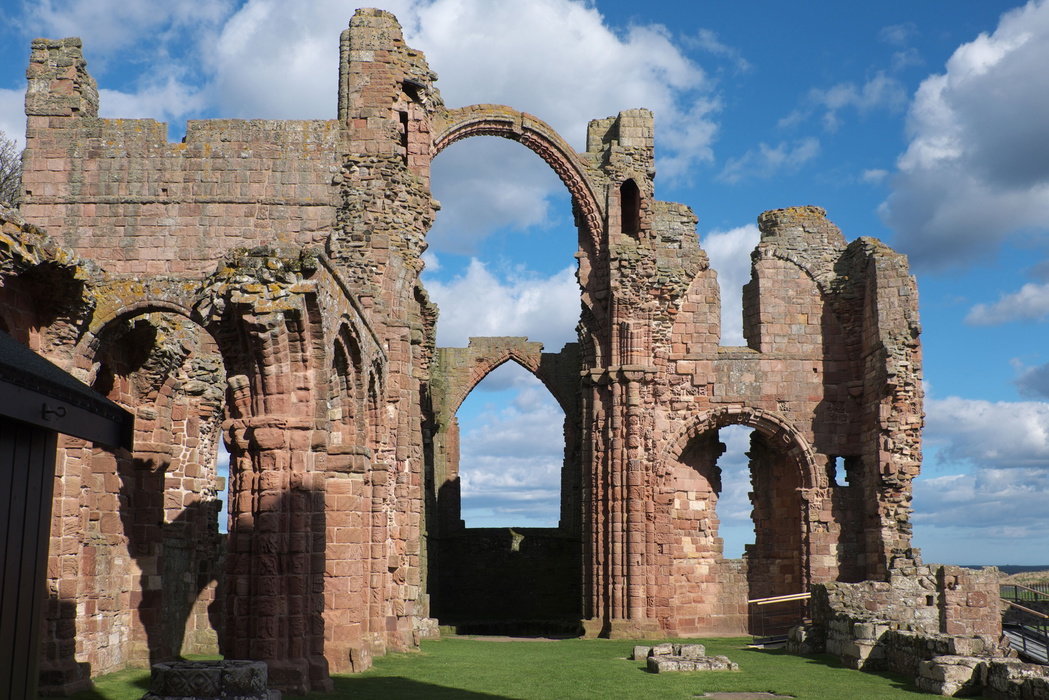
Holy Island (Lindisfarne)
Summary: Enjoy an easy walk around this fascinating tidal island rich with wildlife and historic interest
Start/finish: Holy Island (Lindisfarne)
Time:1hr 45min
Distance: 6km (3¾ miles)
Climb: 25m
Known to Christians since the 7th century as the cradle of Christianity in England, and to wildlife lovers as one of the finest birdwatching sites on the entire east coast, Lindisfarne rewards those who venture beyond the village with some of the most quietly spectacular scenery in Northumberland.
This circular route begins by exploring the wilder, less-visited northern end of the island, where extensive sand dune systems shelter a mosaic of grassland and beach rich in wildlife. The dunes are a designated National Nature Reserve, home to breeding eider ducks. Known locally as Cuddy's ducks after St Cuthbert, who famously protected them here in the 7th century, they share the reserve with grey seals, wading birds and in winter, vast flocks of pale-bellied Brent geese arriving from the Arctic.
The route then takes in the two landmarks that draw most visitors to the island. Lindisfarne Priory was founded in 635 AD and is one of the most significant early Christian sites in Britain, managed by English Heritage and open year-round. Lindisfarne Castle is a 16th-century fort perched on a rocky outcrop above the harbour, converted into a private house by Edwin Lutyens in 1903 and now owned by the National Trust.
Tidal crossing: The Holy Island causeway must be crossed within the safe crossing window. Never attempt to cross outside these times.
Best time to visit: Autumn and winter bring spectacular migratory wildfowl and waders. Spring is ideal for breeding seabirds and wildflowers in the dunes. The island is busiest in summer, so arrive early to secure parking and avoid crowds at the priory and castle.
15 Short Walks in Northumberland: Wooler, Rothbury, Alnwick and the coast
£9.95
Discover 15 of the best short walks around Wooler, Rothbury, Alnwick and the Northumberland coast. Each comes with easy-to-read Ordnance Survey maps, route description and lots of images, plus information on beauty spots and refreshment stops. No challenging terrain or complicated navigation means walks can be enjoyed by everyone.
More informationYou'll find all these routes (and 10 more) in our guide to Short Walks in Northumberland: Wooler, Rothbury, Alnwick and the coast, which contains clear route descriptions, OS mapping, plus facilities, parking and highlights for every route. Each route has been carefully selected to showcase the best of the area. No challenging terrain or complicated navigation means the walks can be enjoyed by everyone.
About Vivienne Crow, author of Short Walks in Northumberland: Wooler, Rothbury, Alnwick and the coast
Vivienne Crow is an award-winning outdoor writer and photographer. A journalist since 1990, she went freelance in 2002, focusing her energies on the activities she loves most - hiking, writing, travel and photography. Based in north Cumbria since 1996, she has written more than 20 popular walking guidebooks. Her words and images also regularly appear in national and regional magazines. Vivienne is a member of the Outdoor Writers and Photographers Guild.