In conversation with Adrian Trendall: climbing the Skye Munros
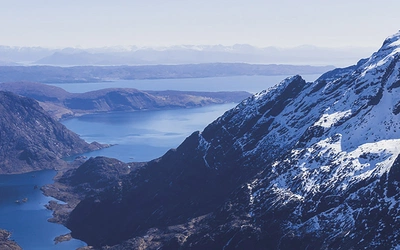
Few mountain groups in Britain inspire quite the same mix of awe, excitement and apprehension as the Black Cuillin. Rising abruptly from the sea on the Isle of Skye, their jagged skyline promises scrambling, exposure and adventure in concentrated form. Here, we catch up with Adrian Trendall, who authors our Skye Murnos guide and brings decades of experience to these iconic peaks. We talk about what first drew him to the Cuillin, why the Inaccessible Pinnacle is not quite as terrifying as its name suggests, and what he hopes walkers and climbers will gain from their own Skye Munros journey.
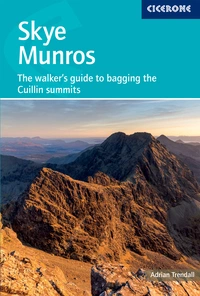
Skye Munros
The walker's guide to bagging the Cuillin summits
£19.95
This 2-volume set provides all the information required to complete the Skye Munros. Strategy, gear, training, navigation and logistics are covered. A lightweight second guidebook gives the hiker detailed maps, topos and route description for the Cuillin Munros and Tops.
More information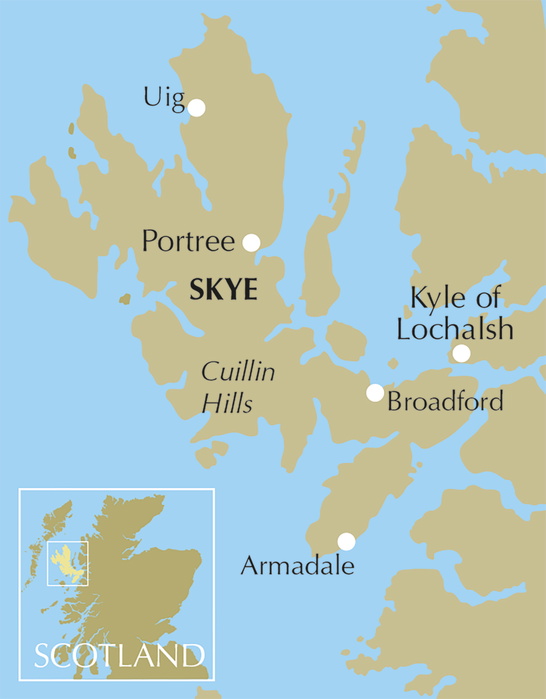
Hi Adrian, the Skye Munros look spectacular! What first drew you to the Cuillin and the Skye Munros? What keeps you coming back?
Like many climbers, it was the lure of traversing the Cuillin Ridge that first drew me to Skye. The Skye Munros are unique both geographically and technically. The Cuillin is Scotland’s premier mountain range, with jagged peaks rising straight out of the sea. I love the proximity to the sea, which adds another dimension, but it also makes the mountains tough since any ascent starts pretty much from sea level. Technically, the Skye Munros are in a class of their own. They involve not just walking and scrambling, but graded rock climbs and an abseil or two. There is a huge amount of variety packed into a very small geographical area.
Could you tell us a bit about your mountaineering background and how it led to writing Skye Munros? How do the Skye Munros compare to other mountains you’ve climbed in Scotland or abroad?
I have a fairly traditional background in climbing. Hill walking led to rock climbing, which led to winter climbing, and then to mountaineering abroad. Some personal highlights would include the Old Man of Hoy, new routes on the chalk cliffs near Dover, north faces in the Alps and big walls in Yosemite. As I have grown older, the appeal of chasing ever harder routes and higher grades has lessened. Now I much prefer the challenge and adventure offered by the peaks we can see from our house in Glen Brittle.
The Cuillin encompasses all I want from mountains and, best of all, most of it is within walking distance of our home. For a long time I had a vision of producing three books about the Cuillin. The first was The Cuillin Ridge Traverse guidebook, which proved so successful that I set to work on Skye Munros. Watch this space for the third volume.
For someone planning their first Cuillin trip, what are the key things they should know before they go?
Definitely do not underestimate the challenge. Distances and heights may seem small compared to mountains on the mainland, but remember:
- All the routes start at sea level, so these are honest Munros with no driving halfway to the summit.
- The terrain is tough and unforgiving and requires constant concentration.
- Many of the routes are massively exposed, with big cliffs and steep drops.
Do your research and know what you are letting yourself in for. But do not be put off. Many people just like you have successfully bagged the Cuillin Munros.
What are your top insider tips for tackling the Cuillin safely and with confidence?
- Do your research so you arrive on Skye well prepared. Obviously, read Skye Munros, but also join All Things Cuillin, a Facebook group where you will find lots of information and current updates on conditions and weather.
- Do not be put off by horrendous YouTube videos or tales from those who have had epics or failures in the Cuillin.
- Arrive as fit as possible, both physically and mentally. If you have not scrambled, climbed or abseiled before, consider getting along to a local climbing wall and picking up some key skills.
- Bring walking poles. They are great, especially for the descents, but make sure they are light and pack down small for the scrambling sections.
Are there any specific routes or peaks in the Cuillin that you would always recommend, and why?
Sgurr nan Gillean is a personal favourite for three reasons.
First, it looks like the stylised mountain a child might draw.
Second, there is no easy route to the summit. Even the so-called tourist route is a full-on scramble, with some very exposed moves near the top.
Third, the summit itself is very small, with steep drops all around and amazing views in every direction.
The Inaccessible Pinnacle is a classic climb and another personal favourite which I never tire of. The climbing is mostly on huge holds, the exposure increases with height, and then you have an abseil descent. Part of the appeal of the In Pinn for me is helping so many people achieve something they once thought impossible.
The Inaccessible Pinnacle has a fearsome reputation. How would you describe it to someone who is nervous but keen to try it?
Just remember that probably thousands of people have been in a similar position, dreaded the ascent, yet managed to do it. You will be protected by a rope and most of the climbing is on really big holds. The crux moves are short and the rope will be directly above you, so your leader or guide can give you a lot of reassurance and even help by keeping the rope tight. Get along to a climbing wall, learn the basics and learn to put your trust in the equipment.
What is your favourite day in the Cuillin, and what makes it special?
Any day in the Cuillin is special to me, so it never really feels like I am going to work. The perfect day would be to ascend a peak in the dark and be on the summit for sunrise when there is a temperature inversion. Being above the clouds as the sun rises and a new day begins feels very special and almost of religious intensity.
Are there any classic mistakes you see people make on the hills, and how can they avoid them?
I see lots of people on dangerous terrain such as the Great Stone Chute either without helmets or with helmets strapped to their packs. There is so much loose rock in the Cuillin, and the name stone chute is a bit of a giveaway. Modern helmets are light and comfortable, so please wear one. People also blindly follow GPS devices and phones with little or no reference to a paper map, and have few navigation skills should their electronics fail. The Cuillin is unforgiving of poor navigation, so get practising.
How do you balance technical challenge with enjoyment when climbing demanding peaks?
I see the technical challenge as part of the enjoyment. Challenges are all relative. A while ago I helped a friend who is a paramedic climb one of the more awkward Munros. We discussed each other’s jobs and I said how stressful hers must be. She replied, “It can be stressful, but nowhere near as much as yours must be.” If all the peaks were simple walks, either I would be out of a job or the work would be nowhere near as interesting.
Finally, what do you hope readers take away from Skye Munros once they have used your guide and climbed these peaks?
The best thing readers could take away would be a real sense of satisfaction from having bagged the Skye Munros. It would be immensely satisfying for me to bump into happy readers in the Cuillin. On an almost daily basis, I meet owners of The Cuillin Ridge Traverse guidebook and it is very gratifying to be thanked for writing it.
Please read the book, arrive on Skye as well prepared as you can be, and good luck with all your Munro endeavours. And do let me know if the book was useful!
Thank you.
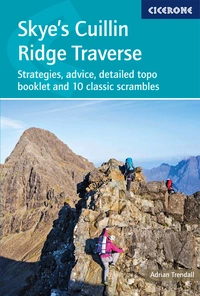
Skye's Cuillin Ridge Traverse
Strategies, advice, detailed topo booklet and 10 classic scrambles
£19.95
This 2-volume set provides all the information required to complete the main ridge traverse on Skye's Black Cuillin. Strategy, gear, training, navigation and logistics are covered. 10 classic Cuillin scrambles are described to use as practice routes. A lightweight second guidebook gives the scrambler detailed maps, topos and route description for the ridge traverse itself.
More information