In conversation with Dan Hughes: Walking the Gloucestershire Way
We caught up with Dan Hughes about his new guidebook, Walking the Gloucestershire Way, covering the 152km (94 mile) trail from Chepstow to Tewkesbury. Dan has walked the footpaths of Gloucestershire for 30 years and is a Cotswold Volunteer Warden, so there's nobody better placed to talk us through a route that takes in the Forest of Dean, the Severn Vale and the Cotswolds in one week-long journey. Read on for his thoughts on the walk's variety, its accessibility, and why it makes such a good first long-distance trail.
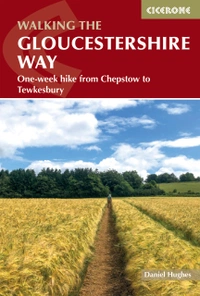
Walking the Gloucestershire Way
One-week hike from Chepstow to Tewkesbury
£16.95
Guidebook to walking the 94-mile Gloucestershire Way, a one-week hike for walkers of all abilities from Chepstow to Tewkesbury passing through the Forest of Dean, Severn Valley and the Cotswolds. Suggested itineraries over 5 to 10 days. Includes accommodation guide.
More information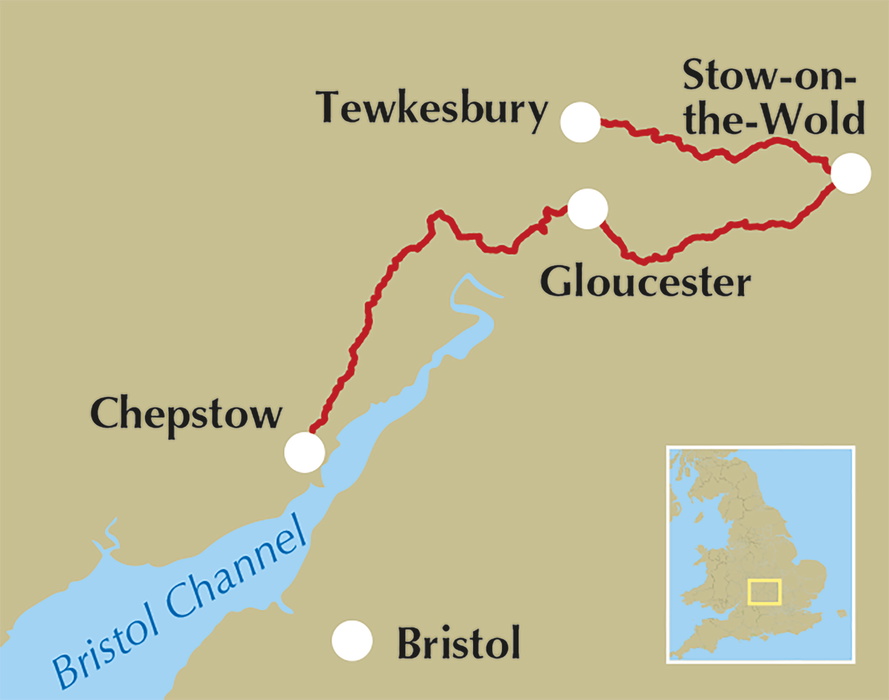
Hi Dan! You've been walking the footpaths of Gloucestershire for 30 years. How did that familiarity with the county shape the way you approached writing this guide?
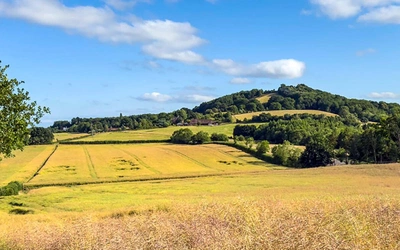
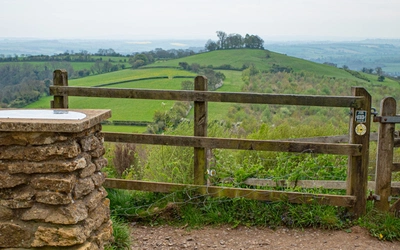
Gloucestershire is quintessential England: a gentle, rolling landscape of hills and settlements linked by ancient footpaths. There's such variety of scenery here, from the glades of ancient woodland in the Forest of Dean to the big skies and open views of the Cotswolds. I wanted to celebrate this landscape, but also to stress how accessible it is to all of us. The public rights of way in this country are one of its greatest and most enduring assets. They're here for everyone, and I hope this guide encourages all sorts of people to pull on some stout footwear and get out there.
It's certainly not mandatory to complete the whole walk in one go, and I hope the book provides inspiration for plenty of short afternoon strolls too. But for anyone wanting a bit of an adventure and a test of their mettle, the Gloucestershire Way is a good entry point into long-distance walking.
The Gloucestershire Way crosses the Cotswold Way on the escarpment but stays entirely within the county. What does it offer that the Cotswold Way doesn't?
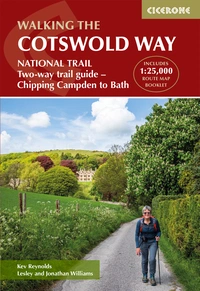
I'm not going to be rude about the Cotswold Way; I note the guidebook's authors are your boss and mine! Seriously, it's a fabulous walk, and rightly a National Trail. It follows the western Cotswold escarpment for its whole length, so it boasts ever-changing, spectacular views west over the Severn Vale. My favourite stretches are probably the beech woodlands around Stroud.
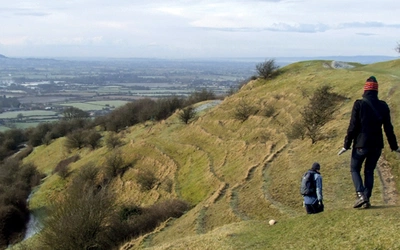
The Gloucestershire Way was designed to showcase the variety of landscapes across the county: Forest and Vale and High Blue Hill. It starts in the Forest of Dean, where there are two good days of walking through ancient woodland, then crosses the Severn Vale and passes close to Gloucester Cathedral, which in my (admittedly biased) view is world-beatingly wonderful. Like the Cotswold Way, it ascends the escarpment at Crickley Hill, but from there it heads east into the Cotswolds, taking in lovely villages and hamlets, and the gorgeous rolling hills and big skies that don't really feature on much of the Cotswold Way.
The route takes in three very different landscapes — the Forest of Dean, the Severn Vale and the Cotswolds. How does the walk change as you move through each one?
It does exactly what it says on the tin. Much of the Forest of Dean is through ancient woodland, which is lovely and changeable through the seasons, and feels a bit magical in places. But this sits right alongside plenty of evidence of the old industries here, particularly mining and forestry; tungsten steel was first made in the Forest, though the foundries have long since fallen silent. Geology buffs will notice the changing colours underfoot too, red sandstone towards the edges and limestone in the middle. The Forest is quite hilly, and offers some of the best views of the Severn's serpentine coils as it heads for the sea.
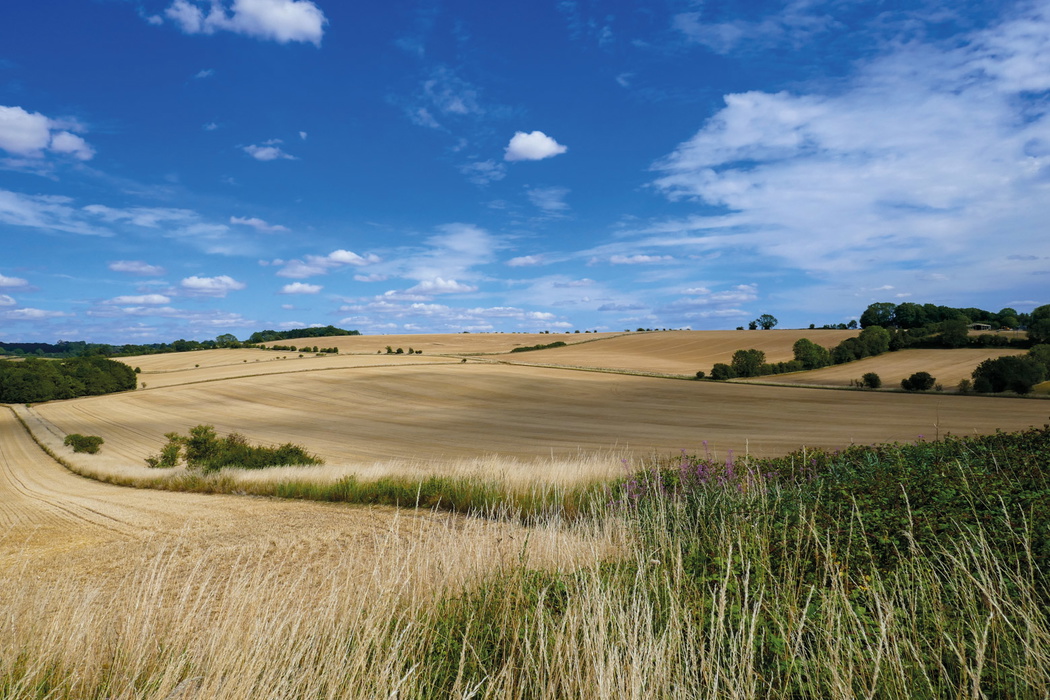
By contrast, the Severn Vale is flat, a mixed landscape of countryside and suburbs, and the Gloucestershire Way has found a path that's mostly through quiet farmland. The Cotswolds start pretty abruptly with the ascent of Crickley Hill, once again opening up fine views. Moving into the countryside beyond, there are limestone walls, mixed farming and numerous settlements, and the Way crosses a series of small ridges that let the walker experience wide open country with plenty of features and points of interest.
Is there a stage or section of the route you'd point walkers to first if they only had a weekend to spare?
That's like asking which is my favourite child! But if you push me, the first day from Chepstow involves a steady ascent with views opening up as you go, and I'm always captivated by the Severn away to the right, looping and meandering below. From there you enter the Forest of Dean, and some of the stretches through the woodland become enclosed, secretive and magical.
In the Cotswolds, the section from Shurdington, up and over the escarpment and into the Cotswolds proper (currently having negotiated the A417 roadworks, a minor irritant), is lovely. You really get the feeling of this gentle landscape, and visit some chocolate-box villages along the way.
The trail's been established since 1996 and is well signposted throughout. Who do you think this walk is best suited to — is it a good option for someone attempting their first long-distance trail?
This is a very democratic walk, in that anyone who can navigate a stile (and sadly there are still a lot of these) can do it. There are certainly some hills, but this isn't a walk with natural hazards, or where you're a long way from civilisation. If you want remoteness, danger and an absence of people, you'll need to look elsewhere. This is a journey where human impact and settlement is everywhere, and it's mostly benign, often sitting well within the landscape.
The walk contains plenty of interest: charming villages, ancient churches, a breathtaking cathedral, a gem of an abbey, lots of pubs, and constantly changing countryside and scenery. As the guide notes, arranging accommodation along the way is a bit of a challenge, but it can be done. It's certainly a good option as a first long-distance trail: shortish, not too demanding, and with plenty of opportunities to pause somewhere interesting.
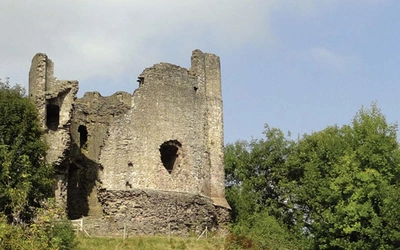
Gloucester Cathedral and Chepstow Castle both feature prominently along the route. Is there a lesser-known landmark or spot on the way you think deserves more attention?
Tewkesbury Abbey, right at the end, is unquestionably worth a visit, and if you get your timings right, you could arrive in Tewkesbury for the medieval festival, which normally takes place in early summer. There are two heritage railways on the route too, if that's your fancy. A significant but walkable detour is YHA St Briavels Castle, a fortified small castle complete with moat. On the route itself, May Hill, right at the end of the Forest of Dean, is pretty special, with 360-degree views taking in the Severn, the Brecon hills and the Cotswold escarpment.
The book's title borrows a line from FW Harvey's poem — "Forest and Vale and High Blue Hill." What is it about that phrase that captures the spirit of the walk for you?
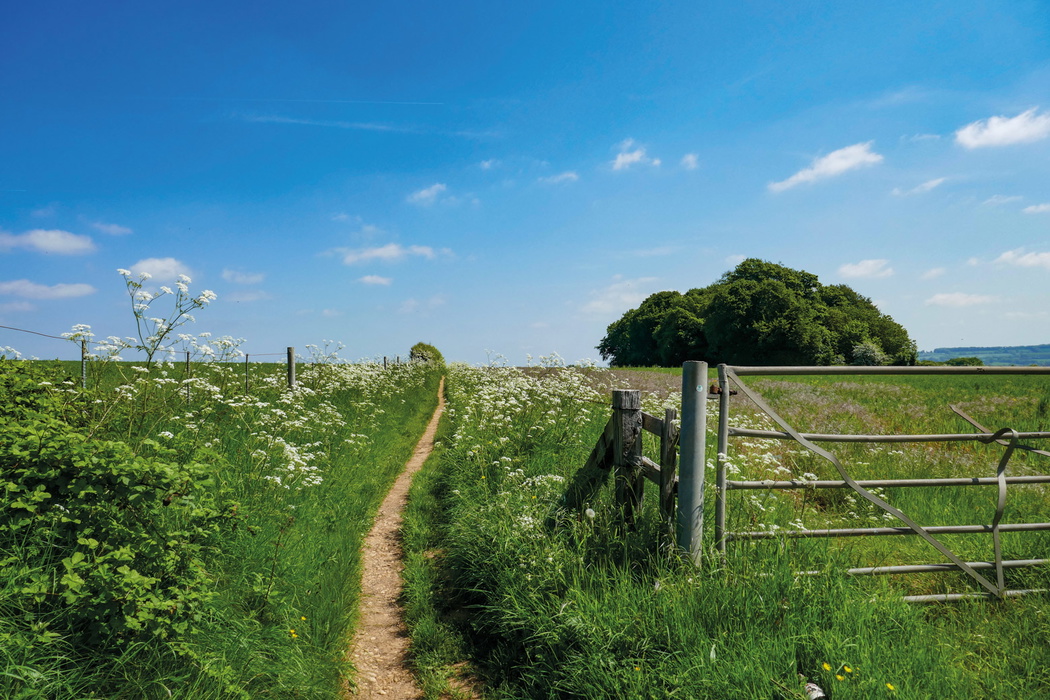
This poem, which you can read at Project Gutenberg, was the original inspiration for Gerry Stewart, who designed the Way back in the 1990s. It discusses the many and varied virtues of Gloucestershire and its people. Gerry wanted a walk that explored the different parts of the county and recognised the changing landscapes a walker could encounter, and the Way stays very true to that idea, seeking to showcase Gloucestershire and explore all of its different aspects.
The route is well served by transport, with stations at both Chepstow and Tewkesbury and several more along the way. How much does that accessibility change the kind of trip someone can plan?
The guidebook lists the buses that augment the train services, and my advice is that a bit of planning goes a long way; all the relevant service providers and their websites are listed in the guide. I recently walked the GR20 in Corsica, where there aren't too many options to call it a day and head out. Only your own feet get you home from there. The Gloucestershire Way is far less rugged, and has plenty of transport options, so choosing to walk only certain sections is perfectly feasible, provided you plan, plan, plan. It might even be possible to end a day's walk with a ride on a heritage train, since there are two lines along the Way.
With stiles throughout but nothing technically demanding, how would you describe the walk to someone who's never tackled a long-distance trail before?
Any effort sustained over a week or more is demanding, so being reasonably fit beforehand will make the walk more enjoyable. That's not Everest-conquering fitness, just recent experience of walking 20km a day over undulating terrain. You'll also benefit from having worn-in footwear you're confident will stay comfortable after a long day's trek. There's a good deal of signage along the Way, but it can't be relied on entirely, so walkers need to be able to navigate the route using the guide, maps, or both.
Although the walk doesn't contain hazards or significantly challenging terrain, you will be tired at the end of each day. My advice is to resist the temptation to go for big-distance days and stick to around 15–25km. My rule for long-distance walking is that there are no rules: deviating from the route, taking short-cuts, skipping a section to make up time, having a day off, or avoiding a stretch that doesn't appeal are all perfectly fine.
You've mentioned there's potential to bring a younger crowd to this walk. Is there anything about the route, or how you've written about it, that you think will appeal to a new generation of walkers?
I'm hoping that the Cicerone "offer" of a book, an eBook or an app will cater for a wider demographic. I suspect most people will use their phone as their primary navigational device, so suggestions on how a novice can make the best of that are included in the guide. As I've said, this is certainly not one long plod, but a route with plenty of features and opportunities to stop walking and do something else. Many of the villages and towns along the way are very pretty, and begging to be photographed and shared. You don't have to be too lucky to meet with iconic animals either, like deer, boar, adders or llamas. The walk could even work as a challenge for Duke of Edinburgh expeditions, as it has a reasonable amount of navigational demand while regularly meeting roads where candidates can be checked in.
Thank you.
Walking the Gloucestershire Way
One-week hike from Chepstow to Tewkesbury
£16.95
Guidebook to walking the 94-mile Gloucestershire Way, a one-week hike for walkers of all abilities from Chepstow to Tewkesbury passing through the Forest of Dean, Severn Valley and the Cotswolds. Suggested itineraries over 5 to 10 days. Includes accommodation guide.
More informationDaniel Hughes has been walking the footpaths of Gloucestershire for the past 30 years. He is a Cotswold Volunteer Warden and has more recently become active in promoting some of the long-distance paths that cross the county. Now semi-retired, Daniel is able to combine his care and support for his local paths with hiking and cycling trips further afield in Europe.