In conversation with Jonathan Williams: trekking in the Bernese Oberland
The Bernese Oberland is home to some of the most iconic mountain scenery in Europe, from the legendary north face of the Eiger to the flower-filled alps above Grindelwald and Lauterbrunnen. Jonathan Williams has been exploring the mountains of Switzerland for over 25 years, and his new Cicerone guidebook brings together five multi-day treks across the region, from the nine-stage Tour of the Jungfrau Region to the tough and remote Tour of the Wildhorn. We asked him what keeps drawing him back, and what walkers planning their first Alpine trek should know. (Last updated: June 2026 · Guidebook edition: First edition, June 2026)
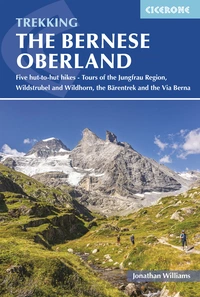
Trekking in the Bernese Oberland
Five hut-to-hut hikes - Tours of the Jungfrau Region, Wildstrubel and Wildhorn, the Bärentrek and the Via Berna
£18.95
Guidebook to hiking in Switzerland's Bernese Oberland, featuring five alpine treks of four to nine days. The Tours of Jungfrau, Baren, Via Berna, Wildstrubel and Wildhorn explore the region's breathtaking mountains, valleys, lakes, glaciers and waterfalls. Includes accommodation listings and trip planning advice.
More informationTrekking in the Bernese Oberland, quick facts:
- Routes covered: 5 multi-day alpine treks
- Distances: 61km (Wildhorn, 4 stages) to 127km (Wildstrubel, 6 stages)
- Duration: 4 to 9 days per trek
- Stages: 4 to 9 per trek (alternatives available on several routes)
- High point: Schilthorn summit, approx. 2970m (TJR Stage 5); Hohtürli 2778m (Bärentrek Stage 5)
- Difficulty: Moderate to Challenging (TJR and Via Berna: moderate; Bärentrek, Wildstrubel, Wildhorn: fairly tough)
- Terrain: Well-signed mountain paths, high passes, alpine meadows, glacier-view ridges, deep glacial valleys; no alpine (blue-sign) paths used
- Waymark: Red/white Bergwanderweg throughout; Bärentrek follows Via Alpina National Route 1; Via Berna follows Swiss National Route 38
- Accommodation: Mountain huts (Hütten), traditional mountain inns, valley hotels
- Best season: Mid-June to late September; September recommended for settled weather and quieter trails
- Guidebook: Trekking in the Bernese Oberland by Jonathan Williams, First edition, £18.95 printed / £18.95 eBook
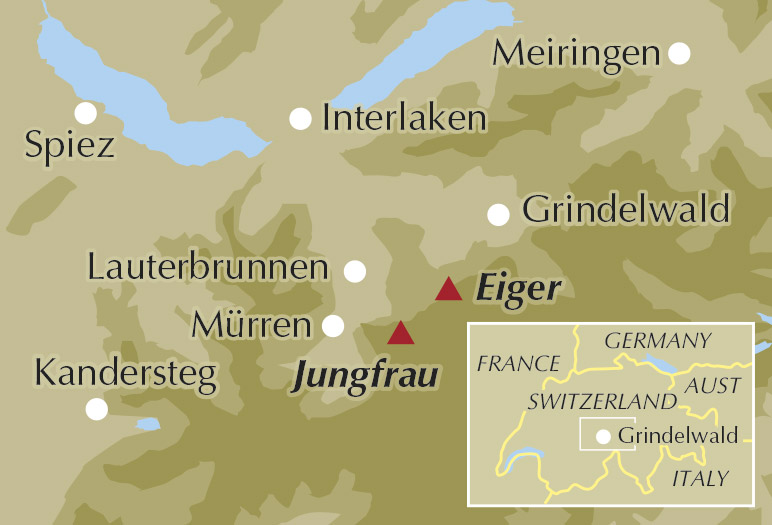
Hi Jonathan! What first drew you to the Bernese Oberland, and what makes it such a special region for trekking?
I think we first visited in about 1982, on the way back north after a week in Arolla, and have been back many times since. The grandeur of the mountains, combined with the ease of travel around, the ability to quickly leave the fairly busy valleys, and the number and quality of facilities, all come together to make it attractive for trekking. The mountain views are some of the best in the Alps.
There is also the 'romance', if that is the right word, of the climbs on the Eiger, and the many books about it, most of which I had read. Our first trek there was in the early 2000s, when we covered much of the Tour of the Jungfrau Region before diverting west to make a high crossing towards Montreux, taking in parts of the Tours of the Wildstrubel and Wildhorn. For the guide, we spent a good part of the summers between 2021 and 2025 exploring, writing, photographing and checking.
Beyond the famous views, like the Eiger, the Jungfraujoch and Piz Gloria, what's a moment or place in these treks that most walkers won't have heard of but shouldn't miss?
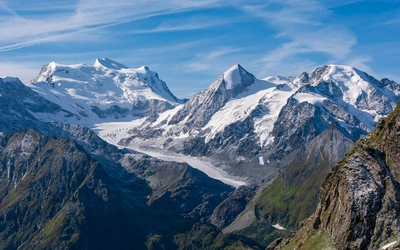
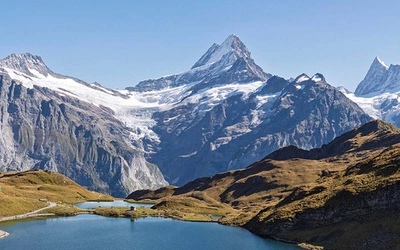
The summit of the tiny peak of Männlichen sits almost right in the centre of the central Oberland, between the cable cars from Grindelwald and Wengen. On a good day you can see the whole of the Tour of the Jungfrau Region and much of the Bärentrek and Via Berna.
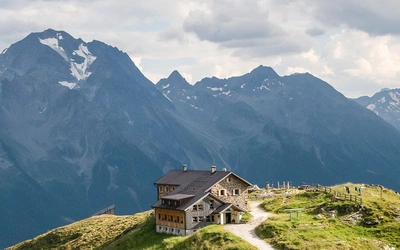
But there are many, and I would add: sunset from the Faulhorn, with the alpenglow on the face of the Wetterhorn and Schreckhorn; the quiet, antique berghauses at Obersteinberg, with limited electricity and crashing waterfalls only a few hours from the valley; and likewise the mornings and nights at the Berghaus Bäregg, tucked away almost behind the Eiger under the icy wall of the Fiescherwand.
The book covers five very different treks, from the nine-stage Tour of the Jungfrau Region to the compact four-day Wildhorn circuit. How did you decide which routes best represented the region?
We wanted to show the full range of walking in the Oberland, which stretches from the Sustenpass in the east almost as far as the Diablerets in the west. It was important to include routes in the east, as they are less well-known areas with quieter days and some tremendous walking.
For walkers unfamiliar with the Bernese Oberland, how would you describe the character of trekking here compared with other Alpine regions?
There are plenty of similarities and differences. We have the normal high-quality Swiss waymarking and well-managed trails. Compared with, say, the Haute Route, you are nearer the valleys and facilities, so access, rest and resupply are rather easier. As a long-standing and very accessible mountain tourist region, the mountain inn or Berghaus is very much the norm rather than a pure hut experience. In the central area around Grindelwald and Lauterbrunnen, it's probably a bit busier than many other areas, always excepting Chamonix and Zermatt, but this really only applies to a few honeypot sections, even near the spectacular Lauterbrunnen waterfalls.
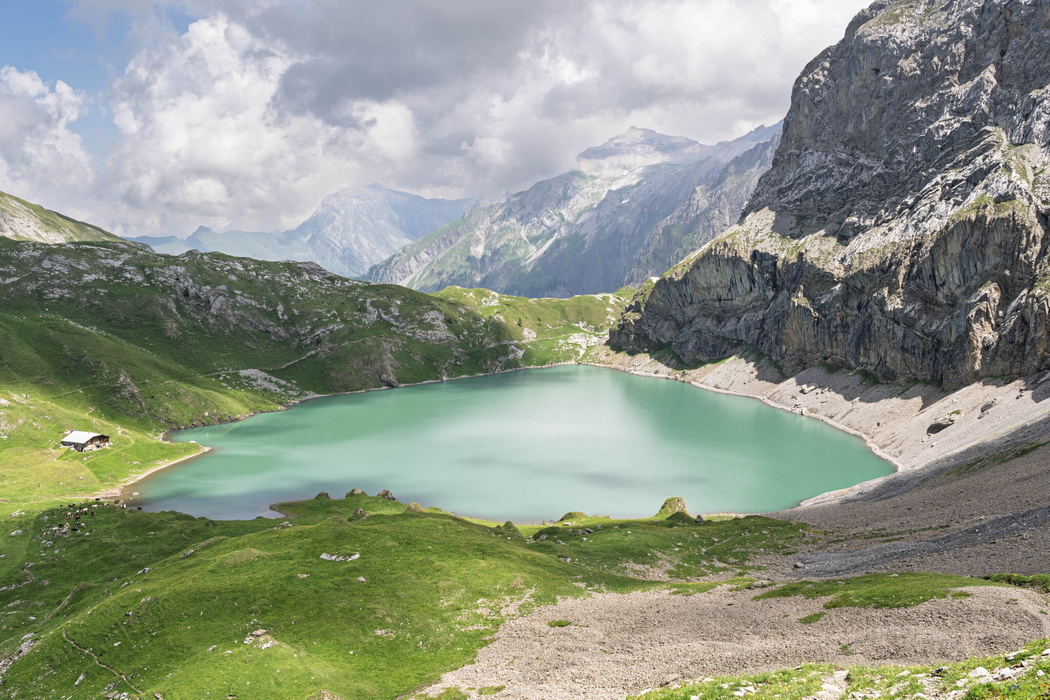
You recommend September as the best month to go. What does the Bernese Oberland look and feel like in September compared to the busy summer peak, and what are the trade-offs?
The weather is slightly cooler than in July and August, and often more settled, with less humidity and fewer afternoon thunderstorms. It can be a bit quieter as Europe's schools have gone back, which also attracts trekkers who can avoid the holiday period.
The trade-off is that there is often a storm in the month. Those who have run the Ultra Trail du Mont Blanc (UTMB) will be familiar with this. We encountered a substantial snowstorm one year quite early in September, with close to a metre of snow, which meant we had to change our route. After that, though, the weather became settled and glorious through October as well. The disadvantage of October is that some accommodation starts to close. But snowfall like that, whilst possible, is rare.
Later in the month, the weather cools, so mornings can be fresher, though almost always a good walking temperature. The cooler weather brings the first hints of autumn, with alpenrose and myrtille turning yellow and red, adding a splash of colour to the hillsides.
You describe the Tour of the Jungfrau Region as a better introduction to Alpine trekking for first-timers than the Tour du Mont Blanc. What makes it more accessible for newcomers?
To start with, it is shorter at 120km compared with 170km, with similar reductions in ascent and descent, making it an easier walk over a similar 10 to 11-day period. There is much more access to valleys if needed, and in several places mountain railways and cable cars can ease the passage for the tired trekker, whereas the TMB has very few of them.
If you seek out some of the sterner sections on the TJR, such as the Trümmelbach falls day or the crossing over the Schilthorn, some of the walking matches the TMB level of challenge. But these are avoidable if you wish. And it's not a pure hut experience either. The TMB is mainly huts, often in dorms; on the TJR, you often have the opportunity to take a small room, which will appeal to those who don't immediately want the full hut experience.
The Wildstrubel and Wildhorn tours are much less well known than the Jungfrau routes. Why do you think they've been overlooked, and what are walkers missing out on?
The TJR and other central routes are based around Grindelwald, Lauterbrunnen, Wengen and Mürren, places that will already be familiar to many trekkers. The Wildhorn and Wildstrubel routes are a day or more's trekking to the west, above Kandersteg, Adelboden and Lenk, which are less known but still very attractive places. So it's really a question of familiarity.
There is also the fact that these are harder routes overall. The days on the Wildstrubel are long, and there are fewer places to stay outside the stage ends. The Tour of the Wildhorn takes in some genuinely remote and tough sections further west above Lenk.
What both routes have that others don't is that they cross to the south side of the Bernese Alps into the Canton of Valais, which is strictly speaking outside the Oberland, so we strayed somewhat. But those southern slopes offer stunning views across the Rhône Valley to the Pennine Alps. It's possible, likely even, to see Mont Blanc, the Grand Combin, Dent Blanche, Weisshorn, Matterhorn, Dom and Monte Rosa.
What were the biggest challenges in creating a guidebook for a region with so many route options, mountain lifts and interconnected trails?
There were two big discussion points. Firstly, exactly what to put in, and just as difficult, what to leave out. We wanted enough in the guide so trekkers can really explore the region, but not an overwhelming amount. The project had to be manageable for both the author and the trekker.
Secondly, Cicerone has long had a guide to the Tour of the Jungfrau Region, and we debated long and hard whether to keep that as a separate book and cover other trails in a new guide. In the end, we decided to give a complete picture of trekking in the Bernese Oberland in one volume.
In terms of detail, a big challenge was including enough options for the trekker without making it so many that it all became confusing. There are many trails and quite a few cable cars, so there is ample scope to mix and match. I hope we have struck a balance.
You've written a 'Top 10 Tips for a First-Time Alpine Trekker' in the book. What's your single top piece of advice for someone preparing for their first multi-day trek in the Alps?
Just one? There are ten things in the book, such as pack light, expect to change plans and so on.
But if I had to bring one thing through, it would be to embrace the experience and everything it brings. Go safely, take the time you need, take it all in, meet other trekkers on the trail and in the hotels, berghauses and huts. Inspect the Eiger with wonder, but relish the quieter trails in the east, west and south of the region.
If you had to choose one stage or viewpoint that truly captures the magic of the Bernese Oberland, which would it be and why?
There are so many. Just one? I insist on two.
For a walk, the TJR and Via Berna stage from Schynige Platte over the Faulhorn to the Bachsee and First cable car station, with dramatic mountain views throughout, is one of the best walks in Switzerland, a country with many great walks.
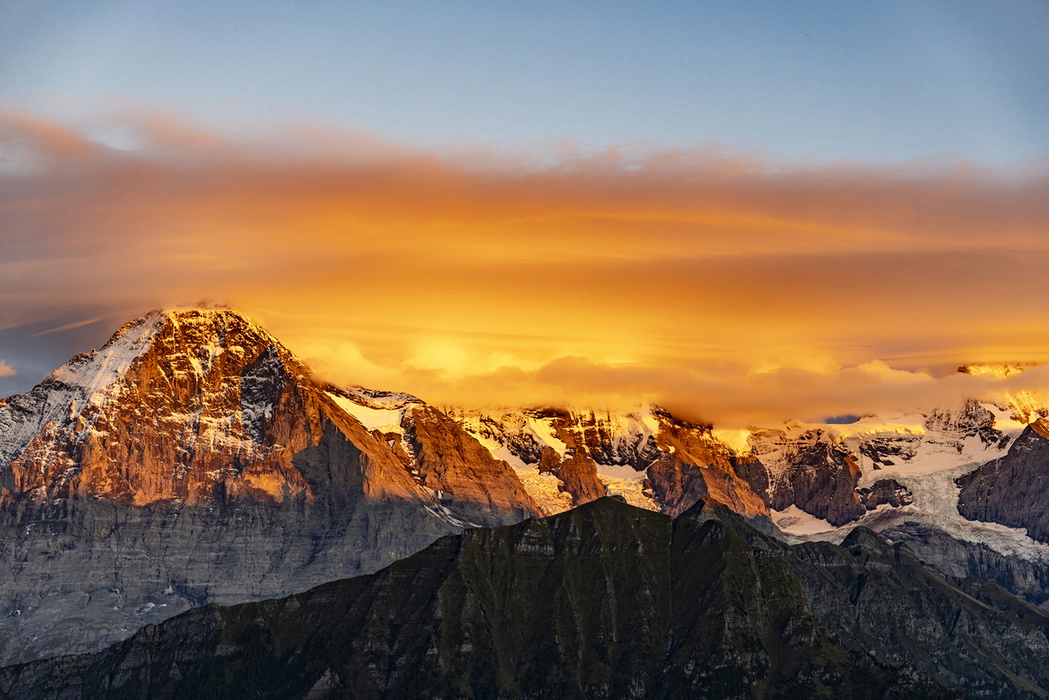
For a viewpoint, the view from Schynige Platte. The old Edwardian inn sits at the top of a nineteenth-century cog railway from the valley. The view extends almost 360°, from the Wetterhorn past the Eiger and Jungfrau to the peaks above Mürren, and round to the Thunersee and Brienzersee cradling Interlaken. At sunset, a deep orange glow bathes the rocky and icy faces, spreading from the east as the sun sets and bringing darkness into the valleys, with range after range etched against the emerging starlight.
Trekking in the Bernese Oberland
Five hut-to-hut hikes - Tours of the Jungfrau Region, Wildstrubel and Wildhorn, the Bärentrek and the Via Berna
£18.95
Guidebook to hiking in Switzerland's Bernese Oberland, featuring five alpine treks of four to nine days. The Tours of Jungfrau, Baren, Via Berna, Wildstrubel and Wildhorn explore the region's breathtaking mountains, valleys, lakes, glaciers and waterfalls. Includes accommodation listings and trip planning advice.
More informationAbout Jonathan Williams, guidebook author:
Jonathan Williams has been Cicerone's publisher and managing director for over 20 years, working with authors and leading the development of the range. He has been exploring the mountains of Switzerland for over 25 years. In his new life as an author, he and Lesley Williams have made the Swiss and French Alps their special subject, exploring treks and walks throughout the mountains and turning this passion into a series of guides. In researching this guide, Jonathan has been exploring the Bernese Oberland over the past four years.