
 New
New
Isle of Man Coastal Path
Raad Ny Foillan - The Way of the Gull; The Millennium and Herring Ways


Isle of Man Coastal Path
Raad Ny Foillan - The Way of the Gull; The Millennium and Herring Ways
Guidebook to walking the Isle of Man coastal path, the Way of the Gull (Raad ny Foillan). The spectacular 98 mile route is described in 9 stages and takes in beaches, glens, moorland and rugged sea cliffs. It can be walked in around a week. Two other paths, the Millennium Way (Bayr ny Ree) and the Herring Way (Bayr ny Skeddan), are also described.Experience the Isle of Man Coastal Path, Raad ny Foillan – The Way of the Gull, a 98-mile (158km) footpath that traces the entire coastline of the Isle of Man. This spectacular long-distance trail reveals a landscape of dramatic sea cliffs, sweeping beaches, wild dunes, and the rugged mountain moorlands of the island’s interior.
Ideal for walkers of all abilities, the Isle of Man Coastal Path can be completed comfortably in a week or enjoyed at a more leisurely pace, and the comprehensive Cicerone guidebook divides the circular route into 9 flexible daily stages.
For those seeking further adventure, the island also offers the 23-mile (37km) Millennium Way, following the ancient route of Manx kings from Ramsey to Castletown, and the 14-mile (22km) Herring Way, which links Peel to Castletown via the hills of the interior. These trails can be combined for a variety of routes, from gentle day walks to challenging multi-day expeditions.
- Step-by-step descriptions, sketch maps, and comprehensive planning information help make the most of your journey on the Isle of Man Coastal Path.
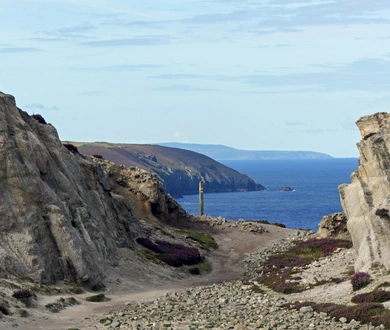
- Traverse a rich variety of scenery, from the rugged cliffs and moorlands of the south, to the tranquil glens, beaches, and dunes of the north. The Isle of Man Coastal Path route passes through nature reserves, along disused railways, and past scenes steeped in history and folklore.
- Explore picturesque centres on the Isle of Man including Douglas, Ramsey, Castletown, Port Erin, Peel, and Kirk Michael, with information on accommodation, public transport, tide times, local services, and places of interest highlighted to enhance your walk.
- The best times to tackle the Isle of Man Coastal Path are in May and June, when sunshine is plentiful, and rainfall is low, while the holiday season ensures facilities are open, but the trails remain peaceful even at the height of summer.
- A glossary of Manx terms, insights into local geology and history, and a useful bibliography are included to enrich your understanding and enjoyment of the Isle of Man.
Plan your Isle of Man Coastal Path adventure with confidence and immerse yourself in the island’s wild beauty, rich heritage, and unique culture, guided every step of the way by the definitive Cicerone guidebook.
Isle of Man Coastal Path – Quick Facts
Trail name: Isle of Man Coastal Path — Raad ny Foillan (The Way of the Gull)
Location: Isle of Man (circuit around the island), UK Crown Dependency
Total distance: ~98 miles / ~158 km
Typical duration: Around one week for the full circuit
Trail description: Circular route described in 9 stages; longest ~15.5 miles, shortest ~7 miles
Other routes in guidebook: Millennium Way (~23 miles) and Herring Way (~14 miles) also described
Difficulty: Mainly coastal walking with short ups and downs (general fitness helpful)
Terrain: Beaches, glens, moorland and rugged sea cliffs
Navigation / mapping: GPX file download available for the Isle of Man Coastal Path
Best season: Year-round walking possible; spring and summer typically best weather
Author Highlight
“In this guide I have tried to introduce you to the Isle of Man as I have found it. As a child I visited Douglas, and returned with memories of seaside bustle, horse-drawn trams and a lurching ship. My next visit was as a rock climber, which f ixed memories of a rugged coastline with crags and secret coves. A third visit was as a backpacker to walk the coastal path. It far exceeded my expectations. After the first day, gone were all my preconceived ideas of roaring motorbikes sporting dayglow stickers. I came away with pictures of primroses in Glen Maye, the sunset turning the surf to gold and the wet noses of the seals as they questioned my presence so close to their domain. I hope that as you follow the Manx footpaths you will collect as many happy memories as I did."
- Aileen Evans, author of Walking the Isle of Man Coastal Path
Printed book
A guidebook with detailed route descriptions, stage breakdowns, accommodation listings, profiles and maps - everything you need on the trail.
ISBN
9781852848798
Availability
Published
Published
13 Apr 2018
Edition
Fourth
Pages
160
Size
17.20 x 11.60 x 1.20cm
Weight
180g
eBook
The complete digital edition of the guidebook, with full route descriptions, accommodation listings, profiles and maps, ready to use on any device. To access your eBook, you will need an eReader app. For more details, visit the eBook FAQs.
Preface
Map key
Overview map
Introduction
How to get there
The best time to walk
Parking
Accommodation
Public transport
Climate
Tides and times
Maps and compasses
Geology
Nature along the footpaths
History
Raad ny Foillan: The Way of the Gull
Douglas to Castletown via Langness
Castletown to Port St Mary
Port St Mary to Port Erin
Port Erin to Peel
Peel to Kirk Michael
Kirk Michael to Point of Ayre
Point of Ayre to Ramsey
Ramsey to Laxey
Laxey to Douglas
The Millennium Way
Ramsey to Crosby
Crosby to Castletown
Bayr ny Skeddan: The Herring Way
Peel to Round Table
Round Table to Junction with the Millennium Way
Junction with the Millennium Way to Castletown
Appendix A Glossary of Manx words
Appendix B Selected bibliography
Appendix C Route summary
Appendix D IOM Coastal Footpath accommodation list
Seasons
Year-round walking on the Isle of Man is possible, although spring and summer weather is best. April, May and June are driest; May, June and July are sunniest; July and August are warmest.
Centres
Douglas, Ramsey, Castletown, Port Erin, Peel, Kirk Michael
Difficulty
Mainly coastal walking with short ups and downs. Stages up to 15 miles long.
Must See
Point of Ayre, historic Laxey, the cliffs and secluded bays and inlets of the south and west and the remote west coast. Sea life and birds.
June 2024
The Marine Biological Interpretation Centre
Page 70 The Marine Biological Interpretation Centre has been demolished
Free Royal Mail 48 postage on UK orders. European postage is £3.50 per item. Worldwide postage is £5.50 per item. If you're not happy with your purchase for any reason, we'll give you a full refund.
Learn moreDiscover the Cicerone App
The Cicerone App brings decades of expertise straight to your phone, making it easier than ever to plan and enjoy your adventures wherever you are. For use with In-App guides — not compatible with eBooks.


Popular related guides