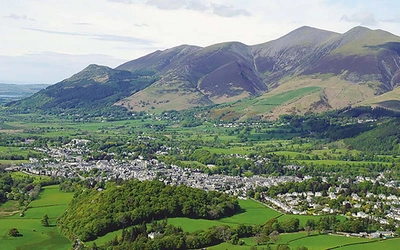
In conversation with Mark Richards: Best Walks in the Lake District
Few guidebook writers have a connection to the Lake District quite like Mark Richards. As a young man he became a regular house guest and walking companion of Alfred Wainwright, and that friendship shaped a lifetime spent mapping, drawing and writing about the fells. His new large-format guide, Best Walks in the Lake District: 50 Great Mountain Days, brings together five decades of that experience, alongside photography by Grey O'Dwyer and a foreword by Sir Chris Bonington. Here, we talk to Mark about what turns a walk into a Great Mountain Day, the quieter fells that deserve more attention, and the one route he'd send a reader out to do this year.
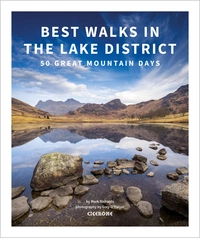
Best Walks in the Lake District
50 Great Mountain Days
£19.95
The 50 best walks in the Lake District, including Scafell Pike, Helvellyn, Skiddaw, Blencathra and other lesser-known but wonderful hill walks. Each route is a Great Mountain Day, a rewarding and potentially challenging route exploring the natural beauty of Lakeland. Includes stunning photography, 1:40,000 Harvey maps and hand-drawn fellscapes for every route.
More informationHi Mark! You describe these routes as ‘Great Mountain Days’ rather than simply walks. What transforms a day in the fells into something memorable?
These are not just day walks; they are majestic, memorable adventures in the hills, whatever their comparatively modest scale when matched against the big days in Scotland, for instance. For countless people who fall in love with the fells, it's because they are the most engaging company of hills imaginable. They are every inch mountains, thrilling and awe-inspiring, with characters and relationships to one another that generate curiosity and bring surprises and excitement to any new fell day. The play of light, the playful tricks of mist, all add excitement and a sense of wonder and respect, as does the threat of storm and the judgements we have to make on whether to proceed or retreat to the sanctuary of the dales.
Your connection with the Lake District stretches back decades, including time spent walking with Alfred Wainwright. How did those experiences shape your own approach to guidebooks and fellwalking?
I loved pen drawing in my youth, captivated by the hand-drawn comics I read. I lived on a farm in rural west Oxfordshire, many miles from mountains. Through my teens, I got to know fell country on busman's holidays on a farm near Kirkby Lonsdale with my mother's cousin, who managed a fell estate. Approaching twenty, I joined a mountaineering club and became fascinated by the inspirational guides created by Alfred Wainwright. Following an exchange of letters, I was welcomed to stay and became a regular house guest, walking with him over weekends in my early twenties. Inevitably this brought a desire to emulate the great man, sharing a mutual love of pen and ink drawing and crafting guidebooks. Naturally, my early guides were hugely influenced by AW's style, though over the years I have evolved, as colourful presentations have inevitably held sway; after all, nature is colourful. I am nevertheless rooted in my pen-and-ink style, so the new book retains my hand-drawn diagrams, which affirm my preference for artistic representation.
This new edition includes 50 routes across the Lakeland fells. How did you go about selecting the walks that best represent the spirit of the Lake District?
Many years walking the fells have given me a strong grasp of the geography that makes this compact mountain landscape tick, and therefore how to pull cohesive routes together. The routes are instinctive. I treated the mountain area as virgin territory, picking up a pattern that I felt worked well, built on my own long-standing experience. Numerous one-off titles have been produced over the years, invariably lured by the idea of picking off the ‘Wainwrights’, not a concept that has ever interested me, I'm not a bagger. The fells are bigger and more enduring than any one person. I suspect that in the future, a new version of this book will be published with a subtly different pattern of routes, gathered by another fan of the fells; that's how it should be. In essence, the fifty routes reflect how I would naturally wander to fill a fell day if I wasn't a guide writer. Routes that lend their own perspectives on the greater whole. In a sense I am sharing my long-learned geographical education. Discover the fells beyond this book, and definitely beyond the simplistic notion of ‘doing the Wainwrights’.
The book combines famous summits such as Scafell Pike and Helvellyn with quieter, lesser-known fells. Why was that balance important to you?
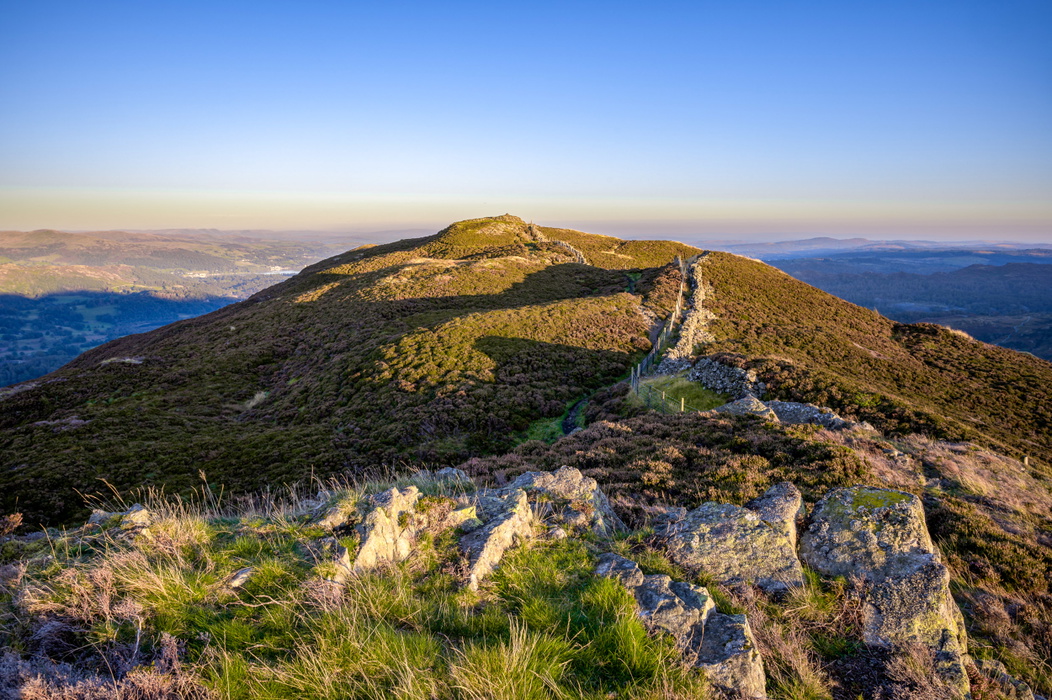
The Lakeland fells are diverse, rugged and sleek, and not everyone wants to tackle the rough stuff, nor take on steep climbs and tortuous descents, so I sought to reflect this balance in readers' choices. It's one of the magic qualities of the area that satisfying mountain days can be enjoyed on less taxing paths. I might cite Walk 1 over Lingmoor Fell, a tantalising introduction to the mountain adventures in store. Similarly, Walk 17, traversing Seatallan, and Walk 46, over Place Fell, are steady climbs on secure paths offering richly rewarding views, notably west upon the Helvellyn range.
Many walkers first discover the Lakes through iconic peaks. Are there any less celebrated routes in the book that you think deserve just as much attention?
There are some great fell characters unknown to newbie walkers, who know the primary summits and yet, once introduced, should become enthralled and determined to discover more. Borrowdale, for instance, is not just the way to Scafell Pike; on all sides, there are great summits and fell terrain to explore, in many respects far more rewarding than the torrid plod to and from the Pike. Walk 29, the Newlands Horseshoe, is a much-loved classic. A personal favourite is Walk 26, Rosthwaite and Glaramara. Walk 27 combines a handsome challenge climb at the outset up Eagle Crag, thereafter intent on High Raise at the centre of the mountain area, as well as forgotten Ullscarf, before coming down onto heather slopes to Dock Tarn and back through the woods to Stonethwaite.
Your hand-drawn fellscape diagrams have become a signature feature of your guidebooks. What do they offer walkers that photographs or standard mapping cannot?
My aerial representations of the fells in pen and ink are an attempt to hold the walk in one's mind's eye, separating it from the surrounding upland, though this is not easy to pull off, as the routes weave their way in and around the slopes. In truth it's a personal touch, an excuse to indulge my first love, pen drawing.
The routes are aimed at walkers early in their fellwalking journeys as well as more experienced hillwalkers. What advice would you give to someone preparing for their first bigger mountain day in the Lakes?
That the book uses the subtitle Great Mountain Days emphasises the nature of the challenge the fells represent. A walk on the fells demands a different mindset to lowland walking. Contemporary outdoor gear has evolved to meet the demands brought on by adverse weather in these wild uplands, so seek advice if this is a new activity and equip yourself appropriately. Boots these days are lightweight, though necessarily sturdy, with walking poles a great help when negotiating rough, rocky ground. Sunny days can change in a few minutes as the wind whips up and brings a chill, or rain sweeps through and catches you unawares. Be sure to have a cagoule, and even over-trousers, and don't dither or delay in putting them on, the sooner the better, for keeping you comfortable. Carry nourishment for added energy and a refreshing drink; a flask in winter gives the comfort of a warm cuppa in the lee of a cairn on a bitter day. I always wear a hat appropriate for the conditions and keep gloves in my day pack too. A long day in the hills can be eased by having just the right amount of shell clothing. Don't over-burden yourself, keep the day sack to a max of 30 litres to avoid carrying too much. I always carry and consult a map and keep a compass with my camera, so it's swiftly in action when mist obscures my surroundings and casts doubt on my next steps. Too many navigational errors, and even injuries, occur from sticking to a line on the ground that you assume is getting you where you intended, without consulting a compass. Don't be browbeaten by peers who insist they know where they're going; invariably, they don't. Bring the compass and map into use the instant the mist gathers around you. If you're confident you're moving in the right direction, then be thankful you have the right tools to travel safely and well.
Classic horseshoe routes such as Fairfield, Newlands and Coledale feature in the guide. What makes horseshoe walks such a distinctive part of Lakeland fellwalking?
Linking a string of summits along a ridge wrapped around a dale brings a sense of satisfaction to any fell day, as you efficiently tick off each top. There are just three natural horseshoes in this guide: Coledale, Fairfield and Newlands. However, all the walks are circular and invariably include more than one summit, so in a sense they are, by a majority, horseshoes. There are no linear walks, though I have to admit that my favourite walks are A to B.
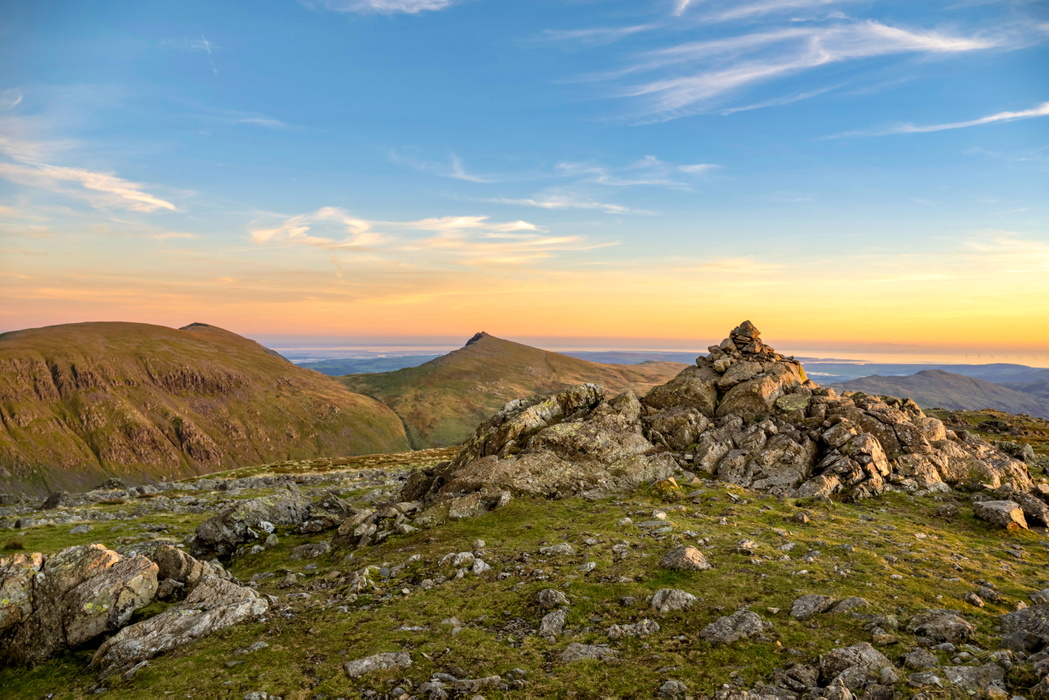
You write beautifully about the emotional pull of the fells and the idea that Lakeland becomes ‘treasured within unique memories’. What is it about the Lake District that keeps drawing people back?
It's so easy to be smitten by the fells. One swiftly develops an insatiable appetite to come back, all too often we do the same rounds or climb the same fells over and over, as, of course, we know the way, and the changing weather and lighting add new magic to the experience. We never really know the fells, as their countenance changes all the time, though they are dependable and fixed points in our changing lives. We develop an appetite for finding new ways to personalise the core set of 50 routes. Why should fifty routes be hard and fast anyway? That's just the model of the book, but the fells are limitless in their opportunities.
If someone could only experience one ‘Great Mountain Day’ from the book this year, which would you encourage them to choose, and why?
If you could do one mountain walk from this book and go home contented and richly rewarded, I'd suggest Walk 25. Wainwright mentions that no one announces at the breakfast table that they plan to climb Green Gable, but this walk's only summit is Green Gable! Promptly descending to Windy Gap, it embarks on the fabulous Gable Girdle, running under Gable Crag to Beck Head and so round to the South Traverse, crossing the base of Great Napes, down by Styhead and thus back to Seathwaite. It's a real wow of a walk. Uncomfortable footing on the girdle, but so exciting.
Thank you, Mark.
Best Walks in the Lake District
50 Great Mountain Days
£19.95
The 50 best walks in the Lake District, including Scafell Pike, Helvellyn, Skiddaw, Blencathra and other lesser-known but wonderful hill walks. Each route is a Great Mountain Day, a rewarding and potentially challenging route exploring the natural beauty of Lakeland. Includes stunning photography, 1:40,000 Harvey maps and hand-drawn fellscapes for every route.
More informationAbout Mark Richards, guidebook author:
Mark was brought up to be a farmer in the Oxfordshire Cotswolds, yet it was his mother's roots in the Yorkshire Dales that influenced him most growing up, instilling a romantic desire to explore fell country as he got older. A love of pen drawing and the works of Alfred Wainwright played into his creative life. Indeed, he was fortunate enough to spend a dozen weekends as a house guest walking with the master guide writer, leading to a life-time's passion for his own brand of pictorial guides. His first guide was The Cotswold Way (published in 1973), and since 1980, when Cicerone Press commissioned a trio of guides to the Peak District, his attention has turned northwards to the Lake District and Hadrian's Wall. Mark also presents the popular Cumbrian podcast countrystride.co.uk, with regular monthly episodes, and Hefted, a Substack newsletter.