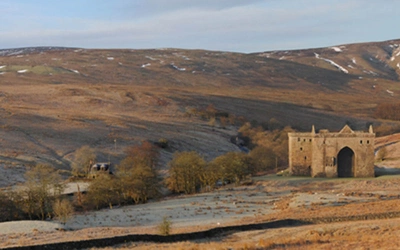
In conversation with Terry Marsh: Walking the Coast to Coast Path
Terry Marsh has been walking, writing and thinking about the northern fells for longer than most. His first Cicerone guide to the Coast to Coast Path appeared in 1993, and this fifth edition, updated to reflect the route's status as a National Trail, marks more than three decades of acquaintance with one of England's most celebrated long walks. We talked to Terry about what has and hasn't changed since Wainwright's day, why the quiet middle section rewards the walker who pays attention, and what he'd tell anyone lacing up their boots at St Bees for the first time.
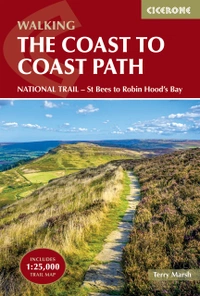
Walking the Coast to Coast Path
NATIONAL TRAIL - St Bees to Robin Hood's Bay
£18.95
Guidebook to walking the Coast to Coast Path, a 182 mile (293km) national trail across northern England from St Bees in the west to Robin Hood's Bay in the east. Described in 13 stages with additional itineraries of 15 to 19 days, the route crosses the Lake District, Yorkshire Dales and North York Moors national parks. With 1:100,000 mapping.
More information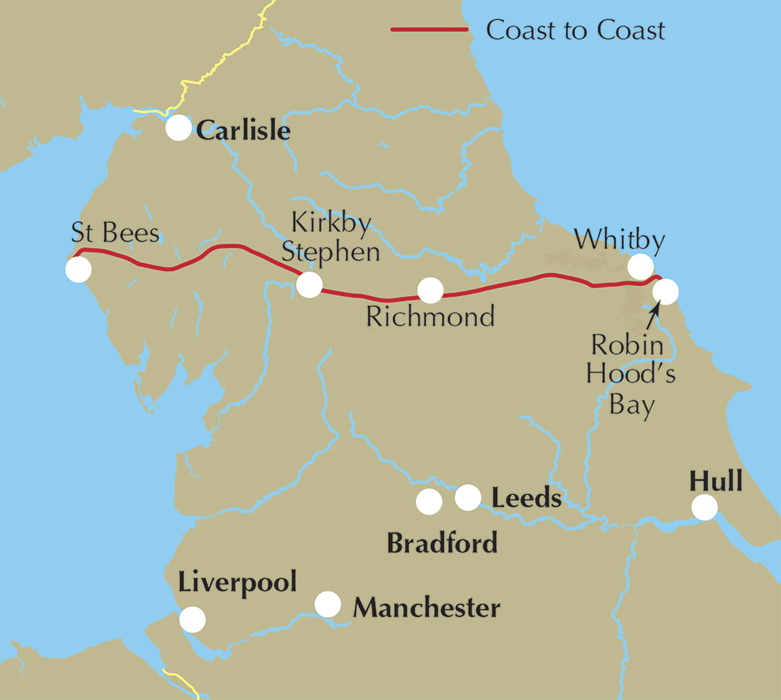
You first wrote the Cicerone guide to the Coast to Coast Path back in 1993, and this is now the fifth edition. How has the trail itself, and the experience of walking it, changed over the last three decades?
Comparing the route I walked in 1992 with today, little has changed: there have been many minor tweaks to accommodate landscape changes and farming practices, but these were only sensible changes. A variant route has also been introduced through Swaledale to avoid the high-level route of the original line. For many, the quagmire of Nine Standards Rigg was a year-round problem, but that has now been alleviated by paving the entire length of the route southwards, avoiding the worst clutches of the peat bogs, although you can still wallow in them if that is your disposition!
Increasing numbers now use the route annually, and few of those follow anything other than the route that is now the national trail. Wainwright hoped that walkers would fashion their own routes, but in publishing his guide he was disingenuous if he thought that many would. My 1993 guide included several variants for walkers to follow, but the 2026 edition now sticks resolutely to the national trail.
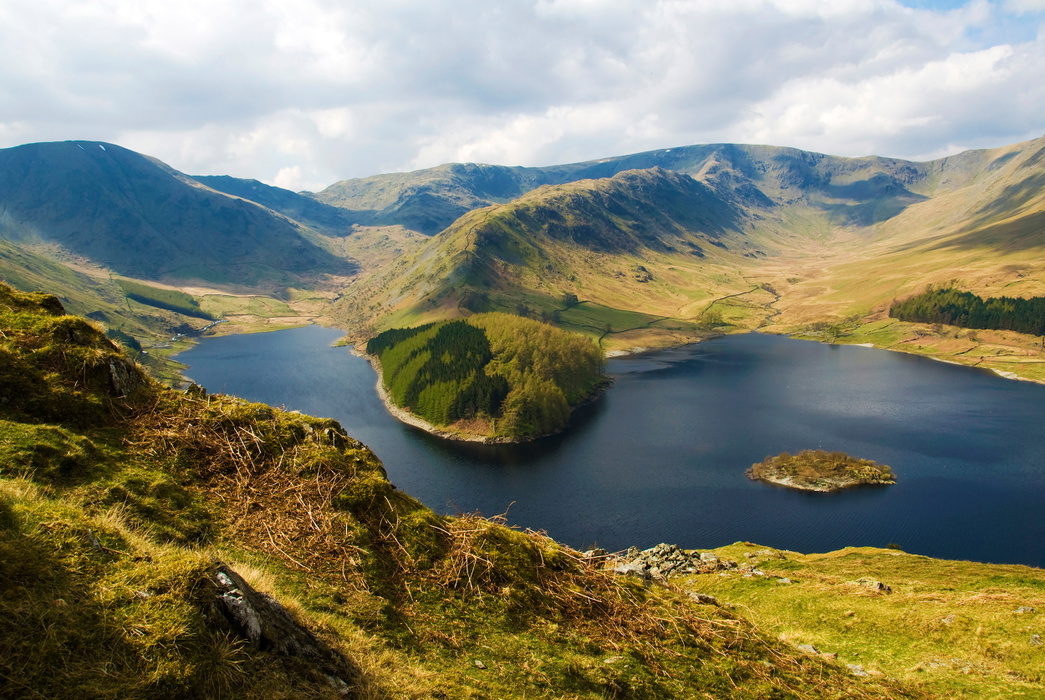
The route crosses three national parks and three very different landscapes, from the Lakeland fells to the Dales and the North York Moors. Do you have a favourite of the three sections, and why?
I like the stretch from Shap to Richmond, but then I'm a historical geographer and I like to connect with the past at every opportunity; there's an abundance of it here. So if you see me hugging a standing stone, do not disturb: I'm connecting with the old folk. Thirty years ago, I would have said the Lake District, but that was because I was busy climbing everything that wasn't flat. Since then, I've grown up, and find pleasure in simpler terrain. Though I have a horrible feeling there is one little Lakeland summit I've missed. Just one. Slight Side.
Many walkers assume the best of the walk is behind them once they leave the Lake District. Why do you think the Dales and North York Moors sections deserve just as much attention?
We each have our own preferences, and these change over time. It's not so much to do with the differing landscapes as with our perception of them, and our own state of mind and condition. I used to run up Scafell Pike; now I just look at it, with equal satisfaction. The Dales and the North York Moors offer contrasting landscapes. There was a time when the moors were anathema to me; now I love their graceful, sweeping curves. If you are in a Lake District stage in your walking career, then it's the Lake District. But the time will come when you need something gentler, not necessarily physically, but spiritually too. It's always good to realise that future memories are coloured by past memories.
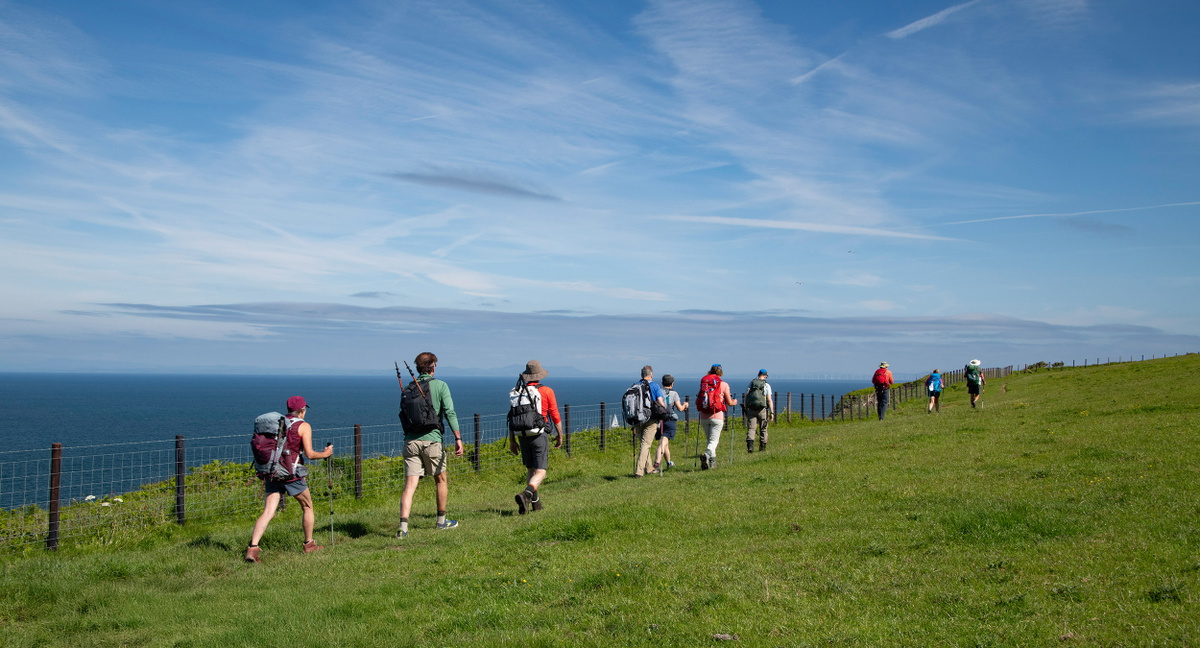
Between Reeth and Richmond, and again through the Vale of Mowbray, the walking is gentler and less dramatic. What do you think first-time Coast to Coast walkers most often overlook or rush through in these quieter interludes?
I don't think they do rush through, as it happens. A few say it's boring, but many more say how much they've enjoyed the interlude. It's a lovely contrast, and closer to civilisation, so it probably feels more comforting and safe. You do feel the gentleness after the Lake District, but that's part of the plan. Even so, I wonder how many walkers deviate to the Oddendale stone circle, or step aside to visit Robin Hood's Grave? How many go to see the Loki stone in Kirkby Stephen parish church? Or slip through the graveyard at Bolton-on-Swale to see the memorial of Henry Jenkins, said to have lived to the age of 169?
Sadly, it's so easy to see just the line on the map and not the countryside it is passing through. If all you want to do is follow a line on a map, stay at home, buy a local map and explore your own locality; it's cheaper. But that isn't why people come to the Coast to Coast. It's because the walk represents something greater, one imbued with a particular sense of achievement at having successfully dealt with an unknowable set of circumstances peculiar to this route. Learn from each one, and in so doing, build up your store of memories.
This edition reflects some real-world changes, including new legislation around livestock worrying. What else has changed on the ground since your last update that walkers should be aware of?
The main change is rooted in the Countryside and Rights of Way Act 2000, which gives the public right of access on foot to vast areas of open land without fear of trespassing: the Right to Roam. Wainwright was cavalier in his choice of route, not all of which followed legal rights of way. The CROW Act rectified that disregard.
The issue of livestock worrying is nothing new. This was originally covered in the Dogs (Protection of Livestock) Act 1953, and updated in 2025 to make it a criminal offence for a dog to attack, chase, or run loose and cause distress to farm animals. One of the ironies here is that while it is illegal for a dog to chase cows, it is not illegal for cows to chase humans, and that is a major concern for many walkers. In my experience, cows are curious and will move to investigate you if they can be bothered, but they rarely run at you unless you run. Walk calmly and sedately through fields with cows in, don't make eye contact (but keep an eye on them), and if you can carry your dog for a short while, do so; the cows may not notice.
I recall that when I first researched this route, I crossed a ladder-stile near Kirkby Stephen. On the other side, leaning against the stile, was a bull surrounded by cows. All I could do was stand on his back and slide off. He never flinched. He was a problem that had to be dealt with. There will be several along the way; think about each one, they are an unavoidable hazard. Deal with them sensibly and try not to panic. I've had many a conversation with cows, bullocks, bulls and sheep, and they are probably still waiting for a sensible answer to their questions.
For a walk that spans around two weeks, what would you say to someone tempted to rush it in one go versus breaking it into instalments over several trips?
When you commit to walking the entire route in one go, you benefit from a unique sense of being cocooned in the walk. Every morning is about 'the walk', and the next, and the next, until it's finished. It's the wholeness that makes the difference. For the duration, your life is immersed in the walk and its many tangles. Not only do you get the bigger picture, but being so close to it day after day, you notice the subtle differences of landscape, geology, flora and fauna that are the route's most charming feature. It's a synergy of harmonious relationships where two plus two definitely does make five.
Breaking it into instalments is mainly a solution to a logistical problem, time constraints above all. This approach gives you flavours of the walk but not the whole thing. No one would listen to a Beethoven symphony in five-minute instalments; it doesn't make sense and doesn't give you the whole picture.
You've walked, written about and revised guides to trails across the Lake District, the Dales and beyond for decades. How does the Coast to Coast compare to other British long-distance paths you know well?
The Coast to Coast is a walk of three parts, and in comparing it with other walks, the common denominator is the demand each imposes. All long walks require good preparation, which is often overlooked or minimised. The Lake District stages throw you in at the deep end, comparable in their demands to the Shropshire Way or the Skye Trail, with the notable distinction that the Coast to Coast has footpaths to follow. The Skye Trail doesn't. The stage into the Yorkshire Dales and through the Vale of Mowbray is a longer version of the Dales Way, while the North York Moors have a lot in common with the West Highland Way.
For someone opening this guidebook for the first time, thinking about their first crossing of England on foot, what's the one thing you'd most want them to take away before they even reach St Bees?
Preparation. Walking day after day for two weeks with even just a modest pack on your back takes its toll. Advance preparation, by regularly walking distances in excess of ten miles, breaking in footwear, equipment and clothing, is essential. I see questions being asked on social media: 'What footwear should I use?' The answer is: 'The boots you've been wearing for the last six months.' Suddenly thrusting your feet into new boots, or carrying a pack that hasn't yet adjusted to your posture, is a shortcut to pain and probable cancellation. And don't just do your training walks on pleasant days. Get out in the wind and rain; see how you and your equipment stand up to that.
Robin Hood's Bay is the traditional finish, mirroring the clifftop start at St Bees. Is there a moment or view on that final stage that never fails to feel like a fitting end to the walk?
The moment when you arrive above May Wyke Hole, finally reaching the coast with only stunning coastal walking left to do.
Walking the Coast to Coast Path
NATIONAL TRAIL - St Bees to Robin Hood's Bay
£18.95
Guidebook to walking the Coast to Coast Path, a 182 mile (293km) national trail across northern England from St Bees in the west to Robin Hood's Bay in the east. Described in 13 stages with additional itineraries of 15 to 19 days, the route crosses the Lake District, Yorkshire Dales and North York Moors national parks. With 1:100,000 mapping.
More informationAbout the guidebook author, Terry Marsh:
Lancashire-born writer and photographer Dr Terry Marsh specialises in the outdoors and travel. He has been writing guidebooks and magazine articles since the early 1980s and is the author or revision author/editor of over 100 titles including the award-winning Cicerone guides to the Coast to Coast Path (first published in 1993 as A Northern Coast to Coast Walk and which received the Outdoor Writers Guild Award for Excellence in 1994), The Shropshire Way and Wild Edric’s Way (1999) and Great Mountain Days in the Pennines (2013). He has been a Cicerone author since 1991.
Terry has a long-standing interest in Cumberland, Westmorland and North Yorkshire, in particular the Lake District, the Yorkshire Dales and the North York Moors. An historical geographer holding a Master of Arts degree with Distinction in Lake District Studies and a PhD in Historical Geography, he is a Life Member and former Secretary of the Outdoor Writers and Photographers Guild.