Walking in Provence – West: a complete planning guide
Drive south past Montélimar on the Autoroute du Soleil and, just after the sign announcing Vous êtes en Provence, the light itself seems to change: clearer, brighter, edged with the scent of pine and herbs. Walking in Provence: West guides walkers through 30 circular day walks across the Drôme Provençale, Vaucluse and Var, ranging from 4 to 16km (2 to 10 miles) through lavender fields, limestone gorges and hilltop villages. This guide covers when to go, how walks are graded, and how to get there. (Last updated: July 2026 · Guidebook edition: 1st edition, November 2014)
Walking in Provence – West, quick facts
- Location: Western Provence, southeast France: the Drôme Provençale, Vaucluse and Var
- Total routes: 30 circular day walks
- Distance range: 4 to 16km (2 to 10 miles)
- Typical duration: 2 to 7 hours
- Difficulty: Easy, Medium or Difficult, graded by length, ascent and terrain
- Terrain: olive groves, lavender fields, limestone gorges, garrigue scrubland and perched medieval villages
- Highest point: none of the walks exceed 1400m
- Navigation: GR long-distance waymarking and local coloured splashes; IGN 1:25,000 maps recommended; GPX files available to download
- Best season: year-round in the lower valleys; spring and autumn are most comfortable overall
- Guidebook: Walking in Provence: West, Janette Norton, 1st edition, November 2014
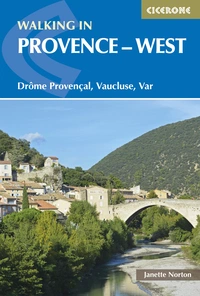
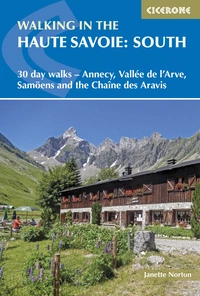
Walking in Provence - West
Drôme Provençal, Vaucluse, Var
£14.95
Guidebook to 30 varied day walks in the west of Provence in the Drome Provencale, the Vaucluse and the Var, with practical information for the walker. Walks span from the Baronnies in the north to the Ste-Baume ridge in the south and can be tackled from charming bases such as Nyons, Apt and Aix-en-Provence.
More informationWhat is Walking in Provence: West?
Walking in Provence: West is a Cicerone guidebook to 30 circular day walks across three contrasting regions of southeast France: the Drôme Provençale, the Vaucluse and the Var. The book grew out of an earlier single-volume guide to Provence, split in two so that a new region, the Drôme Provençale, could be added alongside the mountainous Mercantour material.
The walks trace a landscape shaped as much by history as by geology: hilltop villages, Romanesque abbeys, Roman ruins and the drystone bories of the Vaucluse sit alongside olive groves around Nyons, the lavender-covered plateaux of the Baronnies, the wine villages beneath the Dentelles de Montmirail, and the long limestone ridge of the Sainte-Baume massif above Aix-en-Provence.
This planning guide answers the most common questions walkers have before setting out. For complete route descriptions and sketch maps for all 30 walks, see the Cicerone Walking in Provence: West guidebook.
A companion volume, Walking in Provence: East, covers the Alpes Maritimes, Alpes de Haute-Provence and the Mercantour further east.
The 30 routes at a glance
The walks are grouped by region, each with its own character:
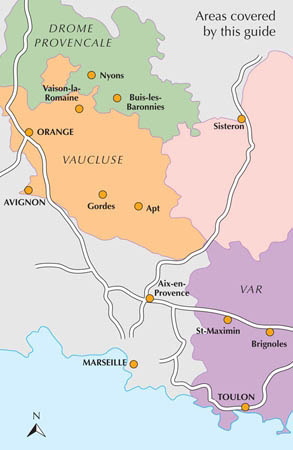
- Drôme Provençale (Walks 1 to 11): the northernmost and sunniest section, based around Nyons and Buis-les-Baronnies. Expect olive groves, lavender fields and the rocky crests and gorges of the Baronnies hills.
- Vaucluse (Walks 12 to 22): centred on Vaison-la-Romaine and Apt, this section takes in the wine villages beneath the Dentelles de Montmirail, the Gorges de la Nesque, the Cistercian Abbaye de Sénanque and the ochre landscape of the Colorado Provençal, with Mont Ventoux visible from many of the ridges.
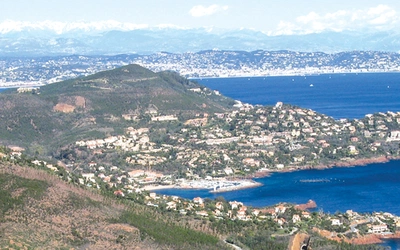
- Var (Walks 23 to 30): based around St-Maximin-la-Ste-Baume and Aix-en-Provence, these walks include Montagne Ste-Victoire, the mountain Cézanne painted almost 80 times, and the long ridge of the Sainte-Baume massif above the Mediterranean coast.
8 walks from the guidebook
| Walk | Distance | Time | Why it stand out |
|---|---|---|---|
| Nyons Olive Walk | 4.1km | 1hr 45min | Circles the olive groves around Nyons, source of the tanche olives used in the region's oil |
| Lavender Walk from Aulan | 14.1km | 4hr 20min | Crosses the lavender plateaux of the Baronnies, best walked in July when the fields are in full colour |
| Dentelles de Montmirail | 10.8km | 4hr 45min | Climbs into the jagged limestone crest above the Gigondas and Vacqueyras wine villages |
| Gorges de la Nesque | 8.6km | 3hr 45min | Follows one of the deepest river gorges in the Vaucluse, with Mont Ventoux visible throughout |
| Fontaine-de-Vaucluse and the Wall of the Plague | 14.3km | 5hr | Combines the source of the Sorgue river with the 18th-century wall built to halt the Marseille plague |
| Abbaye de Sénanque | 9.5km | 3hr 20min | Passes one of Provence's three Cistercian abbeys, framed by lavender fields in season |
| Colorado Provençal | 10.5km | 4hr 30min | Crosses a landscape of ochre cliffs and pillars, unusual among the region's limestone terrain |
| Montagne Ste-Victoire | 15.3km | 7hrs | Climbs the limestone mountain above Aix-en-Provence made famous by Cézanne's paintings |
Who is Walking in Provence: West suitable for?
The 30 walks are designed for averagely fit walkers rather than specialists. Easy walks are short, on well-marked paths with little ascent, and many can be completed in half a day, making them workable for families and less experienced walkers. Medium walks need most of a day and involve 400 to 700m of ascent on paths that remain well-marked throughout.
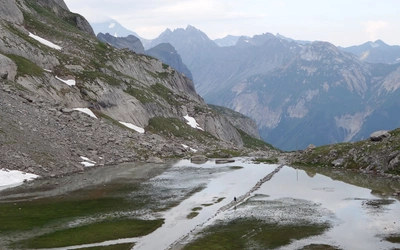
Difficult walks are a different proposition: some run to a full day of up to eight hours, either because total ascent exceeds 700m or because the terrain includes rough ground, exposed sections requiring a head for heights, or stretches where route-finding is genuinely tricky, particularly in poor weather. No walk in the book climbs above 1400m, so none require mountaineering experience, but the difficult grade should be taken at face value rather than treated as a formality.
Walkers should also be prepared for solitude. Away from the coastal towns, the hills of Provence are often empty of other people beyond grazing sheep, and there is rarely a refuge or a fellow walker on hand to ask for directions, so route-finding skills matter more here than the modest altitudes might suggest.
When is the best time to walk in Western Provence?
- Spring: widely considered the most pleasant season, with warm sun, blossoming fruit trees, lavender coming into bud and wildflowers across the garrigue.
- Summer: can be intensely hot; walks with shade or at higher altitude are the better choice, and an early start is worthwhile.
- Autumn: another favoured season, often with reliable sunshine and changing leaf colour, though the heaviest rain of the year tends to fall from November onwards.
- Winter: many of the lower and coastal walks remain possible, since the region's climate stays mild here even outside summer, though some hotels close for the season and higher ground can occasionally see snow.
- Watch for the mistral, a cold northerly wind that can strike at any time of year, sometimes lasting for days, followed by exceptionally clear, still weather.
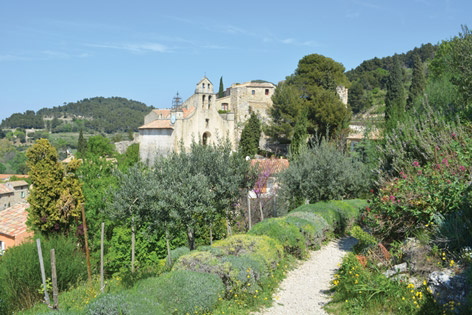
What accommodation is available?
Bases for the three regions include Nyons and Buis-les-Baronnies (Drôme Provençale), Vaison-la-Romaine and Apt (Vaucluse), and St-Maximin-la-Ste-Baume and Aix-en-Provence (Var). Accommodation options across the region include:
- Hotels, generally better value than equivalent UK hotels, including the Logis de France chain
- Gîtes de France, self-catering cottages available by the week, and Chambres d'Hôtes (bed and breakfast)
- Gîtes d'étape, simple hostel-style lodging aimed at walkers and cyclists
- Campsites, graded one to five stars, with facilities ranging from basic to full-service
July and August are the busiest and most fully booked months, particularly for campsites; spring and autumn offer more availability and lower prices. Full listings by area are provided in the guidebook's appendices.
Getting there and back
By car, the most direct route from northern France is the A7 Autoroute du Soleil south of Lyon, leaving at Montélimar Sud or Bollène for the Drôme Provençale and northern Vaucluse, or continuing toward Aix-en-Provence for the Var. The nearest airports are Avignon, Marseille and Nice, all served by car hire, and Eurostar connects London to Avignon and Marseille via a change of train (some routes run direct in summer).
Walking in Provence - West
Drôme Provençal, Vaucluse, Var
£14.95
Guidebook to 30 varied day walks in the west of Provence in the Drome Provencale, the Vaucluse and the Var, with practical information for the walker. Walks span from the Baronnies in the north to the Ste-Baume ridge in the south and can be tackled from charming bases such as Nyons, Apt and Aix-en-Provence.
More informationPlan your walk with the Cicerone guidebook
The Cicerone Walking in Provence: West guidebook by Janette Norton contains everything needed to plan and complete all 30 walks, from the olive groves of Nyons to the ridges above Aix-en-Provence.
- Full route descriptions and sketch maps for all 30 circular walks
- Regional introductions to the Drôme Provençale, Vaucluse and Var
- GPS-measured ascent figures and profile plots for each walk
- Background chapters on Provençal history, wildlife, plants and regional food
- Practical planning information on travel, accommodation, clothing and equipment
- Appendix A route summary table, plus appendices on maps, tourist information, market days and a glossary of Provençal terms
- Free GPX file downloads for every route via the Cicerone website
Available as a printed guidebook (£14.95) or digital eBook.
About Janette Norton, guidebook author
This edition was completed by Janette's husband, Alan Norton, following her passing, using the GPS routes and research the two of them had gathered together.
Janette Norton lived with her physicist husband, Alan, in the Geneva region for over 30 years, raising four children and working in the marketing field. Her love of mountain walking dated from the time she was a guide in her twenties, and the proximity to her home of the Alps and the Jura enabled her to continue her passion. After her children grew up, she branched out to walk in other areas of France such as Provence, the Cevennes and the Dordogne.