The GR5 Trail – Benelux and Lorraine: a complete planning guide
The thought that you can step off a ferry on the North Sea coast and follow a single waymarked trail all the way to the Mediterranean is both thrilling and daunting. The GR5 Trail – Benelux and Lorraine covers the first and most varied section of that extraordinary journey: ~1000km (621 miles) from the coast at Hoek van Holland in the Netherlands to Schirmeck in the northern Vosges mountains of France. Crossing four countries, five landscapes and several centuries of European history, it typically takes six to eight weeks to walk in full, though its excellent public transport links make it equally rewarding in shorter sections. (Last updated: June 2026 · Guidebook edition: First edition, September 2018, reprinted 2024)
The GR5 Trail – Benelux and Lorraine, quick facts:
- Distance: ~1000km / ~621 miles
- Duration: 6–8 weeks (full route); shorter sections easily achieved
- Start: Hoek van Holland, Netherlands (North Sea coast)
- Finish: Schirmeck, France (northern Vosges)
- Stages: 49 stages, each between 8km and 33km
- High point: Le Donon, 1008m (final approach to Schirmeck)
- Difficulty: Easy to moderate; low-level terrain throughout, with no high-mountain sections until the very end
- Terrain: Coastal polders and dunes, heathland, river valleys, Ardennes forest and plateau, Moselle vineyards, and rolling Lorraine countryside
- Waymark: White over red rectangles (standard GR mark); yellow discs and triangles in Luxembourg; red rectangles in the final Alsace section
- Accommodation: Hotels, B&Bs (chambres d'hôtes), youth hostels, gîtes d'étape, campsites with hikers' cabins (trekkershutten)
- Best season: April to October (three-season trail)
- Guidebook:The GR5 Trail – Benelux and Lorraine by Carroll Dorgan, 1st edition 2018, reprinted 2024
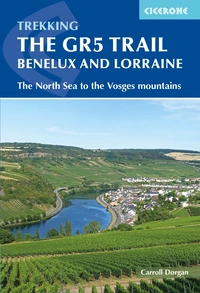
The GR5 Trail - Benelux and Lorraine
The North Sea to Schirmeck in the Vosges mountains
£18.95
Guidebook to walking the northern section of the GR5 - 1000km starting in Hoek van Holland and passing through the Netherlands, Belgium, Luxembourg and Lorraine to Schirmeck in France. A long-distance route covering a variety of cultures and landscapes. The full GR5 from the North Sea to the Mediterranean is one of the world's greatest trails.
More information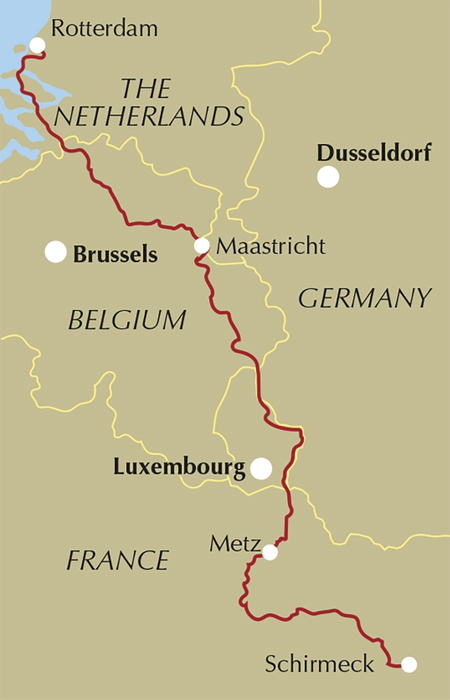
What is the GR5 Trail – Benelux and Lorraine?
The GR5 Trail – Benelux and Lorraine is the northern section of the Grande Randonnée 5, one of the world's great long-distance trails, which runs for approximately 2300km from the North Sea coast to the Mediterranean at Nice. This section of the GR5 covers the first 1000km of that journey, from the signpost at Hoek van Holland – where many walkers dip a toe in the North Sea before setting off – south through the Netherlands, Belgium, Luxembourg and the French region of Lorraine to Schirmeck, where the Vosges mountains begin.
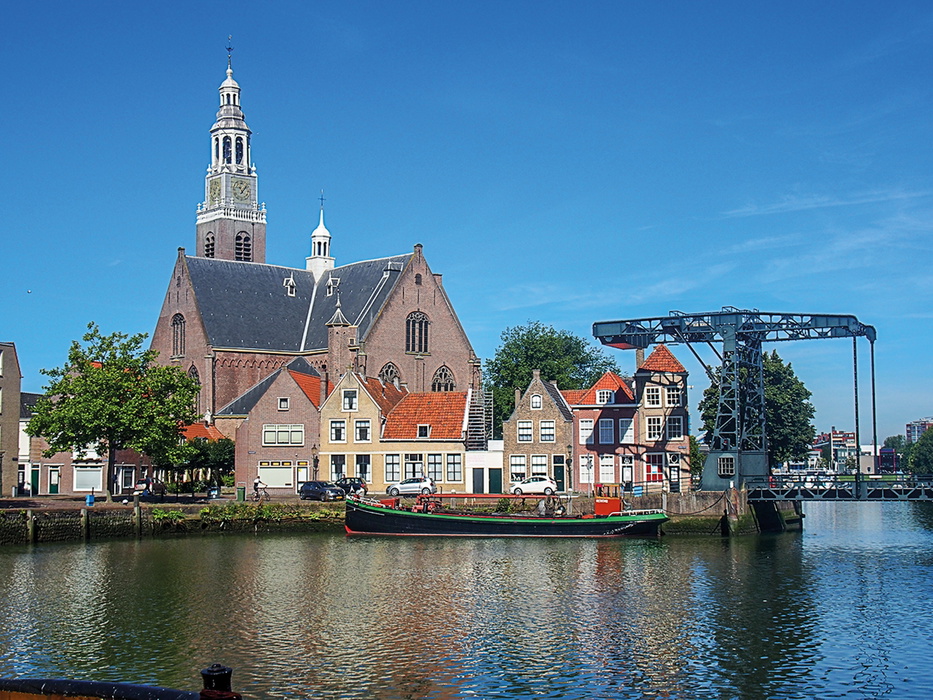
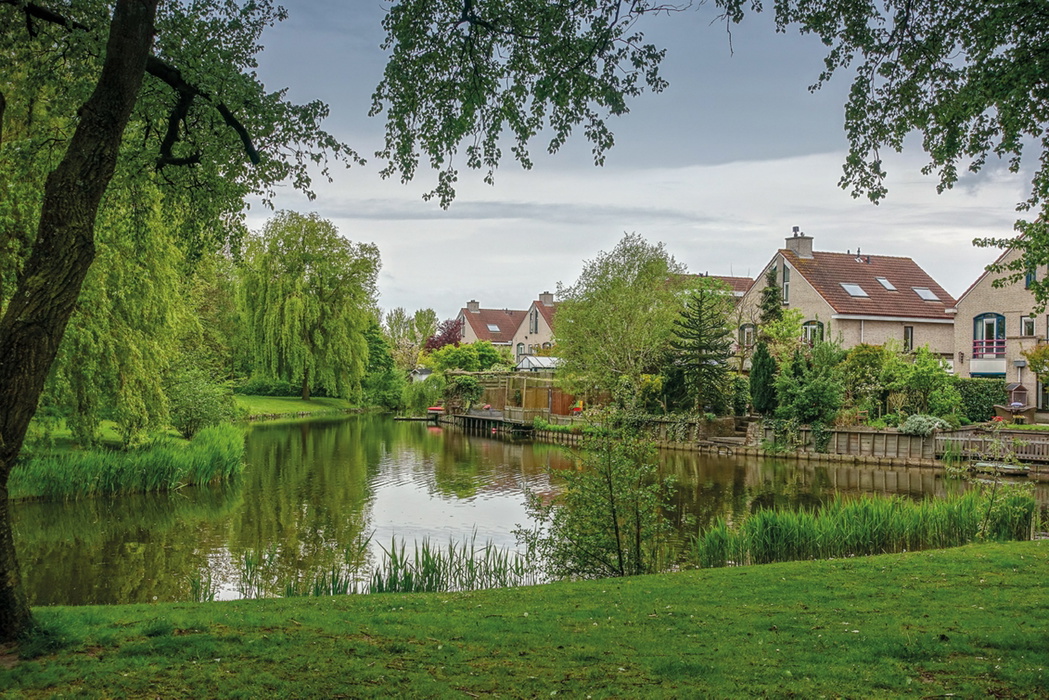
What sets this section apart from the rest of the GR5 is its extraordinary variety in both landscape and culture. In five distinct regions, the trail moves from the flat coastal polders of the Netherlands, protected by dykes and dotted with windmills, through the heathlands and forests of Flanders, across the rolling hills and narrow river valleys of the Ardennes in Wallonia and Luxembourg, along the steep vineyard slopes of the Moselle in Luxembourg's wine country, and finally across the gently undulating plateau of Lorraine to the foothills of the Vosges. It is, as author Carroll Dorgan puts it, much more than a walk through nature: it is a cultural experience.
The trail also passes through some of the most historically significant ground in Europe. Battlefields, Maginot Line fortifications, Carolingian towns, medieval abbeys and the home of Robert Schuman, architect of what became the European Union, all lie close to the path. The major cities along the route, including Maastricht, Spa, Vianden, Echternach and Metz, each offer their own distinct architecture, cuisine and atmosphere.
This planning guide answers the most common questions walkers have before setting out. For complete stage-by-stage route descriptions and mapping, see the Cicerone GR5 Trail – Benelux and Lorraine guidebook.
Why does Cicerone have three GR5 guidebooks? Which one do I need?
The GR5 is approximately 2300km long, making it impossible to cover in a single practical guidebook. Cicerone divides the full trail across three volumes, each covering a distinct section with its own character, difficulty level and logistics:
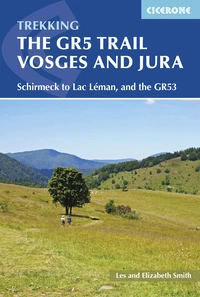
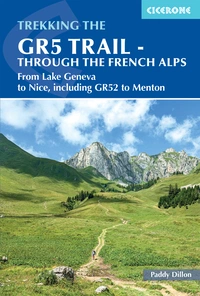
| - | GR5 – Benelux and Lorraine | GR5 – Vosges and Jura | GR5 – Through the French Alps |
|---|---|---|---|
| Start | Hoek van Holland | Schirmeck | Lake Geneva (Lac Léman) |
| Finish | Schirmeck | Lake Geneva (Lac Léman) | Nice (or Menton via GR52) |
| Distance | ~1000km / 621 miles | ~687km / 427 miles | ~600km / 373 miles |
| Duration | 6–8 weeks | 5–6 weeks | 4–5 weeks |
| Countries | Netherlands, Belgium, Luxembourg, France (Lorraine) | France (Vosges, Alsace, Jura), with optional GR53 link from Wissembourg | France (Alps) |
| Terrain | Flat to gently hilly; polders, heath, forest, river valleys, plateau | Forested hills, river gorges, ridges, high meadows, Jura plateau | High mountain terrain; passes, glacial valleys, national parks |
| Difficulty | Easy to moderate | Moderate | Challenging; serious alpine fitness required |
| Author | Carroll Dorgan | Les and Elizabeth Smith | Paddy Dillon |
| Stages | 49 | 11 GR5 sections + GR53 link | 28 |
If you are planning to walk the full GR5 end-to-end, you will need all three volumes: this book takes you from the North Sea to the start of the Vosges, the Vosges and Jura volume carries you to Lake Geneva, and the French Alps volume brings you down to the Mediterranean. If you are planning a section walk, choose the volume that covers your intended start and finish points using the table above.
How long is the GR5 Trail – Benelux and Lorraine? The 49 stages
The Northern GR5 covers ~1000km (621 miles) in 49 stages, divided across five geographic sections. Stage distances range from 8.3km to 33.2km, with a total walking time of around 247 hours at guidebook pace.
| Stage | Route | Distance | Time |
|---|---|---|---|
| THE NETHERLANDS | - | 123.7km | 28hr 45min |
| Stage 1 | Hoek van Holland to Maasland | 18.5km | 4hr 15min |
| Stage 2 | Maasland to Brielle | 12.8km | 3hr 30min |
| Stage 3 | Brielle to Rockanje | 18.0km | 4hr 15min |
| Stage 4 | Rockanje to Goedereede | 13.2km | 3hr |
| Stage 5 | Goedereede to Herkingen | 18.5km | 4hr |
| Stage 6 | Herkingen to Nieuw-Vossemeer | 24.0km | 5hr 15min |
| Stage 7 | Nieuw-Vossemeer to Bergen op Zoom | 18.7km | 4hr 30min |
| FLANDERS | - | 248.9km | 57hr 15min |
| Stage 8 | Bergen op Zoom to Kalmthout | 27.0km | 6hr |
| Stage 9 | Kalmthout to Brecht | 22.8km | 5hr |
| Stage 10 | Brecht to Zoersel | 13.5km | 3hr |
| Stage 11 | Zoersel to Herentals | 21.5km | 5hr |
| Stage 12 | Herentals to Westerlo | 16.5km | 3hr 45min |
| Stage 13 | Westerlo to Scherpenheuvel | 24.0km | 5hr 15min |
| Stage 14 | Scherpenheuvel to Diest | 10.0km | 2hr 15min |
| Stage 15 | Diest to Lummen | 15.5km | 3hr 30min |
| Stage 16 | Lummen to Stokrooie | 18.5km | 4hr 15min |
| Stage 17 | Stokrooie to Bokrijk Provincial Domain | 16.0km | 3hr 45min |
| Stage 18 | Bokrijk Provincial Domain to Zutendaal | 20.6km | 4hr 45min |
| WALLONIA | - | 143.0km | 37hr |
| Stage 21 | Eben-Emael to Visé | 19.0km | 4hr 30min |
| Stage 22 | Visé to Soumagne | 24.5km | 6hr 30min |
| Stage 23 | Soumagne to Banneux | 15.5km | 4hr 30min |
| Stage 24 | Banneux to Spa | 17.0km | 5hr |
| Stage 25 | Spa to Stavelot | 16.0km | 5hr |
| Stage 26 | Stavelot to Commanster | 25.0km | 6hr 30min |
| Stage 27 | Commanster to Ouren | 26.0km | 6hr |
| LUXEMBOURG | - | 184.0km | 50hr 30min |
| Stage 28 | Ouren to Obereisenbach | 20.0km | 6hr |
| Stage 29 | Obereisenbach to Vianden | 23.0km | 7hr |
| Stage 30 | Vianden to Bleesbréck | 14.0km | 4hr |
| Stage 31 | Bleesbréck to Beaufort | 16.5km | 4hr 30min |
| Stage 32 | Beaufort to Echternach | 16.8km | 5hr |
| Stage 33 | Echternach to Wasserbillig | 26.4km | 7hr 30min |
| Stage 34 | Wasserbillig to Grevenmacher | 14.0km | 3hr 30min |
| Stage 35 | Grevenmacher to Remich | 26.0km | 6hr 30min |
| Stage 36 | Remich to Montenach | 27.3km | 6hr 30min |
| LORRAINE | - | 299.1km | 73hr 15min |
| Stage 37 | Montenach to Saint-Hubert | 30.0km | 7hr 30min |
| Stage 38 | Saint-Hubert to Metz | 24.6km | 6hr |
| Stage 39 | Metz to Gorze | 24.2km | 6hr 30min |
| Stage 40 | Gorze to Pagny-sur-Moselle | 15.6km | 4hr 15min |
| Stage 41 | Pagny-sur-Moselle to Montauville | 19.5km | 5hr |
| Stage 42 | Montauville to Liverdun | 33.2km | 8hr 30min |
| Stage 43 | Liverdun to Bioncourt | 32.0km | 7hr |
| Stage 44 | Bioncourt to Vic-sur-Seille | 21.0km | 4hr 45min |
| Stage 45 | Vic-sur-Seille to Tarquimpol | 23.7km | 5hr |
| Stage 46 | Tarquimpol to Gondrexange | 22.8km | 5hr |
| Stage 47 | Gondrexange to Abreschviller | 22.4km | 5hr |
| Stage 48 | Abreschviller to Col du Donon | 21.8km | 6hr 30min |
| Stage 49 | Col du Donon to Schirmeck | 8.3km | 2hr 15min |
| TOTAL | - | ~1000km / 621 miles | ~247hr |
Lorraine has the largest share of the mileage and contains the two longest stages on the route: Stage 42 (Montauville to Liverdun, 33.2km, 8hr 30min) and Stage 43 (Liverdun to Bioncourt, 32.0km, 7hr). Walkers who prefer shorter days will want to split these. Accommodation is also more spread out in Lorraine than in the Benelux sections, so advance planning matters more here.
Who is the GR5 – Benelux and Lorraine suitable for?
The Northern GR5 is one of the most accessible long-distance trails in Europe. The terrain in the Netherlands and Flanders is largely flat, and even the hillier sections of the Ardennes and Luxembourg involve nothing technically difficult. This is not mountain trekking: no special equipment is required, low-cut walking shoes are fine for most of the route, and there are no exposed ridges or scrambles.
That said, it is a long walk. Completing the full 1000km demands stamina, consistent daily effort, and the mental resilience to keep going through varied conditions. The daily stages average around 20km, which is comfortably achievable for anyone in reasonable fitness. Heavier packs will slow progress; the guidebook notes that you can spend every night under a roof if you wish, which means you can travel relatively light.
The route is not suitable for young children as a continuous trek, but families with older children (and a flexible itinerary) could walk shorter sections with ease. Dog walkers will find the waymarked paths and a variety of overnight accommodation generally accommodating.
How difficult is the GR5 – Benelux and Lorraine?
The overall difficulty is easy to moderate, with noticeable variation across the five sections:
- The Netherlands and Flanders: Essentially flat. The main hazard is the exposed dyke sections in bad weather, and fast-moving cyclists on shared paths.
- Wallonia (Ardennes): The trail becomes noticeably hillier. Nothing demanding, but expect some climbing in the forest stages.
- Luxembourg: The Petite Suisse Luxembourgeoise section (Stages 32–33) involves steeper, rougher terrain through sandstone formations and is considered a highlight.
- Lorraine: Largely gentle, with the trail crossing ridges and river valleys on the Côte de Moselle. The final approach to Schirmeck via Le Donon (1008m) introduces the first genuine mountain terrain.
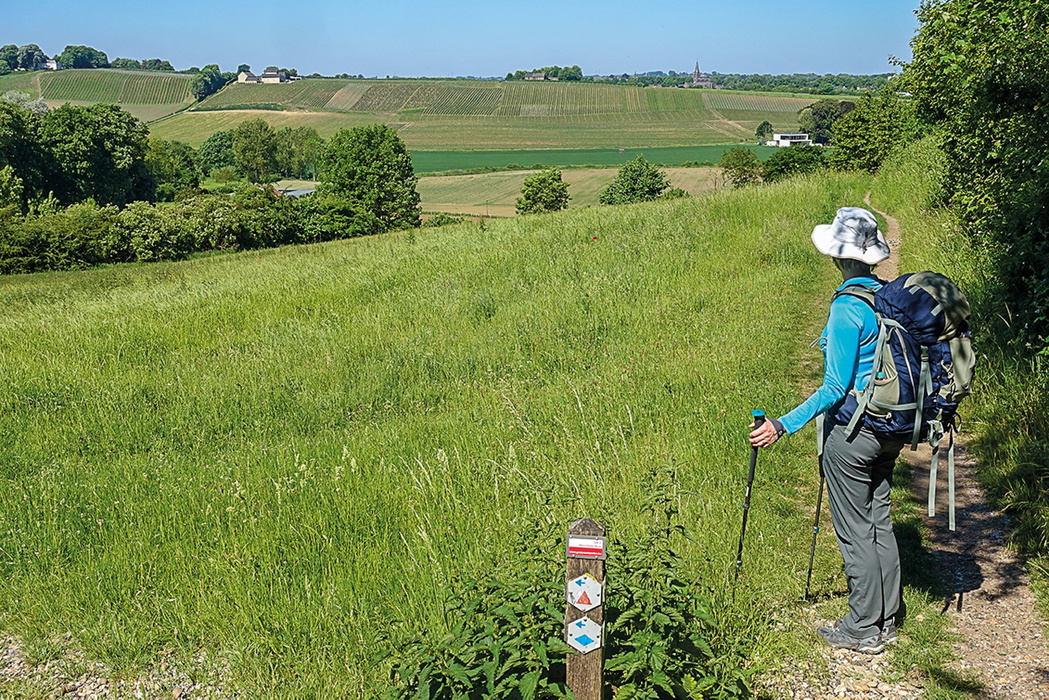
Navigation is generally straightforward thanks to consistent white-and-red GR waymarking throughout (with Luxembourg's own coloured disc-and-triangle system between Stages 28–36, which the guidebook explains clearly).
Can I walk a shorter section of the GR5 – Benelux and Lorraine?
Yes, and this is how many people experience the Northern GR5. The guidebook includes Appendix B with four suggested five-day itineraries, each designed to fit comfortably into a week's holiday. The five geographic sections also make natural standalone trips:
- The Netherlands (7 stages, ~124km): Hoek van Holland to Bergen op Zoom. Polders, dunes, historic towns. A good introduction to the GR5.
- Flanders (13 stages, ~249km): Bergen op Zoom to Eben-Emael via Maastricht. Heathland, abbeys, the city of Diest.
- Wallonia (7 stages, ~143km): Eben-Emael to Ouren. The Ardennes proper, including Spa and the deep Stavelot valley.
- Luxembourg (9 stages, ~184km): Ouren to Montenach. Vianden castle, Echternach, the Moselle Wine Route.
- Lorraine (13 stages, ~299km): Montenach to Schirmeck. Metz, the salt country of the Seille valley, the land of ponds, and the Vosges foothills.
Public transport connections are excellent throughout the Netherlands, Belgium and Luxembourg, and Metz and Schirmeck both have direct rail links. The guidebook highlights rail and bus access points at each stage, making it easy to join or leave the route wherever suits you.
Which direction should I walk the Northern GR5?
The GR5 is described in this guidebook north to south, from Hoek van Holland to Schirmeck, and this is the direction most walkers choose. There is a satisfying logic to it: starting on the flat and building gradually toward the mountains, with the Alps waiting further south for those who continue into the Vosges and Jura volume. The symbolic gesture of beginning at the sea (some walkers collect a small bottle of North Sea water to carry south) also works better going this direction.
Walking south to north is entirely possible but relatively uncommon, and a few accommodation and logistical notes in the guidebook assume a northbound approach from Schirmeck.
When is the best time to walk the GR5 – Benelux and Lorraine?
The Northern GR5 is a three-season trail, walkable from April to October, with the following considerations:
- April to May: Can be excellent, especially in the Netherlands and Flanders, where spring comes early. Be prepared for cool temperatures and rain, particularly in the Ardennes. In May, asparagus season means the food is exceptional in the Netherlands and Flanders.
- June to August: The most popular period. Long days, warm temperatures, and the Moselle wine country at its lushest. Accommodation in popular areas (Spa, Vianden, Echternach) may need advance booking, especially in July and August.
- September: Often a sweet spot. Quieter trails, softer light, and autumn colour beginning in the Ardennes forests. Harvest time along the Moselle.
- October: Still walkable, but days are shortening and the Ardennes can be wet. The Vosges stages at the end of the route may see the first frosts.
- Winter: Not recommended for the full route. The Ardennes and Lorraine can be cold, wet and occasionally snowy. That said, the Netherlands and Flanders sections can be pleasant even on fine winter days if you have public transport as a fallback.
What is the historical significance of the GR5 route?
Few long-distance trails in Europe carry quite so much history underfoot. The Northern GR5 passes through territory that has been contested, divided and reunited repeatedly over two millennia. Julius Caesar's Gallic campaigns, the division of Charlemagne's empire at the Treaty of Verdun in 843, the Burgundian dukes, the Spanish Netherlands, the Maginot Line, the Battle of the Bulge in the Ardennes: all of this happened in the landscape you are walking through.
The trail passes close to Fort Eben-Emael, north of Liège (famously captured by German glider troops in 1940), crosses the Ardennes forests that saw some of the fiercest fighting of both World Wars, and passes the home of Robert Schuman in Scy-Chazelles, near Metz. Schuman, the Lorraine statesman who helped found what became the European Union, declared that his goal was to make war "not only unthinkable but materially impossible." The irony that you cross borders between four countries without once showing a passport, thanks to the Schengen Agreement signed at a village on the Luxembourg Moselle that the trail also passes through, is hard to miss.
Walkers interested in European history will find the Northern GR5 unusually rewarding in this regard.
What accommodation is available on the Northern GR5?
Accommodation varies considerably between sections, and planning ahead is worthwhile, especially in Lorraine where options can be sparse.
- Netherlands and Flanders: Hotels, B&Bs and youth hostels are plentiful. Many commercial campsites also offer hikers' cabins (trekkershutten) which provide a bed (and sometimes cooking facilities) without requiring you to carry a tent.
- Wallonia and Luxembourg: Good variety of hotels, B&Bs and youth hostels in the towns, with gîtes d'étape in some villages. Vianden, Echternach and Spa are well-served.
- Lorraine: More challenging. Accommodation is concentrated in larger towns and cities (Metz is the major hub). Some rural sections require advance booking to avoid a very long walk to the next available bed. The guidebook's stage descriptions address this directly and suggest solutions.
Camping is an option throughout, though formally permitted wild camping is limited. Discreet camping near the trail is widely practised. Gîtes d'étape are generally self-catering; chambres d'hôtes may offer a table d'hôte dinner if booked in advance.
A full accommodation list by stage is provided in Appendix C of the guidebook.
Getting to Hoek van Holland and leaving from Schirmeck
Getting there: Hoek van Holland is easily reached from the UK by the Harwich–Hoek van Holland ferry. From the continent, take a train to Rotterdam Central Station and then the RET Metro Line B to Hoek van Holland Haven. The terminal and the GR5 signpost are adjacent.
Leaving from Schirmeck: Schirmeck has a regular train service to Strasbourg, making it straightforward to return home or continue into the Vosges with the second volume of the series. If continuing the GR5, the GR5 – Vosges and Jura guidebook picks up exactly where this book leaves off.
Along the route: The guidebook identifies rail connections and useful bus routes at each stage, and Appendix D lists public transport websites with timetables and ticket information. Major cities with mainline rail connections include Bergen op Zoom, Liège, Maastricht, Spa (Pepinster), Vianden (via Ettelbruck or Diekirch), Echternach (via Luxembourg City) and Metz.
What are the highlights of the GR5 – Benelux and Lorraine?
- Voornes Duin Nature Reserve (Netherlands): A beautifully managed coastal dune landscape with an observation hide for birdwatching at Breede Water.
- Flemish abbeys: Westmalle, Tongerlo and Averbode all lie on or near the route. Trappist beer tastings are unavoidable (and should not be avoided).
- Maastricht: One of the Netherlands' most historically layered cities, and a natural rest day.
- The Ardennes forests: Wild boar, roe deer, forested ridges and narrow river valleys in the stages around Spa, Stavelot and Vielsalm.
- Petite Suisse Luxembourgeoise (Stages 32–33): Towering sandstone formations in dark forest between Beaufort and Echternach. A frequent highlight for through-walkers.
- Vianden castle: One of the most impressive medieval castles in Europe, dramatically sited above the Our valley.
- The Luxembourg Moselle Wine Route (Stages 34–36): Vineyard walking above the river from Wasserbillig to Schengen, with white wine tastings at the source.
- Metz: The magnificent St Étienne Cathedral and the Centre Pompidou-Metz make this a city worth a full rest day.
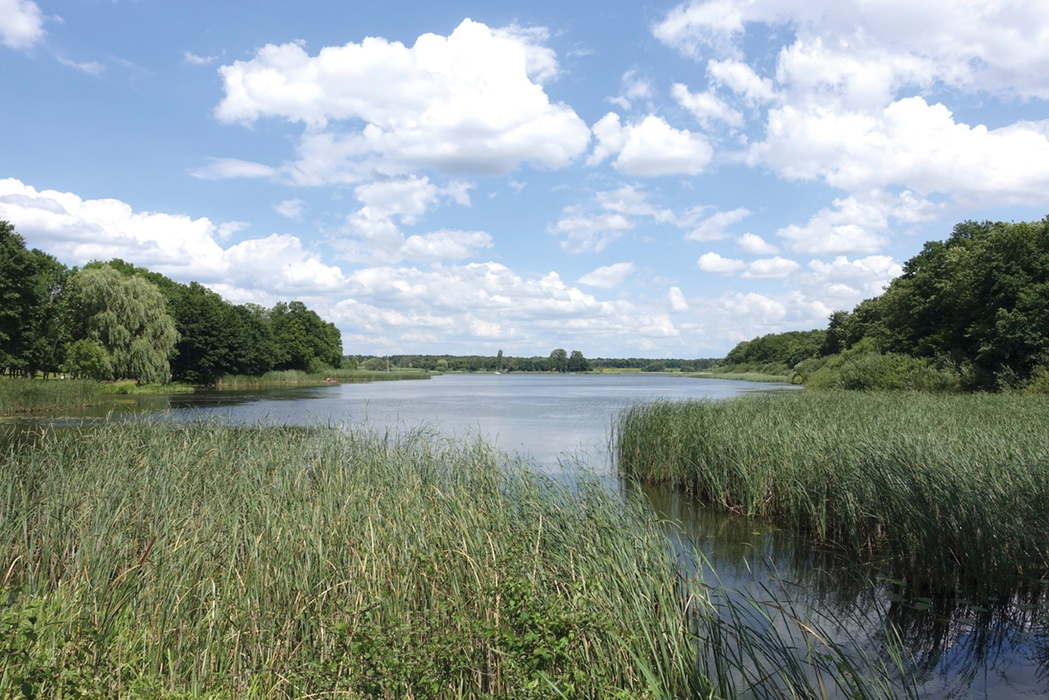
- The land of ponds (Pays des Etangs, Lorraine): A quiet, distinctive landscape of medieval fish ponds with white storks overhead, before the first sight of the Vosges on the horizon.
Plan your walk with the Cicerone guidebook
The GR5 Trail – Benelux and Lorraine by Carroll Dorgan contains everything you need to plan and complete the Northern GR5, from Hoek van Holland to Schirmeck.
- 49 stage-by-stage route descriptions, each with start/finish, distance, walking time, public transport links, accommodation options and points of interest
- 1:100,000 mapping throughout, supplemented by 1:40,000 urban maps for key towns
- Downloadable GPX files (free for registered book owners) covering the complete route as described in July 2017
- Appendix A: Full route planner showing facilities available at each stage
- Appendix B: Four five-day itinerary suggestions for shorter holidays
- Appendix C: Comprehensive accommodation list by stage (hotels, B&Bs, chambres d'hôtes, gîtes d'étape, hostels, campsites with trekkershutten)
- Appendix D: Useful contacts including transport, map purchasing and post office websites
- Appendix E: Practical Dutch and French vocabulary for hikers
Available as a printed guidebook (£18.95) or digital eBook (£18.95).
The GR5 Trail - Benelux and Lorraine
The North Sea to Schirmeck in the Vosges mountains
£18.95
Guidebook to walking the northern section of the GR5 - 1000km starting in Hoek van Holland and passing through the Netherlands, Belgium, Luxembourg and Lorraine to Schirmeck in France. A long-distance route covering a variety of cultures and landscapes. The full GR5 from the North Sea to the Mediterranean is one of the world's greatest trails.
More informationAbout Carroll Dorgan, guidebook author:
Carroll Dorgan was born and educated in the United States. Pushed by the absence of jobs for history graduates where he happened to be living in 1975 and pulled by his wanderlust, Carroll pursued a teaching career for a decade in international schools in Iran, Belgium, England and France. He then returned to California to qualify as a lawyer, but soon moved back to Europe to practise international law in the Netherlands and France. In all of those places, he explored nearby hiking trails. While living in Liège, he discovered the GR5, which passes near the city on its way from Hoek van Holland to Nice. Over the years, the GR5 became his favourite trail. Carroll hiked in the Olympics, Cascades, Sierras and Green Mountains in the United States and the Pyrenees and Auvergne in France, but he was always drawn back to the GR5. Upon completing a trek on the GR5 in the Vosges, Jura and Alps in 1989, he dreamt of hiking the entire trail someday. The dream became a plan and then his first adventure after retiring in 2015. Carroll enjoyed that long trek so much – and is so keen to share his enthusiasm for the trail – that he returned to the GR5 to write this guide to the Northern GR5. Carroll lives in France with Mary, his wife and hiking companion.