Walking Lake Garda and Iseo: a complete planning guide
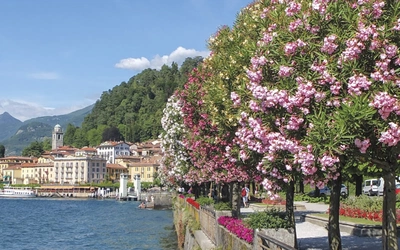
At the foot of the Alps in north Italy, the magnificent expanse of Lago di Garda is an irresistible magnet for sport and nature lovers, along with its attractive western neighbour, the lesser-known Lago d'Iseo. Only steps beyond the beautiful lakefronts and their promenades is a wonderful world of footpaths traversing woods and rugged mountain valleys, often making use of a network of age-old paved mule tracks linking remote hamlets. The 20 day walks described in Gillian Price's guidebook range from a leisurely waterfront stroll to a demanding extended hike to alpine heights, covering both lakes in a single compact volume. Every single walk can be accessed by public transport, whether ferry, train, bus, cable car, or chair lift. (Last updated: June 2026 · Guidebook edition: 1st edition, April 2019)
Walking Lake Garda and Iseo, quick facts:
- Location: Lago di Garda and Lago d'Iseo, northern Italy
- Total routes: 20 graded day walks
- Distance range: 4.5km to 13km (2.8 to 8 miles) per walk
- Typical duration:1hr 30min to 4hr 30min per walk
- Difficulty grades: Grade 1 (easy) to Grade 3 (strenuous)
- Terrain: Lakeside paths, mountain routes, canyon walks, historic military paths, island circuits, mule tracks
- Highest point: Monte Baldo (1160m ascent on Walk 11)
- Navigation: CAI red/white waymarks on most routes
- Best season: Spring to autumn; lower lakeside walks accessible year-round; Monte Baldo altitude routes best in midsummer
- Lago di Garda bases: Malcesine, Riva del Garda, Limone, Gargnano
- Lago d'Iseo bases: Iseo, Lovere
- Guidebook:Walking Lake Garda and Iseo by Gillian Price, 1st edition
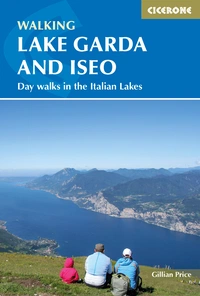
Walking Lake Garda and Iseo
Day walks in the Italian Lakes
£14.95
Guidebook to 20 day walks around the majestic Italian lakes of Garda and Iseo. The routes, which range from leisurely strolls to more strenuous routes up panoramic peaks, offer something to suit all walkers. Invaluable practical information about public transport, accommodation and walking kit is included, together with a handy Italian glossary.
More information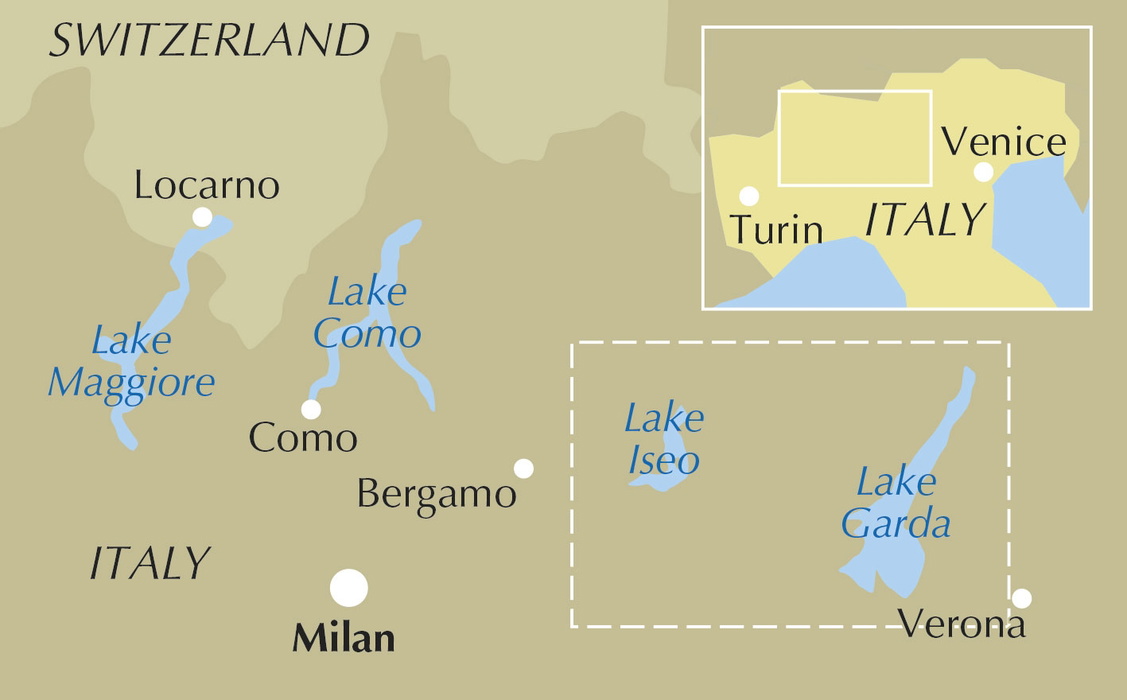
What is Walking Lake Garda and Iseo?
Walking Lake Garda and Iseo by Gillian Price is a day-walk collection covering two of northern Italy's most beautiful and distinct lakes in a single compact guidebook. The 20 routes are divided between Lago di Garda, with 16 walks, and Lago d'Iseo, with four walks, spanning everything from gentle waterfront promenades to strenuous ascents on Monte Baldo. Together they give a thorough and varied introduction to walking in this part of the Italian lakes, accessible entirely by public transport.
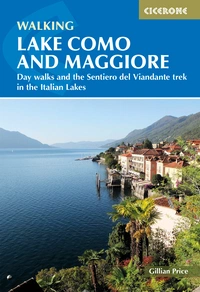
The two lakes are quite distinct in character. Garda is more dramatic: vast and alpine in flavour, with the upper lake hemmed in by awesome cliffs and the great ridge of Monte Baldo rising to over 2000m above Malcesine. Iseo is smaller, more remote, and less touristy, with a quieter charm. Both are breathtakingly beautiful, and between them they offer a rewarding contrast for any walking holiday in northern Italy. A companion Cicerone guidebook, Walking Lake Como and Maggiore, covers the two great lakes further west.
What sets this guide apart is Gillian Price's insistence on public transport: every walk starts and finishes at a ferry landing, bus stop, train station, or cable car terminal. Visitors never need a hire car. For complete route descriptions and sketch maps for all 20 walks, see the Cicerone Walking Lake Garda and Iseo guidebook.
The 20 walks at a glance
The guidebook divides the walks between the two lakes, with Lago di Garda further organised around its main walking areas.
| Lake/area | Walks | Distance range | Time range |
|---|---|---|---|
| Lago di Garda: western shore and Campione | 1–6 | 7.3–10km | 2hr–4hr 30min |
| Lago di Garda: Riva, Torbole and Monte Brione | 7–10 | 4.5–12km | 1hr 30min–4hr 15min |
| Lago di Garda: Monte Baldo | 11–15 | 9.7–13km | 2hr 40min–4hr |
| Lago di Garda: eastern shore | 16 | 12km | 2hr 50min |
| Lago d'Iseo | 17–20 | 6.5–11km | 2hr 15min–3hr 30min |
Lago di Garda: western shore and Campione (Walks 1–6) covers the dramatic western edge of the lake, including the Valle delle Cartiere paper-mill gorge, the canyons of Campione, and the high ridge above Limone and Pregasina. This section includes the most demanding routes on Garda, with Walks 5 and 6 reaching Grade 3 terrain.
Lago di Garda: Riva, Torbole and Monte Brione (Walks 7–10) covers the northern end of the lake around the busy resort of Riva del Garda, including the spectacular Strada del Ponale cliffside path, the Venetian Bastione fortification above Malcesine, and the historic military forts of Monte Brione.
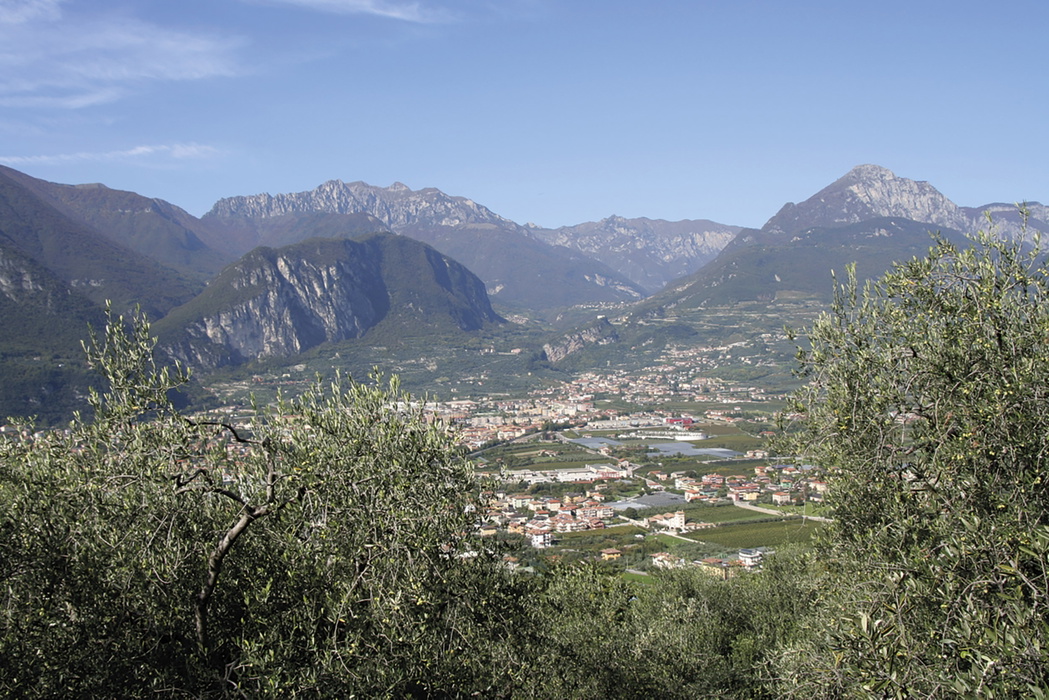
Lago di Garda: Monte Baldo (Walks 11–15) dedicates five routes to the great ridge above Malcesine, accessible by cable car. This is the most botanically rich section, known as the Botanical Garden of Europe for its exceptional wildflowers. Routes range from a dramatic 1160m ascent on Walk 11 to more manageable ridge traverses on Walks 12 to 15.
Lago di Garda: eastern shore (Walk 16) covers the single route on the southern Veronese shore: Torri del Benaco and its prehistoric rock carvings.
Lago d'Iseo (Walks 17–20) covers four routes on the smaller, quieter lake: the panoramic ridge of Punta Alta, the pilgrimage path to the Santuario di San Giovanni, the dramatic cliffs of Corna Trentapassi, and a circuit of Monteisola, Europe's largest inhabited lake island.
Who is Walking Lake Garda and Iseo suitable for?
Walking Lake Garda and Iseo caters for a wide range of abilities. Several Grade 1 routes, including the Venetian Bastione walk above Malcesine and the Monteisola island circuit, are well suited to beginners and families with older children looking for a gentle half-day out. The majority of routes are at Grade 2, requiring a reasonable level of fitness but no technical experience.
The Grade 3 routes, principally Walk 5 (Limone sul Garda and the Valle del Singol) and Walk 6 (Monte Nodice and Pregasina) on the western shore, involve sustained ascent and some exposed terrain and are best reserved for walkers with a good level of fitness and some hill-walking experience. The Monte Baldo routes (Walks 11–15) vary considerably: Walk 11 involves 1160m of ascent and is the most demanding in the book, while Walks 12–15 are more accessible at Grade 1–2 or 2–3.
The guidebook is particularly well suited to visitors basing themselves in one of the main lake towns and taking a different walk each day by public transport, with no need for a hire car at any point.
How difficult are the walks?
The guidebook uses a three-grade system. Grade 1 routes are easy, on clear tracks and paths, suitable for beginners. Grade 2 routes cross hill and mountain terrain with ups and downs and require a reasonable level of fitness. Grade 3 routes are strenuous, with some exposed stretches and possibly prolonged ascent; experience and extra care are recommended.
The most demanding walks are Walk 5 (Limone sul Garda and the Valle del Singol, 880m ascent/descent, Grade 3) and Walk 17 (Punta Alta on Lago d'Iseo, 850m ascent/descent, Grade 2+). The easiest is Walk 8 (The Venetian Bastione, 4.5km, Grade 1), ideal for a short morning or afternoon. Walk 11 on Monte Baldo involves 1160m of total ascent but is graded 2–3 rather than 3, as the cable car from Malcesine handles much of the elevation gain.
When is the best time to walk at Lakes Garda and Iseo?
The lakes enjoy a mild climate year-round, though spring and autumn are the finest seasons for most walks.
- Spring (March to June) is highly recommended. Temperatures are comfortable, the vegetation is brilliant green, and wildflowers are at their best, particularly on Monte Baldo where the blooming season begins in late April at lower altitudes and continues through to August on the higher ridges. The peonies on Monte Baldo are a particular highlight.
- Summer (July and August) can bring temperatures up to 30°C on the lakeshores, though an afternoon breeze is nearly always guaranteed. The Monte Baldo altitude routes are at their best in midsummer, offering a cool and rewarding escape from the heat below. The lakes are busiest at this time.
- Autumn (September and October) is an excellent alternative: fewer visitors, clear crisp air once summer haze has dissipated, and good visibility for the panoramic ridge walks. September in particular is a strong choice.
- Winter (November to February) closes the high-altitude routes due to snow, but crisp sunny days make for perfect low-altitude walking with brilliant visibility. Note that ferry services are reduced from November through to March, and much accommodation closes.
The Italian public holidays bring the lakes to near-capacity, particularly Ferragosto (15 August) and Easter. Book accommodation well in advance for these periods.

What accommodation is available?
Both lakes have a good range of reasonably priced hotels, B&Bs, and campsites, as well as hostels and mountain rifugi. The guidebook suggests mid-range options for each lake, typically around €80–100 for a double room with breakfast.
On Lago di Garda, the main bases are Malcesine, Riva del Garda, Limone, and Gargnano. On Lago d'Iseo, Iseo and Lovere are the best-served towns. Many accommodation options close from October/November to March/April, so check ahead for low-season visits.
For Walks 14 and 15 on Monte Baldo, an overnight stay in one of the high-altitude rifugi is a memorable option. These staffed mountain huts provide dormitory accommodation and meals during the summer months, with contact details given in the relevant walk descriptions. Book well in advance for peak months, particularly May and September.
How do I get to Lakes Garda and Iseo?
For Lago di Garda, the closest airports are Brescia and Verona. For Lago d'Iseo, Bergamo's Orio al Serio airport is the most convenient, with Milan's Linate and Malpensa airports also an option. The international rail line between Austria and Italy (Innsbruck to Verona) serves Lago di Garda via Rovereto, which has good bus connections to Riva del Garda.
Once at the lakes, the extensive network of trains, buses, ferries, and cable cars makes getting around straightforward. Umbria Mobilità covers all public transport within the Lago d'Iseo area, while Lago di Garda has its own networks. Full ferry services run from March/April through to October/November; winter services are reduced and some are suspended. Day tickets offering unlimited travel are available on both lakes. All 20 walks in the guidebook start and finish at public transport stops, so a hire car is never needed.
What are the highlights of walking at Lakes Garda and Iseo?
- Monte Baldo is Lago di Garda's finest walking destination, with five dedicated routes (Walks 11–15). Take the cable car from Malcesine to the ridge, known as the Botanical Garden of Europe for its extraordinary wildflower diversity, and choose from routes ranging from a dramatic full-day ascent to more accessible ridge traverses.
- The Strada del Ponale (Walk 7) is one of the great historic paths of the Italian lakes: a former carriage road carved into the cliffs above Riva del Garda, now a spectacular walking and cycling route with vertiginous views over the northern lake.
- Campione and its canyons (Walks 3 and 4) are the highlight of the western shore, a village dramatically situated at the foot of a gorge carved by the Torrente San Giovanni, with walking routes that climb steeply through the canyon walls.
- Monte Brione (Walk 9) rises between Riva del Garda and Torbole at the northern tip of the lake, its summit dotted with the ruins of Austro-Hungarian military fortifications and offering commanding views in all directions.
- Monteisola (Walk 20) on Lago d'Iseo is Europe's largest inhabited lake island, car-free and unhurried, with a circuit walk to the hilltop Santuario della Ceriola and views across the lake to the small island fortresses of Loreto and San Paolo.
- Corna Trentapassi (Walk 19) offers the most dramatic ridge walking on Lago d'Iseo, with precipitous cliffs and panoramic views that rival anything on the larger lake.
Plan your walk with the Cicerone guidebook
The Cicerone Walking Lake Garda and Iseo guidebook by Gillian Price contains everything you need to plan and complete all 20 walks at both lakes.
- 20 day walks graded 1 to 3, divided between Lago di Garda (16 walks) and Lago d'Iseo (4 walks)
- Sketch maps for every walk with key landmarks and route detail
- Full route descriptions for all 20 walks, with partial timings and waymark information
- Route summary table (Appendix A) listing all 20 walks by name, distance, ascent/descent, grade, and time
- Public transport information for every walk start and finish point, covering ferries, buses, trains, cable cars, and taxis
- Accommodation suggestions for both lakes, with mid-range options in the main base towns
- Background sections covering plants and flowers, wildlife, food and drink, and local transport
- Italian–English glossary (Appendix B) with practical phrases for purchasing tickets and navigating timetables
- GPX files available to download at cicerone.co.uk
Available as a printed guidebook (£14.95) or digital eBook (£14.95).
Walking Lake Garda and Iseo
Day walks in the Italian Lakes
£14.95
Guidebook to 20 day walks around the majestic Italian lakes of Garda and Iseo. The routes, which range from leisurely strolls to more strenuous routes up panoramic peaks, offer something to suit all walkers. Invaluable practical information about public transport, accommodation and walking kit is included, together with a handy Italian glossary.
More informationAbout Gillian Price, guidebook author
Gillian Price has trekked throughout Asia and the Himalayas, but now lives in Venice and is exploring the mountains and flatter bits of Italy. Starting in the Italian Dolomites, Gillian has written outstanding Cicerone guides to walking all over Italy as well as Corsica and Corfu. An adamant promoter of public transport to minimise environmental impact, Gillian belongs to Mountain Wilderness and is an active member of the Venice branch of CAI, the Italian Alpine Club. Check her out at www.gillianprice.eu.